

























































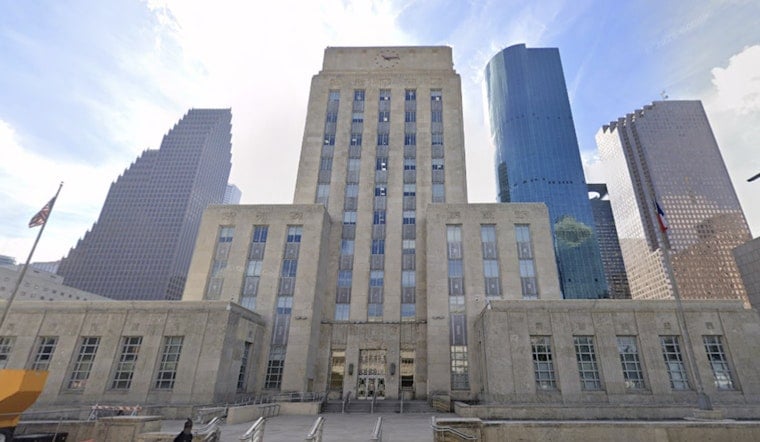
Houston City Council is set to decide Wednesday whether two contentious policing measures — a ban on no-knock warrants and a policy making low-level marijuana possession the lowest enforcement priority for police — will go before voters this November. The proposals would amend the Houston city charter, and organizers say they collected roughly 40,000 signatures, well above what's needed to force the question onto the ballot.
The campaign, known as the Houston Freedom Act, is led by Ground Game Texas, a statewide organization focused on social justice, according to Click2Houston. Under Houston municipal law, activists needed at least 20,000 valid signatures from registered voters to force a charter amendment referendum, a threshold the Houston City Secretary's office has been verifying after the signature haul came in, according to the Houston Chronicle. If the signatures are certified, the city council must place the measures on the ballot.
Catina Voellinger, executive director of Ground Game Texas, framed the effort as a matter of departmental accountability. “The Houston Freedom Act is about priorities and accountability,” Voellinger said, according to the same report. She added that the proposals would codify policy and standards for the police department, and that the rules would remain in effect regardless of who leads it in the future.
A Raid That Still Haunts City Hall
The no-knock provision traces directly back to the 2019 Harding Street raid, in which Houston police served a no-knock warrant that ended in a shootout and killed homeowners Dennis Tuttle and Rhogena Nicholas, while injuring several officers. The warrant was based on fabricated evidence. Former officer Gerald Goines was sentenced in October 2024 to 60 years in prison for felony murder after a jury found he lied on the search warrant affidavit, according to Courthouse News Service — making him the first law enforcement officer in Harris County history convicted of murder for an on-duty shooting.
State criminal charges against eight other former Houston officers linked to the raid were dismissed in February 2025, leaving Goines as the primary officer held criminally responsible, according to Click2Houston, which noted federal civil rights charges against key personnel had also been pursued since 2019. The Houston Freedom Act also asks the city to audit the demographics of no-knock and marijuana-related arrests over the past five years.
Police Union Says the Fix Targets a Problem That's Already Gone
Douglas Griffith, president of the Houston Police Officers' Union, argues the no-knock measure addresses a problem that no longer exists. He said the department largely ended the use of no-knock warrants after the Harding Street raid, and that any remaining approved operations — which he estimated at one or two a year — are run only by HPD's SWAT team and require approval by the police chief. Griffith also said officers now use body cameras for everything they do.
On the marijuana provision, Griffith said existing procedures wouldn't actually change much. Per Griffith, Houston police officers already must tag marijuana found in a car and file a report, and people found with marijuana in a car must enter a diversion program. He said deprioritizing marijuana enforcement further would not help officers focus on more serious crimes, and noted that Harris County very rarely arrests people for marijuana as it is. Harris County's District Attorney's Office has run a Misdemeanor Marijuana Diversion Program since 2017, letting people found with four ounces or less complete a court or education program to avoid arrest and a criminal record, according to the Chronicle.
State Law Looms Over the Marijuana Measure
Even if Houston voters approve the marijuana deprioritization measure, it would face the same legal headwinds that have battered similar policies elsewhere in Texas. Under state law, possessing two ounces or less of marijuana remains a Class B misdemeanor punishable by up to 180 days in jail, a $2,000 fine, and an automatic six-month driver's license suspension, according to Saputo Toufexis; possession of two to four ounces escalates to a Class A misdemeanor with up to a year in jail.
In April 2025, the Texas Fifteenth Court of Appeals ruled that voter-approved marijuana decriminalization ordinances in Austin and San Marcos were unenforceable, holding that state law prevents cities from restricting full enforcement of state drug statutes, according to NORML. Texas Attorney General Ken Paxton has sued multiple cities — including Austin, San Marcos, Killeen, Elgin, Denton, and Dallas — over local marijuana deprioritization policies since January 2024, arguing municipalities cannot pick and choose which state laws to follow.
Dallas offers the most direct comparison: about 67% of voters there approved a nearly identical charter amendment in November 2024, directing police to make low-level marijuana possession their lowest priority and barring officers from using cannabis odor as probable cause, according to FOX 4 Dallas. But in July 2025, Dallas agreed to a temporary injunction pausing that measure after the state appeals court ruling, filing a joint motion with the attorney general's office rather than continue fighting in court, according to KERA News.
Ground Game Texas has run this playbook before. The organization previously led a successful May 2022 ballot initiative for the Austin Freedom Act, which combined the same two elements — marijuana deprioritization and a no-knock warrant ban — and it backed 15 progressive ballot initiatives across Texas in 2024, according to Ballotpedia.
What Happens Next
Houston City Council plans to decide Wednesday whether to let voters weigh in on both measures this November. Ahead of that vote, supporters can attend a public comment session Tuesday at Houston City Hall, where the measures will be discussed; Ground Game Texas is encouraging backers to show up. The debate over marijuana enforcement is playing out across Texas cities, but for Houston, the fight over no-knock warrants remains inseparable from the memory of Harding Street.





