

























































A retired Army National Guard officer who spent nearly 33 years in uniform is now the first patient in the entire VA system to be treated for epilepsy with an MRI-guided laser procedure, avoiding an open-skull surgery that would have removed a large portion of his brain. Robert Lindemann underwent the operation in May 2026 at a Houston hospital and was discharged just two days later, reporting that he felt great within four days of the surgery.
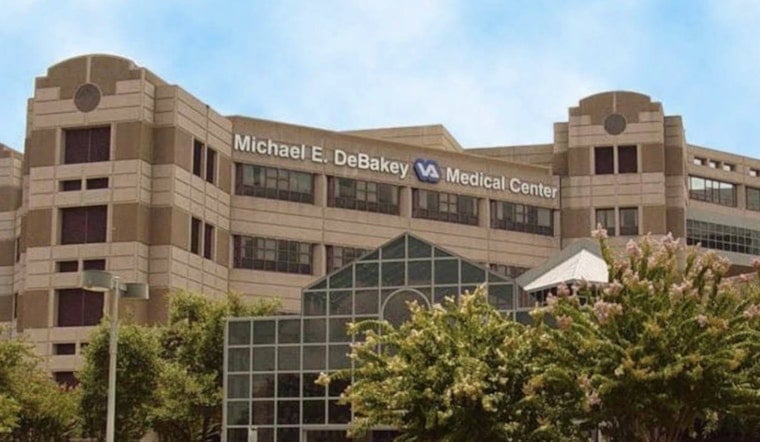
Lindemann's case, first reported by the Houston Chronicle, marks a milestone for the Michael E. DeBakey VA Medical Center at 2002 Holcombe Blvd., which became the first VA facility in the country to treat a patient with the technology, known as Visualase. The device is an MRI-guided laser system already used at academic medical centers to treat brain tumors, radiation necrosis, and the type of tissue that triggers seizures, according to the Chronicle's reporting. For Lindemann, it meant surgeons could destroy seizure-causing brain tissue through a small hole in his skull rather than performing a craniotomy — the normal surgical solution for his condition, according to the VA — that would have removed a large portion of his right temporal lobe.
A Fiber-Optic Catheter Through a 3.2-Millimeter Hole
The procedure itself relied on real-time MRI guidance, which let the surgical team target the precise brain tissue responsible for Lindemann's repeated seizures while continuously monitoring temperatures and protecting the structures around it. A medical team inserted a fiber-optic laser catheter through a hole in Lindemann's skull measuring just 3.2 millimeters, according to the Chronicle. Laser interstitial thermal therapy, the broader category of procedure Visualase falls under, uses that MRI guidance to destroy a small area of seizure-causing tissue without opening a large section of the skull.
Houston neurosurgeon Garrett Banks, who used the Visualase system on Lindemann, said the procedure preserves the cognitive abilities, dignity, and well-being of veteran patients. The U.S. Department of Veterans Affairs said the operation opens a new chapter in VA neurosurgical capabilities. Lindemann, for his part, said he received first-rate care and the latest technology at the medical center, calling that combination something you simply cannot beat.
Why This Matters for a Uniquely Vulnerable Population
The stakes behind this kind of minimally invasive option are steep for veterans specifically. An estimated 64,000 veterans across the VA healthcare system suffer from drug-resistant epilepsy and face a 1.5-times higher risk of mortality compared to veterans whose seizures are controlled by medication, according to U.S. Medicine. Research led by the Houston VA and Baylor College of Medicine found that veterans who develop epilepsy after a traumatic brain injury face higher mortality rates than those with non-traumatic epilepsy, with veterans aged 18 to 39 experiencing a two-fold increase in mortality, per a study detailed by VA Houston Health Care. The Veterans Health Administration treats roughly 80,000 veterans for epilepsy each year, with a higher overall prevalence than among nonveterans due to elevated rates of traumatic brain injuries and PTSD, according to VA Health Systems Research.
Before his diagnosis of focal epilepsy, Lindemann experienced warning signs that went unmapped for years — episodes where he lost chunks of time and felt disconnected, which he initially chalked up to exhaustion or sleepwalking, according to VA News. He enlisted in the Army National Guard at 17 in 1980, following the World War II service of his father and stepfather, before retiring in Texas as an officer.
Part of a Broader Push Into Minimally Invasive Care
The minimally invasive procedure offers an alternative to open surgery and could expand VA treatment options for veterans with focal epilepsy, deep brain tumors, and radiation necrosis. Visualase may eventually open the door to other veterans with focal epilepsy who qualify for surgery, though how quickly other VA facilities nationwide might adopt the technology now that Houston has set the precedent remains an open question. Nationally, procedure volumes for laser interstitial thermal therapy at accredited U.S. epilepsy centers grew by 61% between 2012 and 2019, outpacing traditional open temporal lobectomies as neurosurgeons moved toward less invasive brain ablation methods, according to research published in Neurology.
Lindemann's surgery follows a pattern of high-tech investment at the Michael E. DeBakey VA Medical Center, which became the first VA site to deploy dual da Vinci 5 robots in January 2026. In August 2026, the same Houston hospital introduced the FDA-approved NeuroOne stereo electroencephalography system to perform diagnostic recording and targeted ablation on Navy veteran Derrick Harpole, who had suffered from drug-resistant epilepsy for 28 years. The facility, originally established as a VA hospital and renamed in 2003 to honor cardiovascular surgery pioneer Dr. Michael E. DeBakey, serves as a primary teaching site affiliated with Baylor College of Medicine and hosts one of the VA's Epilepsy Centers of Excellence.
Demand for that kind of specialized care has climbed steadily. Patient clinical encounters across the VA's national Epilepsy Centers of Excellence network increased by 74% between 2011 and 2023, rising from 10,487 to 18,285 annual visits, according to a study indexed on PubMed. It remains to be seen what long-term seizure-freedom rates veteran patients will achieve after laser ablation, but for now, Lindemann stands as proof of concept for a treatment path Houston hopes more veterans with focal epilepsy can access.





