

























































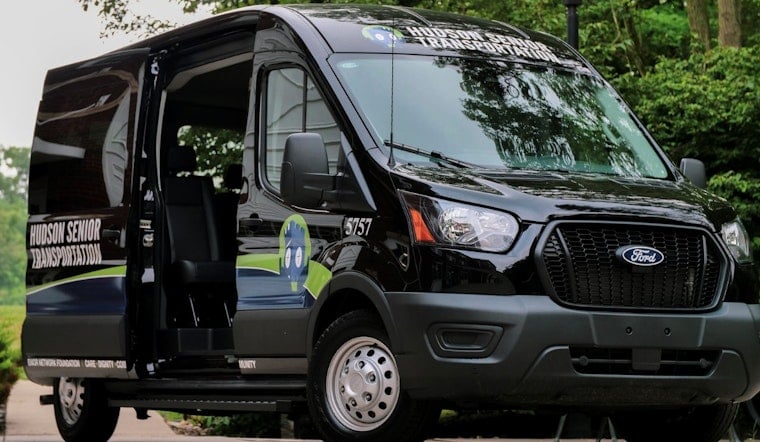
Hudson is rolling out its first-ever senior transportation program, a free van service that will carry older residents to medical appointments, pharmacies and grocery stores starting Wednesday, September 2. The new 12-passenger van, funded through donations and foundation grants, was recently turned over to the city, and officials say it fills a need that residents themselves flagged as a top priority.
According to Cleveland.com, the program grew out of a Hudson senior survey that identified transportation as a highest-priority need among older residents. The Hudson Community Foundation and Hudson Senior Network raised money for the van, and city leaders developed the program in partnership with those two groups. The city itself will operate the van service, handling ride scheduling, driver hiring, fuel and maintenance, while two drivers will run routes on Mondays, Wednesdays and Fridays.
Residents can get a first look at the vehicle during a Seniors Van Launch Celebration set for Wednesday, September 16, from 10:30 a.m. to noon in the rear parking lot of City Hall at 1140 Terex Road, according to the City of Hudson. The event will let residents view the van and meet the program's drivers ahead of its full launch. The city says the vehicle is outfitted to make entering and exiting easier for older riders, though it is not wheelchair accessible.
Who Qualifies and How the Rides Work
The service is open to Hudson residents aged 65 and older, as well as people 55 and older with a permanent disability, with no income restrictions attached. Riders must be able to reach the vehicle and enter their seats without assistance, and each may bring one companion adult along when needed. Applicants must apply and have their eligibility verified before they can schedule a ride, with applications available online or on paper.
Trips must stay within a six-mile radius of the intersection of Ohio 91 and Ohio 303 in Hudson, and the van operates 9 a.m. to 4 p.m. on Mondays, Wednesdays and Fridays, per Cleveland.com's report. Riders are limited to one appointment per day, and trips must be scheduled and confirmed at least two weeks in advance, though medical appointments can be booked up to three months ahead. Rides can be arranged by calling 330-342-1880 or emailing [email protected].
The city's program guidelines, outlined by the City of Hudson, also spell out several restrictions: rides cannot be used for medical procedures involving anesthesia, pets are barred unless accompanied by official service-animal documentation, and residents of nursing facilities that already have transit services are ineligible. The van joined city operations after Hudson City Council considered Resolution 26-79 in May, authorizing the city manager to enter an agreement with the Hudson Community Foundation to accept donated funds and acquire the vehicle using state bid pricing.
Why City Leaders Say the Need Is Growing
Hudson has roughly 23,200 residents, and seniors make up nearly 20% of that population, the report notes. Hudson Mayor Jeffrey Anzevino expects the city's senior population to keep growing and said Hudson seniors want to remain part of the community. Heidi Schweighoefer, who advocated for the senior transportation program, said transportation can be especially difficult for seniors who live alone or lack family nearby.
Countywide, seniors have made up about 20% of Summit County's population on average over the past five years, with the Summit County Health Department reporting around 109,000 seniors living in the county in 2023. Summit County is expected to see its senior population sharply rise as the baby boom generation ages. That trend tracks with U.S. Census Bureau QuickFacts data showing residents 65 and older already make up 21.6% of Summit County's total population, above the roughly 18% national average, with the Ohio Development Services Agency projecting the county's senior share will peak around 22% by 2035.
Summit County Public Health data also shows that 31.2% of noninstitutionalized county residents 65 and older live with at least one disability, underscoring why curb-to-curb assistance matters even for seniors who do not use wheelchairs. Transportation barriers can leave some seniors without necessary items such as soap, and can cause a total lack of social interaction, leading to isolation, according to Cleveland.com's reporting.
How Hudson's Van Fits Into the Regional Picture
The Akron METRO Regional Transit Authority, a Summit County-wide transportation program, has identified weather, a lack of sidewalks and mobility problems as physical and environmental barriers facing seniors. The agency said aging is a community issue involving caregivers to parents, grandparents and neighbors, and that reliable transportation can remove barriers and promote independence within the community.
Hudson's single-van, city-run model contrasts with the scale of senior transit in neighboring Cuyahoga County, where the nonprofit Senior Transportation Connection centralizes rides through a fleet of 48 accessible vehicles serving more than 12,000 registered riders across 36 zip codes, according to ReliaWheels. Across Summit County, Akron METRO already offers demand-response services such as SCAT and Call-a-Ride to connect suburban communities like Hudson and Stow with regional medical and commercial hubs, meaning Hudson's new van is designed to fill quick, local trips rather than replace those broader county options.
The volunteer-run Hudson Senior Network Foundation, which partnered with the city on the van initiative, already runs fall-prevention exercise classes, chair yoga, line dancing and social clubs out of the basement of Hudson City Hall. The city also operates a Senior Residential Driveway Plowing Program that issues five emergency snow-plowing vouchers per winter season to residents 65 and older or disabled adults without an able-bodied household member, part of a broader municipal effort to address mobility and isolation barriers for older residents year-round.





