

























































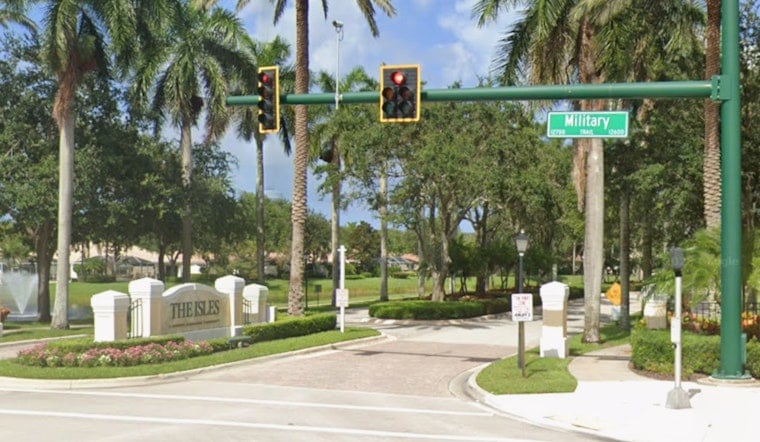
Homeowners inside the gated Isles community in Palm Beach Gardens are bracing for the sound of chainsaws this week, as the neighborhood's HOA board moves ahead with a plan to remove and replace up to 600 mature live oak trees. The first phase alone calls for taking down 170 of them, and city officials say a removal permit for that initial batch could be issued within days. The plan has split the community over questions of safety, aesthetics, and what the tree-lined streets will look like for decades to come.
At the center of the dispute are the live oak root systems that have spent years lifting and cracking the concrete sidewalks throughout the neighborhood, according to WPTV. For resident Tim Wagman, who relies on his guide dog, Summer, to navigate the neighborhood, the damaged pavement isn't just an eyesore — it makes getting around genuinely difficult.
Guide Dog Owner Says Buckled Sidewalks Are the Real Hazard
Wagman said the trees are a defining feature of the neighborhood, even as he acknowledged that the safety hazard created by the buckled walkways may ultimately outweigh the character the oaks provide, per the same report. His conflicted take reflects the broader mood among residents who love the shade but worry about tripping on their own street.
The Isles was built by DiVosta Homes roughly two decades ago as a gated development of more than 400 single-family homes and villas arranged around winding, tree-shaded streets, common green space and lakes, according to Homes.com. That original landscape design, dense with oaks planted close to narrow sidewalk swales, is now colliding with root systems that have simply outgrown their space.
A Neighbor Says Slow Down and Judge Each Tree Separately
Not every resident is on board with a wholesale removal. Neighbor C. Way Hoyt argued that each tree should be evaluated individually before a removal decision is made, rather than clearing entire blocks at once, and warned that replacing all the trees may not permanently solve the sidewalk problem.
That skepticism lines up with a broader concern raised in the report: replacement trees planted in the same tight spaces could begin lifting sidewalks and streets again within 10 to 20 years, essentially resetting the same conflict for a future generation of homeowners.
How the Three-Phase Removal Plan Came Together
According to a letter the association sent homeowners, the tree removal effort is structured as a three-phase program, though residents say they received little information from the board about what each phase would actually involve. The Isles HOA board declined a request for comment on the plan.
The City of Palm Beach Gardens approved the HOA's landscape plan earlier this year after it was filed with the city, clearing the way for the removals to move forward. Because live oaks are a regulated native species in Florida, the association needs a permit for every individual tree it takes down, a process that typically requires an approved landscape plan and city arborist review under Chapter 78 of the municipal code, according to the City of Palm Beach Gardens.
Florida Law Offers a Faster Path Around City Permits
State law does offer property owners and associations a shortcut around that permitting process. Under Florida Statute § 163.045, local governments and HOAs cannot require permits, applications or mitigation fees for removing a tree if a certified International Society of Arboriculture arborist documents in writing that the tree endangers people or property, per the Florida Senate Journal. It remains unclear whether the Isles board is relying on that hazard exemption or the standard city review process, and whether ISA-certified arborists have individually documented all 600 trees slated for removal.
Palm Beach County's Unified Land Development Code adds another layer of oversight, classifying live oaks as specimen native trees and requiring that any approved removals be mitigated based on the total trunk caliper inches taken out rather than a simple one-for-one sapling swap, according to Palm Beach County.
HOA Boards Walk a Legal Tightrope on Liability
Homeowners association boards hold broad authority over common-area landscaping decisions under Florida Statute Chapter 720, but that power comes bundled with a fiduciary duty to residents — meaning a mass removal project like the Isles' could expose board members to litigation or recall petitions if owners believe the decision wasn't handled fairly, according to Optimum Legal Services. The same firm notes that Florida premises liability law holds associations responsible for trip-and-fall injuries on common walkways, a risk that grows the longer sidewalk displacement goes unaddressed. Federal rules make that risk concrete: under Title II of the Americans with Disabilities Act, any vertical sidewalk height difference greater than a quarter-inch counts as a trip hazard requiring repair, per the U.S. Access Board.
What South Florida Loses When Mature Oaks Come Down
That liability math cuts against the ecological case for keeping the mature canopy intact. Live oaks rank among the most wind-resistant trees in South Florida, offering greater storm survival and better wind reduction than shallow-rooted palms or ornamental species, according to UF/IFAS Extension hurricane research. Mature oaks also generate more than 40 percent of the cooling and stormwater retention benefits found across Florida's urban canopy despite making up a smaller share of overall tree counts, per USDA Forest Service assessments.
Arborists say outright removal isn't the only fix for root-damaged sidewalks. Root pruning combined with root barriers, rubberized paver walkways, or simply re-routing sidewalks around root structures can address the lifting without felling the trees, according to Florida ISA Arborist Publications. Whether the Isles board weighed those alternatives before settling on mass removal is one of the questions still hanging over the project.
For now, the fight centers on that initial phase. City officials say a permit could be issued this week, according to the same report — a milestone residents on both sides of the debate say will shape how the rest of the removal plan unfolds.



