

























































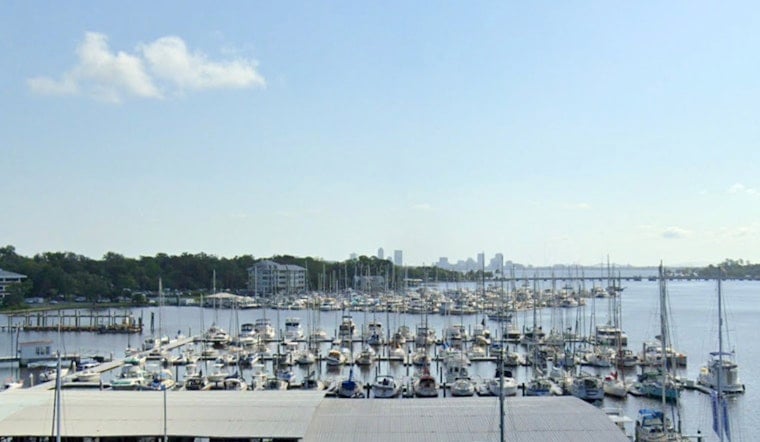
Chuck and Diane Martoia had been paying dues to Carefree Boat Club for years, expecting to reserve a boat for a trip with their grandchildren out of St. Augustine. Instead, they found an empty office and no boats at the marina. When Chuck Martoia asked a marina worker what happened, he says he was told the club had gone bankrupt and all of its boats had been repossessed the day before.
The Martoias are among a growing number of members across the Jacksonville area who say their local Carefree Boat Club locations have simply stopped functioning, even as the charges keep coming. According to News4JAX, boats have disappeared from several local marinas, and locations in Jacksonville, St. Augustine and Fernandina Beach have all suspended operations. Diane Martoia said the couple never expected the club to suddenly stop operating, and that the lack of communication from the company has been particularly frustrating.
Membership agreements for Carefree Boat Club are made with individual local clubs rather than the national network, and local monthly dues can exceed $400 a month, per the same account. On August 18, Chuck Martoia saw another $432 charge hit his American Express account, despite having no working club to use. Members say they have been unable to reach staff or make reservations since the locations went dark.
Ownership Trail Leads Back to One Name
Public records point to a specific owner behind the Jacksonville-area clubs. Florida Division of Corporations filings show Carefree Boat Club of Jacksonville, LLC was registered in the state in March 2024, listing Nicholas A. Mastroianni III as an authorized person and Carefree Club Holdings, LLLC, based in Tequesta, Florida, as its managing member. Mastroianni III acquired the entire Carefree Boat Club network as CEO in 2023, and public records indicate he appears to retain ownership of the Jacksonville-area locations even after the broader Carefree Boat Club network ownership returned to its original founder in March, the report notes.
Carefree Boat Club was originally founded in Virginia in 2002 by U.S. military veterans as a sharing-economy alternative to boat ownership, later expanding into a franchise and licensee network with nearly 150 locations worldwide. Before taking over Carefree, Mastroianni III had also led a 2017 investment in JetRide, growing that Florida-based boat club to more than 20 locations across Florida and South Carolina. As of August 2025, the North Florida footprint included corporate-managed sites at Amelia Island, St. Augustine, Jacksonville Beach and Sadler Point before those local operations were abruptly suspended this month.
Network Says It's Stable, But Local Clubs Are on Their Own
The national Carefree Boat Club network, through its attorney, told the outlet that the network is operating as usual and that there are no other impacted clubs. The network said members' accounts and reservation accounts remain active, and that members can make reservations at any Carefree location that remains open, with the closest options to Jacksonville being in Daytona Beach and St. Marys. In an email sent to members dated August 14, the network stated it is stable and that operations continue across the network.
But the network has also acknowledged its limits when it comes to the shuttered local clubs. It confirmed it is not a party to the membership agreements between customers and local clubs, and that it operates under license agreements with independently owned and operated local clubs. On the same date as its member email, the network stopped billing its own network fees for members at clubs that suspended operations, and said members do not need to take any action for that fee suspension to apply. That fee pause, however, does not suspend the separate monthly membership dues still owed to the local clubs — the very charges the Martoias and others say keep landing on their cards.
No Bankruptcy Filing Found, No Response From Owner
Despite the marina worker's account that the St. Augustine club had gone bankrupt, an I-Team review by the outlet found no bankruptcy filings for Carefree Boat Club of Jacksonville. The outlet reported that it contacted Mastroianni III and his attorney for answers, but as of publication neither had provided a response.
Mastroianni III is also named, along with Nicholas A. Mastroianni II, in a federal class-action securities fraud lawsuit filed in April in the Southern District of New York, alleging $89.6 million in investor losses tied to real estate ventures under the U.S. Immigration Fund, according to Reuters. It remains unknown whether the Jacksonville-area club's assets have entered any form of receivership or liquidation, or whether marina lease defaults led to the reported boat repossessions.
What Affected Members Can Do
Boat clubs like Carefree typically run on a target 10-to-1 member-to-boat ratio to guarantee access, with the global network managing roughly 1,600 vessels for more than 10,000 active members before this year's corporate restructuring, according to The Docks Expo & Marina Conference. When that access disappears but billing continues, federal and state consumer laws offer some recourse. Under the federal Fair Credit Billing Act, cardholders charged for recurring services that are no longer provided have up to 60 days from the billing statement date to file a formal written dispute with their card issuer, per the Federal Trade Commission.
State law may offer additional leverage. Under the Florida Deceptive and Unfair Trade Practices Act, businesses that continue automated recurring charges for services no longer being provided can face civil penalties of up to $10,000 per willful violation, along with liability for actual damages and legal fees. The Florida Department of Agriculture and Consumer Services serves as the state's primary clearinghouse for filing complaints over membership agreements and unfulfilled service contracts, offering a channel for mediation between members and merchants. Separately, Florida law governing some other prepaid membership categories, such as health studios, requires $25,000 security bonds per location to protect consumers if a facility suddenly shuts down — a comparison that underscores how differently boat clubs are currently regulated in the state.



