

























































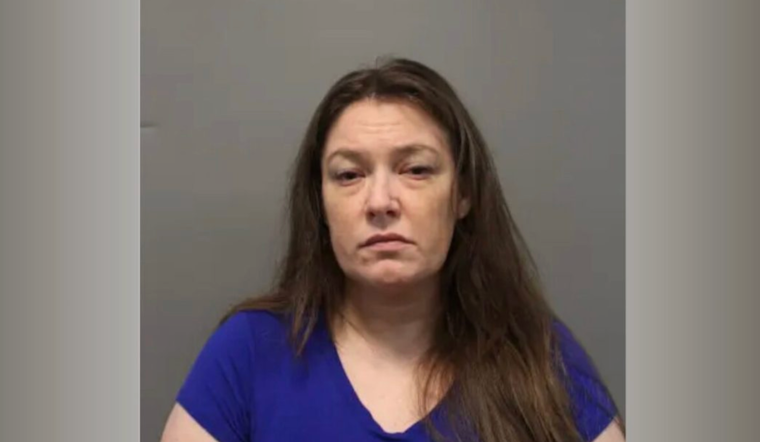
A Montgomery County judge has delayed ruling on whether Catherine Hoggle's attorneys can pursue a not criminally responsible defense, after her public defenders filed the request as a last-minute motion at midnight, leaving prosecutors without enough time to review or respond before the hearing. Hoggle is charged with the disappearance and presumed deaths of her two young children, Sarah and Jacob, who vanished from her care in Clarksburg in September 2014 and whose bodies have never been found.
The timing has become the central fight in the case. According to CBS News Baltimore, not criminally responsible pleas are usually filed within the first 15 days of a case, but Hoggle's case started last December, and her defense did not explain why the plea request came so late. Under Maryland Rule 4-242, such a plea generally must be entered within 15 days of a defendant's initial appearance or their attorney's appearance in circuit court, unless good cause for the delay is shown, according to legal filings reviewed by Westlaw.
Montgomery County State's Attorney John McCarthy said allowing the defense's late motion would “absolutely” delay Hoggle's trial, which is scheduled to start October 19, per The MoCo Show. The defense filed its insanity motion roughly seven months after the circuit court case began, the outlet reported. Hoggle's trial date remains set for October, and her next court appearance is scheduled for August 20.
A Case Reopened After Years of Psychiatric Confinement
Hoggle was ruled incompetent to stand trial for nearly a decade, a status that traces back to 2017, when a judge determined she could not be tried and she was sent to a state-run psychiatric hospital for treatment. She has a history of schizophrenia and, per the Associated Press, was diagnosed with paranoid schizophrenia in 2014. Attorney David Felsen said Hoggle suffers from severe mental illness, and she was treated with antipsychotic medications after her arrest.
Maryland's Criminal Procedure Code § 3-107(a)(1) requires courts to dismiss felony charges against a defendant found incompetent to stand trial after five years unless competency is restored or an extension is granted for extraordinary cause, a statute that forced dismissal of Hoggle's original 2017 murder indictment in December 2022. Everything changed after Hoggle was released from the state-run psychiatric hospital and later rearrested on two counts of first-degree murder in 2025, following her discharge from Clifton T. Perkins Hospital in Jessup, Maryland, the state's maximum-security forensic psychiatric facility where she had been ordered to remain.
Competency Versus Criminal Responsibility
A judge determined Hoggle was competent to stand trial last year, finding that having paranoid schizophrenia does not automatically render a defendant legally incompetent. During those competency proceedings, prosecutors presented Hoggle's recorded jail phone calls, text messages, and artwork created in prison art therapy to demonstrate her functional understanding of her own legal defense, according to the same MoCo Show report.
That competency finding is legally distinct from the insanity defense her attorneys are now trying to raise. Competency asks whether Hoggle currently understands the charges and can assist her attorneys, while a not criminally responsible plea under Maryland Criminal Procedure Code § 3-109 requires proof that, due to a mental disorder, she lacked substantial capacity at the time of the alleged offense in September 2014 to appreciate the criminality of her conduct or conform to the law. If the plea is admitted, it could force a bifurcated trial or additional psychiatric evaluations, potentially conflicting with the October trial date.
The Disappearance That Started It All
Sarah and Jacob Hoggle were 2 and 3 years old, respectively, when they went missing with their mother in September 2014. Troy Turner, the children's father, reported all three missing, and Catherine Hoggle was found days later in a nearby town without the children. She was initially arrested and charged with neglect and abduction after police said she refused to tell them where the children were; she was indicted on murder charges later that year.
Turner said Hoggle had been acting erratically and paranoid before the disappearance, but he later claimed she was feigning incompetency to avoid trial. He has maintained public advocacy for nearly 12 years, organizing search parties and testifying in court that he believes Hoggle killed their children, according to reporting cited by 10 Tampa Bay. Despite extensive searches across Montgomery County over the years, the children's bodies have never been found.
For now, the question of whether Hoggle can mount an insanity defense remains unresolved. The next hearing on August 20 is expected to reveal whether her defense team offers a formal justification for the late filing, and whether the October trial date can still hold.





