

























































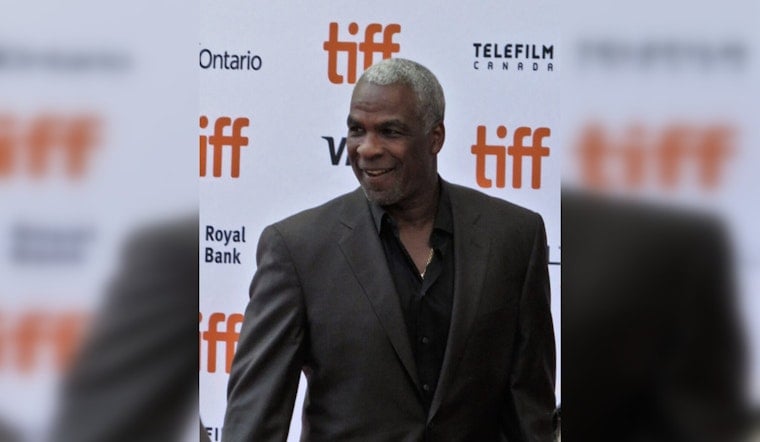
Charles Oakley's nine-year legal war with Madison Square Garden is over, and the former Knicks enforcer lost. A federal judge ruled that Oakley could not prove MSG security guards assaulted him when he was handcuffed and removed from a 2017 game against the Los Angeles Clippers, closing the book on a case that had bounced between trial and appellate courts for nearly a decade.
U.S. District Judge Richard J. Sullivan of the Southern District of New York found that Oakley produced no evidence supporting his assault claim and concluded that no rational jury could find he reasonably feared wrongful physical contact from arena security, according to The Associated Press. The judge also ruled that Oakley had not proven he was removed with excessive force. MSG presented video evidence and prior testimony indicating Oakley was not assaulted, and that footage and witness accounts showed he had an opportunity to leave the arena and was never pushed to the ground, per the same report.
The case traces back to a February 2017 night at Madison Square Garden, when Oakley was sitting near team owner James Dolan during the Clippers game and was handcuffed and arrested following an altercation with security. MSG has maintained that Oakley resorted to physical violence during the encounter. Oakley, a former New York Knicks All-Star who played forward for the team throughout the 1990s, has remained absent from the arena during the team's recent playoff runs, including this year's run to the NBA championship.
A Legal Odyssey That Outlasted Two Appeals
Oakley's path through the courts was anything but straightforward. His initial claims were dismissed in February 2020, when Judge Sullivan also dropped Dolan as an individual defendant, ruling that MSG had the legal right as a property owner to remove a trespasser using reasonable force, according to theScore. But the U.S. Court of Appeals for the Second Circuit twice revived Oakley's assault and battery claims after that dismissal — first in November 2020, then again in May 2023 — ruling both times that a jury should evaluate whether arena security used excessive force, per Wigdor LLP.
The appellate panel noted in 2023 that the initial video evidence did not capture the entire encounter, which kept Oakley's claims alive even as MSG's legal team pressed forward. Oakley's original criminal charges — misdemeanor assault and criminal trespass — never resulted in a conviction. He resolved them in August 2017 through a plea deal requiring six months without an arrest and a one-year MSG ban, after initially refusing a plea bargain and demanding a trial, according to DNAinfo. Those charges were dismissed in February 2018.
Sanctions and Spoliation Fights Along the Way
The evidentiary battles between the two sides grew increasingly bitter as the case dragged on. In October 2025, U.S. Magistrate Judge Robyn F. Tarnofsky ordered Oakley to pay MSG $642,337 in attorney fees as a sanction for failing to preserve text messages sent or received before February 2022, as reported by Complex. Judge Sullivan had previously called Oakley's failure to back up or retain his cell phone data “stunningly derelict” under federal discovery rules.
Oakley did not win every evidentiary fight, but he did land at least one. In July 2025, Judge Sullivan rejected a counter-motion for spoliation sanctions Oakley had filed against MSG, which alleged the company destroyed security staff cell phones and executive preparation binders — even as the court had separately granted MSG's spoliation motion over Oakley's own deleted texts, according to Sidley Austin LLP's account of the ruling.
Attorney Vows to Fight On as MSG Turns the Tables
Douglas Wigdor, Oakley's lead attorney, said he was disappointed with the court's rulings and said he believes the conflicting accounts from that night require a jury to decide what actually happened. Wigdor hopes the Second Circuit will remand the case for an immediate jury trial, and per Wigdor, the appeals court may take up the case once more.
MSG, for its part, said Oakley's claims had been dismissed by the court in their entirety for the third time. Following Sullivan's summary judgment ruling this week, the arena operator announced it is now pursuing legal action against Wigdor and his law firm, accusing them of pursuing frivolous litigation and false claims for over nine years.
A Rift That Predates the Ejection
Oakley's legal filings had long suggested the conflict with MSG ran deeper than a single night at the arena. In his original September 2017 federal complaint, Oakley alleged that Dolan harbored long-standing personal animosity toward him, refusing to make eye contact or shake hands during meetings and forcing him to purchase his own game tickets, according to Courthouse News Service. That framing underscored why the case carried such weight among Knicks fans — Oakley spent ten seasons in New York from 1988 to 1998, averaging 10.4 points and 10.0 rebounds per game, earning an NBA All-Star selection in 1994 and two NBA All-Defensive Team honors.
The lawsuit's collapse also lands amid broader scrutiny of how MSG manages people it considers adversaries. New York Attorney General Letitia James issued a formal inquiry to MSG Entertainment in January 2023 over its use of facial recognition technology to identify and ban attorneys from roughly 90 law firms involved in active litigation against the company, warning the practice might violate civil rights laws prohibiting retaliation. Hoodline's reporting on MSG's surveillance practices has cited Oakley's 2017 ejection as an earlier flashpoint in the company's handling of critics. The legal saga also unfolds as MSG's Manhattan operating permit approaches its 2028 expiration, amid ongoing Penn Station redevelopment proposals that could reshape the arena's future entirely.




.jpg)