

























































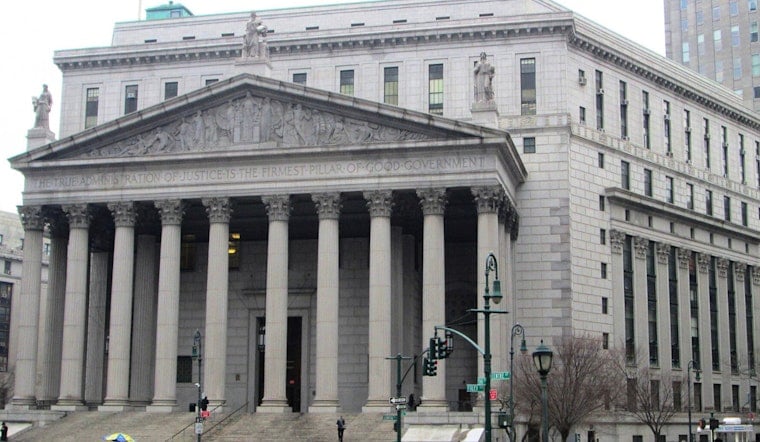
A New York State Supreme Court judge has ruled that both Mayor Zohran Mamdani and former Mayor Eric Adams violated the law by failing to release New York City's racial equity plan on time, a decision handed down Tuesday that also hands the city's equity watchdog new power to sue future administrations. Judge Phaedra F. Perry-Bond's ruling caps a legal fight that began when the Commission on Racial Equity sued City Hall a year ago over a report that was supposed to have been public more than two years earlier.
The case traces back to the charter-mandated deadline of January 16, 2024, for the city's first-ever Racial Equity Plan, a requirement born from ballot reforms that New York City voters overwhelmingly passed in 2022, as reported by Gothamist. Those reforms, detailed by the Children's Defense Fund, amended the city charter to require biennial citywide and agency Racial Equity Plans, created an Office of Racial Equity, and established the Commission on Racial Equity, known as CORE, as an independent oversight body. Adams failed to meet that April 2024 deadline, and Mamdani, after taking office, missed it as well, according to Gothamist.
A Lawsuit Born of Years of Delay
CORE filed suit against the city in August 2025, after the deadline had already passed by more than 500 days, according to a September 2025 newsletter from Narrowing the Front Door. The commission announced the suit on the steps of City Hall alongside community advocates. At the time, the Adams administration attributed the delay in part to legal concerns that publishing explicit equity criteria could invite lawsuits threatening federal funding, per reporting from the Amsterdam News. Gothamist reports that the Adams administration separately said extra time was necessary for what it described as ambitious, large-scale, unprecedented work.
The New York City Law Department had previously denied CORE's request to retain outside counsel paid for by the city, according to Gothamist, a decision that left the commission without city-funded legal representation as it prepared to challenge City Hall. Judge Perry-Bond's ruling reverses that, granting CORE the opportunity to retain outside counsel paid for by the city going forward. Her decision also grants CORE authority to sue for future delays, a provision Gothamist notes turns what had been an unenforceable deadline into one with real consequences, since the charter itself carries no built-in penalty for missing it.
What the Ruling Means Going Forward
Tyrik Washington said the ruling affirms that the racial equity plan is required by law and that CORE can hold mayoral administrations accountable, according to Gothamist. Neither Adams administration spokespersons nor Mamdani administration spokespersons responded to a request for comment from the outlet. As of the article's publication, a final version of the racial equity plan had still not been released.
Mamdani did release the city's first-ever draft racial equity plan in April, alongside an inaugural True Cost of Living measure that found 62 percent of New York City residents, roughly 5.04 million people, do not meet basic cost-of-living standards, according to CBS New York. That draft, developed with the Urban Institute, estimated an average annual resource gap of $39,603 per struggling family and found that 87 percent of children in the Bronx live below economic security thresholds, as Hoodline previously reported. Gothamist notes the draft includes improved data collection across demographics, anti-racism training for city staff, orders for agencies to direct resources toward historically underserved communities, and directives to improve recruitment and retention of workers across demographics.
Community Scrutiny Continues
After the April release, CORE conducted a 30-day citywide tour where residents pressed officials on how much of the city's $127.4 billion municipal budget would actually go toward implementing the equity goals, according to the Amsterdam News. Residents also demanded disaggregated demographic data across individual agency plans during that tour, the outlet reported.
CORE's mandate now extends well beyond the equity plan fight. Under Local Laws 91 and 92, passed in 2024, the commission's responsibilities were expanded to include advancing a municipal reparations study and establishing a citywide truth, healing, and reconciliation process, according to Forbes. CORE is led by Executive Director and Chair Linda Tigani, a former city health department equity official appointed to the role in late 2023, per the same Forbes profile. With the final plan still unreleased and Judge Perry-Bond's ruling now on the books, CORE's new authority to sue over future delays means the pressure on City Hall to finish the job is unlikely to ease.





