

























































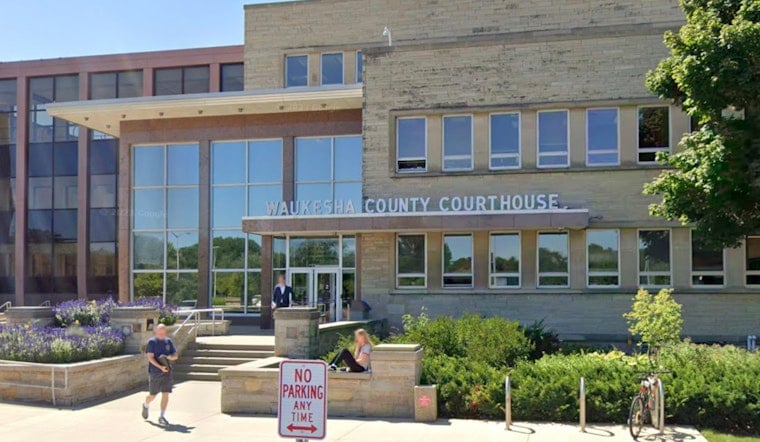
A Waukesha County judge has struck down a state budget provision that let Milwaukee County keep every dollar of its traffic fine revenue, a funding stream the county was using to pay for a dozen assistant district attorney positions. Circuit Court Judge J. Arthur Melvin III ruled on August 13 that the arrangement violates the Wisconsin Constitution, siding with a taxpayer challenge and putting the county's prosecutorial staffing back in limbo.
The order, signed August 12 according to the Dairyland Sentinel, declared Wis. Stat. § 59.25(3)(j)1.c. unconstitutional under Article X, Section 2 of the state constitution and issued a permanent injunction against Milwaukee County Treasurer David Cullen in the case, Stueland v. Cullen. The lawsuit was brought by the Wisconsin Institute for Law & Liberty on behalf of a Menomonee Falls taxpayer, and the group argued the budget provision was unconstitutional, according to the Milwaukee Journal Sentinel. WILL attorney Lauren Greuel said the decision ended what she called an unconstitutional and costly money grab by Milwaukee County.
Why the County Needed the Money
The dispute traces back to a sudden funding gap. The 12 assistant district attorney positions had previously been covered by federal American Rescue Plan Act pandemic-relief grants, which expired on July 31, 2025, as reported by Wisconsin Watch. To fill that gap, the 2025-27 state budget included a provision allowing Milwaukee County to retain 100% of its traffic fine revenues rather than splitting them with the state, per the Journal Sentinel's reporting. Governor Tony Evers and Republican legislative leaders had reached a bipartisan budget deal that included the arrangement.
Milwaukee County officials argued the funding was necessary to maintain public safety efforts, and county spokespersons identified an urgent need to keep the assistant district attorney positions staffed. A county spokesperson said the Joint Committee on Finance had developed a bipartisan solution to fund the positions. Milwaukee's criminal courts have been under strain for years, with a backlog of more than 10,000 to 12,000 unresolved felony cases in 2025 and 2026 and average felony adjudication times stretching past 200 days, according to the same Wisconsin Watch reporting. Officials warned that losing the prosecutors would only increase court backlogs that negatively affect public safety.
The Constitutional Problem
The legal issue is decades old. Wisconsin's Constitution requires that all clear proceeds from traffic fines and forfeitures go to the Common School Fund, and a 1973 state Supreme Court decision, State ex rel. Commissioners of Public Lands v. Anderson, established that counties cannot retain so much fine revenue that what's left for the school fund becomes merely nominal. Under the standard rule that applies to Wisconsin's other 71 counties, jurisdictions must send 50% of traffic fine and forfeiture revenues to the Common School Fund while keeping the other half for local administration.
Milwaukee County's 100% retention broke from that baseline, and the Legislative Fiscal Bureau estimated the arrangement would divert about $4.4 million from the Common School Fund over the two-year budget cycle, or roughly $2.2 million annually. Assembly Speaker Mark Born, a Republican, said Wisconsin courts have recognized the legislature's authority to direct fine and forfeiture money toward enforcing the laws that generate that revenue. Born added that the justice system is stretched thin and that urgent action is needed to protect lives and property.
What the Fund Actually Pays For
The Common School Fund isn't an abstraction — it directly pays for materials in public school classrooms. The fund distributed $70 million in library aid to Wisconsin public school districts in 2025 alone, covering books and instructional materials, according to the Wisconsin Institute for Law & Liberty. Born has said the fund holds more than $1.4 billion in assets. It traces back to Wisconsin's 1848 statehood, when nearly a million acres of federal land grants were sold to build the permanent trust supporting K-12 education.
The Board of Commissioners of Public Lands, which manages the fund, isn't a bystander in this fight either. In September 2025 the board passed a formal resolution acknowledging Milwaukee County's prosecutorial funding needs while still opposing the diversion of what it considers constitutionally protected education trust dollars, the Dairyland Sentinel reported at the time.
What Happens Next
It remains unclear how Milwaukee County and state lawmakers will now cover the roughly $2.2 million annual gap to keep the 12 prosecutor positions funded, or whether the county will appeal Judge Melvin's ruling. Milwaukee County spokespersons did not immediately respond to requests for comment on the order or on the county's appeal plans, according to the Journal Sentinel. Britt Cudaback, a spokesperson referenced in that reporting, said maintaining the 12 positions last year had been part of budget negotiations with Republican leaders and that Republicans alone decided how to fund the roles — but she likewise did not immediately respond to a request for comment on the new ruling.
The pay gap that pushed Milwaukee toward this funding fight is itself part of a broader statewide staffing problem. Starting pay for Wisconsin assistant district attorneys was raised to $36.72 an hour, or $80,267 annually, in recent budget cycles specifically to address recruitment and retention shortages, according to the State of Wisconsin Department of Administration — still well below the more than $115,000 average for private-sector attorneys in the state. For now, the ruling leaves Milwaukee County needing a new answer to an old problem: how to keep prosecutors on staff without touching money the state constitution has reserved for school libraries since before the Civil War.





