

























































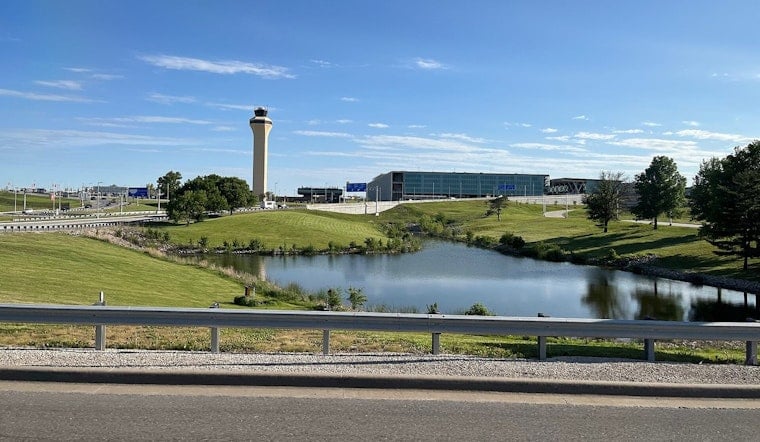
Kansas City has hit pause on its long-planned solar farm surrounding Kansas City International Airport after nine federal funding programs backing the project were canceled, Mayor Quinton Lucas announced on Friday, August 28, 2026. The project, first unveiled in August 2023, was designed to generate more than 500 megawatts of electricity and had been billed as enough to power roughly 70,000 homes, about one-third of all households in Kansas City.
Lucas attributed the funding collapse to a shift in federal priorities, saying the current federal administration and the majority of Congress are simply not focused on clean energy the way the previous one was. As reported by KCTV5, the mayor said the cancellations left a budget gap the city cannot currently close, and he did not name the nine programs that were pulled. KCTV5 has requested a full list of the canceled programs along with a dollar estimate of the shortfall from the city.
The scale of what was lost is significant. Lucas introduced legislation in August 2023 to advance the roughly 3,000-acre array, which could have included more than 500 solar panels spread across airport land. The project was intended as a long-term investment in Kansas City's ability to generate its own renewable power, and city officials have said that kind of generation could help keep Kansas City affordable as energy costs rise nationally, according to the same KCTV5 report.
A Consortium Built to Design, Build and Maintain the Array
Kansas City selected the 816 Solar Consortium in September 2023 to design, build and maintain the airport solar farm, a group made up of regional utility Evergy, engineering firm Burns & McDonnell, solar developer Savion, and construction company Herzog, according to Flatland KC. All four companies are headquartered or heavily established in the Kansas City area. The plan called for phased construction, starting with an initial 35-megawatt array across 136 acres before scaling toward the full build-out, per reporting from Engineering News-Record.
The arrangement was also structured to bring money into city coffers without spending taxpayer funds. Kansas City was set to collect up to $300,000 annually in land rental payments from the consortium for leasing undeveloped airport property, a private lease model rather than a city-financed utility buildout, Flatland KC's reporting shows. That revenue stream is now on hold along with the rest of the project, and the city says it will continue looking for new funding opportunities for the KCI project and similar developments, and intends to restart the effort once federal priorities shift again, per KCTV5.
Not KCI's First Brush With Solar Setbacks
This isn't the first time solar plans at the airport have run into trouble. Evergy and Kansas City previously canceled a proposed 5-megawatt solar array atop KCI's new parking garage back in December 2020, after an FAA-mandated glare study, according to Canary Media. The Kansas City Aviation Department later initiated a formal Federal Aviation Administration Environmental Assessment process meant to clear non-aviation development zones at the airport ahead of any panel installation, a step the aviation department outlined in project documents.
The pause complicates a city that has staked real climate commitments on projects like this one. Kansas City's Council adopted its Climate Protection & Resiliency Plan in August 2022, setting targets for net-zero greenhouse gas emissions from municipal operations by 2030 and citywide by 2040, according to the Sierra Club. The KCI array was presented as a sustainability initiative, and the city's stated priority remains clean energy paired with revenue-generating development, per KCTV5's reporting.
How KCI's Scope Stacked Up Nationally
Had it been built at full scale, KCI's solar farm would have dwarfed similar projects elsewhere in the country. Washington Dulles International Airport broke ground in August 2023 on a 100-megawatt, 835-acre solar and battery storage facility slated to come online in late 2026, currently the largest airport solar project in the United States, according to a PR Newswire announcement. KCI's full 500-megawatt scope would have been roughly five times larger than Dulles.
The federal financing tool that made ambitions like KCI's possible in the first place came from the Inflation Reduction Act, which Joe Biden signed in 2022 and described as the largest investment by the federal government in clean energy in the nation's history. Under that law, local governments and tax-exempt entities gained access to direct pay tax credits, letting them receive cash payments from the IRS covering 30% or more of clean energy project costs, according to the World Resources Institute. That mechanism allowed non-taxable public entities to monetize clean energy tax credits for the first time.
Evergy Leaning Into Natural Gas as Demand Climbs
Even as the solar farm sits frozen, Evergy is pressing ahead with a different kind of power buildout. The utility announced plans in October 2024 to construct two 705-megawatt combined-cycle natural gas generation plants in Kansas by 2030, aimed at meeting rising regional power demand from data centers and economic growth, per a Business Wire release. The planned plants would add natural-gas generation to the regional power supply. According to Evergy Missouri West's 2026 Annual Update Integrated Resource Plan filed through the Missouri Public Service Commission's EFIS system, power demand forecasts were revised up for the third year running, led by data centers. Evergy's First Quarter 2025 Earnings Call materials cited ~1.3 GWs from two data center projects, including one project in Kansas, and included them in a 2-3% demand forecast.
The Mid-America Regional Council has also built a voluntary regional climate framework targeting net-zero regional emissions by 2050, with action by 19 local governments. KCI's stalled buildout sits squarely inside that bi-state sustainability push, even as the city's own timeline for the project now has no announced restart date.
Hardesty Redevelopment Moves Forward Separately
One project that is not affected by the KCI pause is the redevelopment of the former Hardesty Federal Complex, a 22-acre former Army quartermaster depot that has sat vacant for four decades. KCTV5 reports that this effort is privately driven and separate from the city-led KCI array. The Arnold Development Group has proposed converting the site into 500 affordable apartments, along with retail space, a daycare center, and a solar energy farm.
The Environmental Protection Agency awarded Kansas City $4.5 million in brownfield cleanup funding in September 2024, money partly earmarked for redeveloping the Hardesty site. KCTV5 has contacted the Kansas City Aviation Department and the city about existing contracts and airport operations tied to the paused solar project, and the outlet notes the KCI solar panels themselves were supplied by a Lawrence, Kansas, company and installed by Staco Electric Construction back in 2023, work that remains in place even as the broader expansion sits on hold.





