

























































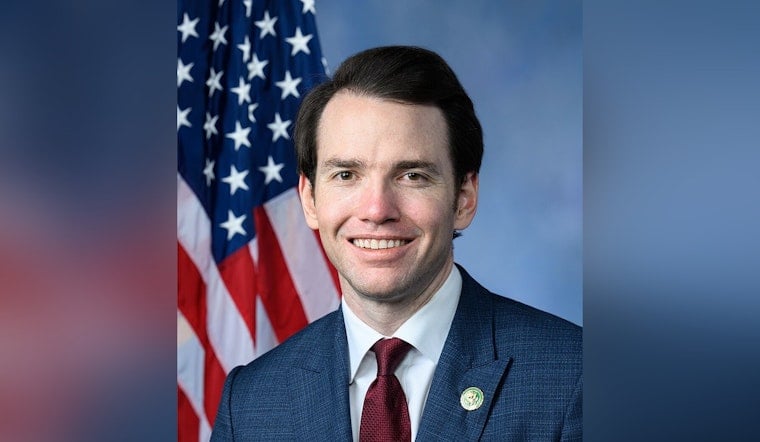
Kevin Kiley and Richard Pan stood on a Sacramento stage together for the first time as general election rivals on Monday, and it took no time at all for the two men to start picking apart each other's records. Kiley hammered Pan over a nearly decade-old vote to raise California's gas tax, while Pan countered that Kiley's voting record in Congress betrays the independent image he has tried to build.
The debate, held on August 17 in Sacramento, was hosted by The Sacramento Bee and moderated by Tom Philp, Mathew Miranda and Marcos Bretón, according to the outlet's account of the event. It marked the first face-to-face matchup between Kiley, the sitting U.S. representative from Rocklin, and Pan, a pediatrician and former state senator, since both advanced out of the June 2 top-two primary to compete for the newly redrawn 6th Congressional District seat.
Much of the early exchange centered on blame. Kiley pointed to Sacramento as the source of problems facing district voters, while Pan pointed the finger at Washington, per the Bee's reporting. Kiley argued that Pan would, in his words, press every button Democratic leaders wanted if elected, framing his opponent as a reliable partisan vote rather than an independent voice.
The 2017 Gas Tax Fight Resurfaces
Kiley zeroed in on Pan's 2017 vote for a transportation package that raised California's gas tax by 12 cents per gallon and increased diesel taxes as well, a law known as the Road Repair and Accountability Act. As CapRadio has reported, Kiley has repeatedly targeted Pan over that vote as the race has unfolded. Pan, for his part, stood by the decision, telling the debate that the gas-tax increase paid for necessary road repairs and that the hike was justified to improve the state's infrastructure.
Pan also turned the conversation toward federal policy, blaming Donald Trump and Republicans in Washington for raising costs and cutting services for district residents. He argued that H.R. 1, the Trump-backed federal law that Kiley voted for, includes Medicaid changes that could cause some recipients to lose coverage under new work requirements — changes that would require states to spend money simply to administer those requirements, according to the Bee's account of the debate.
Immigration and Identity Politics
Kiley accused Pan of opposing immigration enforcement, a charge Pan denied outright. Pan said immigration enforcement is necessary but must follow the law, and he reiterated his support for a path to citizenship for people already living in the United States.
Pan also used the debate to argue that Kiley's congressional voting record aligns him with Republicans and undercuts his independent branding — a pointed jab given Kiley's decision earlier this year to drop his GOP registration. As Hoodline previously reported, Kiley changed his registration from Republican to No Party Preference in March while keeping his caucus membership with House Republicans intact to preserve his committee assignments. Kiley told the debate audience that he supports independent representation that works with both parties, and that his willingness to cross the aisle is a strength, not a liability — adding that he opposes policies of either party when they threaten quality of life.
Gaza and War Powers Also Surfaced
The two men also sparred over foreign policy. Kiley rejected characterizing Israel's actions in Gaza as genocide, arguing that the October 7 Hamas attack on Israel was a more appropriate context for that kind of terminology. Pan, who called for a two-state solution and described the situation in Gaza as a humanitarian crisis, did not characterize Israel's actions as genocide either — a point on which the two candidates did not actually disagree, even as they framed the issue differently.
Kiley also defended his opposition to congressional efforts to limit Trump's war powers, calling war-powers resolutions symbolic. The exchange came against a backdrop of gas prices that have risen roughly $1 per gallon since the war with Iran disrupted oil shipments through the Strait of Hormuz, a detail that fed into the broader cost-of-living arguments both candidates made throughout the evening.
An Open Seat Born of Redistricting
Neither candidate is defending a seat they have long held in its current form. California's 6th District was reshaped by Proposition 50, the mid-decade redistricting measure that CalMatters reports voters approved in November 2025, transforming the district into a Democratic-leaning seat that now includes suburban communities like Roseville and Rocklin. The same measure dismantled much of California's old 3rd Congressional District, which Kiley had represented before the new maps took effect, pushing him into the 6th District race altogether.
Registration in the redrawn district now runs roughly 39% Democratic, 31% Republican and 22% No Party Preference, according to CalMatters, numbers that help explain both Kiley's rebrand and the intensity of Monday's exchanges. Democratic Representative Ami Bera, who had represented the pre-redistricting 6th District, opted to run instead in the redrawn 3rd District, leaving the 6th an open seat that neither Kiley nor Pan has held before.
Kiley said voters deserve to hear from both candidates several times before ballots are issued, and he has pushed for a broader series of five debates across the district ahead of the November general election, a push CapRadio detailed in July. He said he wanted additional opportunities to debate Pan directly. Financial disclosures through June 30 show Kiley with a substantial advantage heading into the fall, holding more than $2.1 million in cash on hand from nearly $2.98 million raised, compared with Pan's $359,000 in cash on hand from $1.09 million raised, according to Federal Election Commission filings cited by Ballotpedia.
Pan built his political identity in Sacramento well before this race, co-authoring Senate Bill 277 in 2015 as a state senator, a law that eliminated non-medical personal belief exemptions for school immunizations following a 2014 measles outbreak at Disneyland. Kiley, meanwhile, ran as a Republican candidate in the 2021 recall election against Governor Gavin Newsom, placing sixth among replacement candidates with 3.5% of the vote, and was endorsed by Trump as a “MAGA champion” in 2022. Both records were part of the backdrop Monday as voters got their first extended look at the two men sharing a debate stage.




