

























































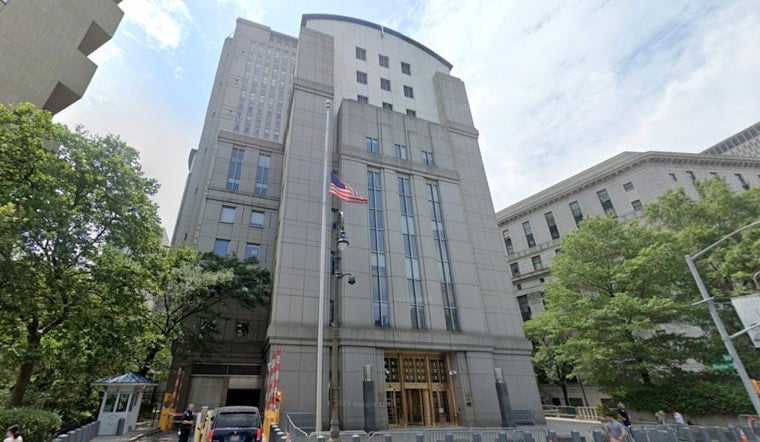
The private equity giant KKR has agreed to pay $250 million to settle a U.S. antitrust case accusing the firm of repeatedly violating federal premerger filing requirements across at least 16 transactions. The Justice Department says the penalty, filed with the U.S. District Court for the Southern District of New York, is the largest civil fine ever imposed for violations of the Hart-Scott-Rodino Antitrust Improvements Act.
According to the Justice Department's complaint, KKR altered documents in filings for at least eight deals, failed to submit any filing at all for at least two deals, and systematically omitted required documents in filings for at least 10 deals. The Hart-Scott-Rodino Act requires companies to notify antitrust regulators of certain mergers and acquisitions before they close, giving the government a chance to review deals for competitive harm before money changes hands, as Reuters reports. KKR made more than 100 premerger filings since 2021 and, per the government's allegations, was well familiar with what the law required.
KKR did not dispute agreeing to the settlement but pushed back hard on how the government described its conduct. The firm said it acted in good faith at all times under its prior filing process and that the process was consistent with industry practice, according to the same Reuters report. In a separate statement, KKR said outside law firms will reimburse the $250 million penalty in full and that the fine will have no financial impact on KKR, its funds, or its investors.
A Penalty More Than 20 Times the Old Record
Associate Attorney General Stanley Woodward said the settlement sends a powerful message that the department is committed to vigorous enforcement, according to the Justice Department. The department has stated that the $250 million figure is more than 20 times larger than any prior HSR Act civil penalty it has ever obtained, according to the Department of Justice. Under federal regulations governing the act, statutory civil penalties for noncompliance with premerger reporting rules exceed $50,000 per day per violation, a formula that helps explain how fines of this size get calculated in the first place.
The case had a long runway before landing at $250 million. When the Justice Department originally sued KKR in January 2025, in the final week of the Biden administration, it sought more than $650 million in civil penalties tied to the same 16 deals, which carried a combined transaction value exceeding $24.7 billion, per Claims Journal. Notably, KKR and the Justice Department had reportedly reached a tentative agreement on a $250 million settlement shortly before the 2024 presidential election, though that deal was never finalized at the time — meaning the final number ultimately matched what had been on the table nearly two years earlier.
KKR Fired Back With Its Own Lawsuit
Rather than settling quietly, KKR GP countersued the DOJ and FTC in January 2025 in Washington, D.C. federal court, alleging that antitrust enforcers were weaponizing confusing and contradictory HSR rules to chill private equity dealmaking, according to Holland & Hart LLP. KKR argued that any filing errors amounted to immaterial paperwork mistakes rather than deliberate evasion. Both the Biden administration and, later, the Trump administration continued scrutinizing merger activity and compliance with merger-review rules throughout the litigation, per Reuters.
The proposed Final Judgment filed in August 2026 spells out concrete consequences if KKR does not pay up. The firm must transfer the $250 million penalty within 30 calendar days of the judgment's entry, and any default or delayed payment accrues interest at an annual rate of 18 percent, according to court documents cited by the Department of Justice. The judgment covers all KKR entities for transactions filed prior to 2025.
Part of a Broader Federal Crackdown
KKR's case is not the only recent example of federal regulators cracking down on premerger filing evasion. In July 2026, the FTC and DOJ secured a $12 million civil penalty against Edwards Lifesciences and Genesis MedTech over transaction structures designed to evade premerger filing thresholds, according to Stinson LLP. That $12 million figure had briefly stood as a record for HSR failure-to-file cases before KKR's much larger settlement eclipsed it weeks later.
At the same time, the DOJ's Antitrust Division has signaled it wants merger review itself to move faster. The division announced in July 2026 that it was returning to targeted Second Request investigations meant to streamline merger reviews and reduce bureaucratic burdens for companies, a shift that suggests regulators want to focus enforcement resources on specific competitive harms rather than blanket scrutiny of every deal.
KKR, headquartered in New York, reported total assets under management of more than $700 billion, according to Reuters, with the Justice Department's own 2026 filings citing a figure over $744 billion. Whichever number is used, the settlement lands on one of the largest investment managers in the world — one now on record insisting its filing practices were standard for the industry even as it pays a fine that dwarfs anything the government has previously collected under the law.





