

























































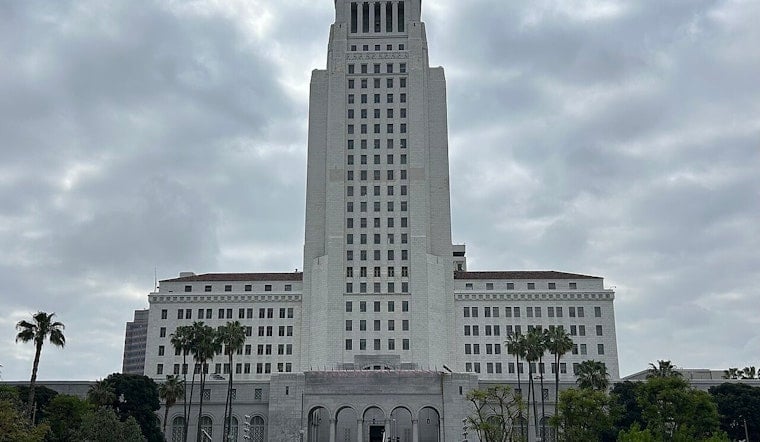
Los Angeles City Council members voted 12-2 to direct city attorneys to draft tougher municipal rules cracking down on employers who skip out on overtime pay, meal breaks, rest breaks and on-time wages. The move targets low-wage workers across the city, but it also reopened a fight over whether Los Angeles has the staff and money to actually enforce what it is proposing.
The council approved a motion from Hugo Soto-Martinez, Tim McOsker and Katy Yaroslavsky instructing city attorneys to draft amendments to Los Angeles Municipal Code Section 188.00 and related ordinances, according to MyNewsLA.com. Soto-Martinez said the effort was necessary to protect workers across Los Angeles, arguing that employer wage theft harms entire communities. He cited figures showing low-wage workers in the city experience some form of wage theft and lose an average of 12% of their annual income to it, and he put the citywide toll at more than $1.4 billion in stolen wages every year — a figure that traces back to a UCLA Labor Center study finding low-wage workers across Los Angeles County lose an estimated $26.2 million per week to wage and hour violations.
The proposed amendments would grant the Bureau of Contract Administration director authority to issue administrative subpoenas, giving investigators new power to compel records from employers accused of shorting workers. The office would also be instructed to develop a public database tracking workplace complaints, completed investigations, violations found and the penalties issued as a result. McOsker said city staff had conducted comprehensive outreach through numerous hearings and committee sessions over the past three years, part of an effort the council began in 2023.
Two Council Members Push Back
Not everyone on the dais was on board. Monica Rodriguez and Traci Park both voted against the proposal, with Rodriguez raising the sharpest objections. She argued the process did not thoroughly assess potential industry impacts and warned the city could create more barriers and harm businesses trying to remain operational. Rodriguez also raised concerns about duplicative procedures, noting that California already conducts its own investigative oversight for wage theft claims.
Katy Yaroslavsky, one of the motion's original authors, was absent from the vote itself. McOsker acknowledged the practical strain the plan could put on the city's existing enforcement arm, saying he was concerned about the Bureau of Contract Administration's capacity given staff turnover. Even so, he argued the city should intervene where the state has failed, and said Los Angeles would build the resources and capacity needed for its long-established bureau.
An Enforcement Office Already Stretched
The Bureau of Contract Administration is not fully funded, and it currently lacks the staffing to oversee additional wage-theft enforcement work on top of its existing duties. That shortfall has already forced Los Angeles officials to pause a separate effort to reevaluate worker classification, a pause officials say was needed to ensure the bureau was prepared to recruit and retain staff before taking on more.
The office in question, the Office of Wage Standards within the Bureau of Contract Administration, was created by Ordinance No. 184313 in 2016 to enforce the city's local minimum wage and paid sick leave laws, according to the Los Angeles City Clerk. Under that existing framework, employers found guilty of wage theft can already face administrative penalties and be referred to the Los Angeles Police Commission to have municipal police permits denied, suspended or revoked. The new amendments would expand the Bureau of Contract Administration Office of Wage Standard's reach to investigate and increase enforcement against employers who fail to provide overtime payment, late pay, meal breaks or rest breaks — gaps that current city law does not adequately police, since existing rules largely stop short of covering employees who work through lunch, miss required 10-minute rest breaks or clock time off the books.
Why City Leaders Say the State Isn't Enough
The push for local muscle comes as state-level wage theft enforcement has buckled under its own weight. A May 2024 audit by the California State Auditor found the state Labor Commissioner's Office had accumulated a backlog of 47,000 unresolved wage theft claims by fiscal year 2022–23, with cases taking more than two years on average to resolve rather than the 135-day limit set by law. State auditors attributed much of the backlog to severe understaffing and high vacancy rates. Even when workers do win their claims, the same audit found the state's Judgment Enforcement Unit recovers the full amount of back pay owed in only 12% of cases, often because delinquent employers close up shop or hide assets before collection finishes, as reported by the LA Times.
Those delays have not let up. A July 2026 report by California Rural Legal Assistance examined 472 wage theft clients represented before the state Labor Commissioner between 2018 and 2026 and found that not a single one had a claim adjudicated within the legally required 135 days. That left 214 clients still waiting on more than $5.6 million in unpaid wages and penalties, with the organization noting that multi-year delays disempower workers while giving delinquent employers little incentive to respond to claims.
State law does carry criminal teeth for the worst offenders. Under Assembly Bill 1003, which took effect in January 2022, intentional wage theft exceeding $950 from a single worker, or $2,350 total from two or more workers within a year, counts as grand theft and can bring a felony charge with up to three years in prison. That statute expanded existing grand theft provisions to cover independent contractors and the businesses that hire them.
Layered on Top of Existing City Wage Rules
The proposed changes would build on a patchwork of city wage laws already on the books. Los Angeles' general minimum wage rose from $17.87 to $18.42 per hour effective July 1, adjusted annually based on regional cost-of-living data. Hotel workers covered under the city's Citywide Hotel Worker Minimum Wage Ordinance now must be paid $25.00 per hour plus a mandatory $4.25 hourly health benefit payment, with that hospitality wage set to scale up further ahead of the 2028 Olympic Games. Retail employers with 300 or more workers globally are separately required under the Fair Work Week Ordinance to give staff 14 days' advance notice of their schedules and pay predictability premiums for last-minute shift changes.
Under Section 188.00, the new protections would specifically benefit workers earning two-thirds or less of Los Angeles' median household income — the low-wage workforce that city leaders say bears the brunt of unpaid overtime, skipped breaks and delayed paychecks. Whether the expanded authority translates into faster relief for those workers will likely hinge on whether the city follows through with the staffing and budget the Bureau of Contract Administration says it still needs.





.jpg)