

























































A Los Angeles-area professional fiduciary accused of stealing more than $6 million from elderly and disabled clients allegedly wrote 19 checks to himself totaling $670,000 from one client's accounts in a single year — and never disclosed them on the financial report he filed with the court. Gregory Oveross and his accountant, Faranita Corvalan, are now awaiting trial on felony grand theft and tax evasion charges after prosecutors say the scheme unfolded over more than six years, largely unnoticed by the courts and regulators meant to catch it.
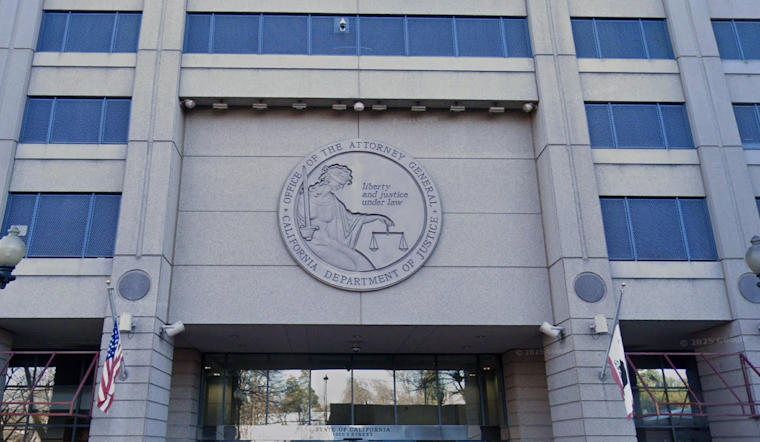
California Attorney General Rob Bonta announced the charges on June 9, alleging Oveross and Corvalan stole from five client trusts, estates and conservatorships between August 2018 and October 2025, according to MyNewsLA. Both defendants have pleaded not guilty and were released on bond, as detailed by LAist, which reported that the attorney general's office described Oveross' alleged conduct in an arrest declaration as a systematic and pervasive pattern of asset misappropriation, discrepancies, unauthorized fund diversions and non-compliance with probate court mandates.
A Dementia Patient's Missing Inheritance
Los Angeles Superior Court appointed Oveross conservator of Jean C. Elbert in August 2018. Elbert, who had dementia, died in August 2019, and the court later ordered Oveross to deliver her inheritance to her heirs, per LAist's reporting. Oveross reported $1.8 million available for distribution, but the attorney general's office said he never paid a $1.7 million inheritance to beneficiaries and made $1.3 million in unauthorized payments from Elbert's accounts, including the $670,000 in checks written to himself. He did not send $764,000 owed to Elbert's brother, and Los Angeles Superior Court Judge Deborah L. Christian had approved his financial report despite the 19 checks never appearing on it.
Oveross allegedly ran a similar pattern managing Guadalupe Rodriguez Diaz's $2 million estate after her 2019 death. State prosecutors allege he opened a secondary set of accounts and transferred funds to himself, Corvalan and another trust he managed, according to CalMatters. He reported $1.6 million remaining for Diaz's beneficiaries after bills were paid, but her heirs received no money from the estate accounts, the outlet reported. The attorney general's office has characterized the alleged conduct as a Ponzi-style scheme targeting people unable to care for themselves.
Warning Signs on Paper, Missed in Court
Oveross left blank the check-number column on a required state accounting form — an omission Alameda County probate court supervising judge Sandra Bean said should be an immediate red flag for reviewing courts, since not having check numbers would be a big warning sign. Attorney Rob Oftring told the same outlet that an attorney reviews fiduciary accountings for required information, supporting documentation, explanations, accuracy and balance, underscoring how far this case allegedly slipped past that scrutiny.
Oveross also submitted annual statements in 2022 and 2023 that failed to answer whether he had settled complaints, and he omitted a case involving alleged wrongdoing from at least one of those statements — all signed under penalty of perjury. A client and Elbert's nephew each filed complaints against Oveross with the Professional Fiduciaries Bureau in 2023. A bureau investigator forwarded those complaints to the California Department of Justice, yet the bureau still issued Oveross a valid license in both 2022 and 2023, allowing him to keep working with clients for more than two years while under criminal investigation.
A Regulator Built to Depend on Courts
The Professional Fiduciaries Bureau, established roughly two decades ago to protect consumers, depends on courts to police fiduciaries, while courts in turn often lean on the bureau to catch problems — a structure that left mutual blind spots in the Oveross case, per the CalMatters investigation. When the bureau suspended Oveross' license less than two weeks after his arrest, it ordered him to turn over a complete list of every matter in which he had served as a fiduciary — a basic client roster he was already required to report annually.
California lawmakers passed a 2006 law requiring fiduciaries to provide more detailed documentation of client spending, and Governor Gavin Newsom signed a 2021 law requiring courts to notify the bureau when judges punished fiduciaries for license abuse. But that notification requirement has never been funded, and state law still does not require courts to automatically schedule a hearing reviewing estate distributions. Assembly Bill 1194, enacted in September 2021, separately required fiduciaries to post fee schedules publicly and mandated licensing sanctions for misconduct, though its judicial notification provisions likewise went unfunded, according to LegiScan.
A Statewide Pattern of Slow Oversight
Fewer than 2,000 licensed professional fiduciaries operate in California, yet they manage billions of dollars in client trusts, estates and conservatorship accounts. State oversight data published this year found the bureau took an average of more than two years to resolve serious disciplinary cases, a backlog Hoodline examined in its look at fiduciary oversight delays tied to bare-bones staffing and frequent leadership turnover at the agency.
The case lands amid a sharp rise in elder financial exploitation statewide: California seniors lost $1.4 billion to fraud in 2025, a 68% increase from 2024 and the highest total in the nation, according to the California Elder Fraud 2025 Report. California Penal Code Section 368 enhances criminal penalties for grand theft and financial exploitation committed against elders and dependent adults by people in positions of trust, a framework that applies directly to the felony charges Oveross and Corvalan now face.
Los Angeles Superior Court changed its rules in January to automatically schedule follow-up review dates after judges approve final distributions — a shift that came after Oveross' alleged conduct had already gone undetected for years. Court officials and the Professional Fiduciaries Bureau missed warning signs before Oveross was charged, and the case echoes an earlier one out of the same city: in 2024, Los Angeles fiduciary Donna Bogdanovich was accused of siphoning over $1 million from special needs trusts, a case Hoodline also covered. Oveross and Corvalan remain out on bond as they await trial.





