

























































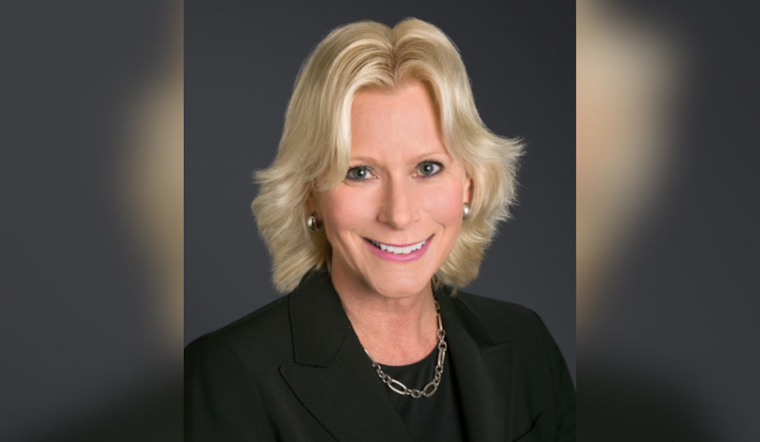
Lake County Commission Chair Leslie Campione is seeking a fifth term representing District 4, facing a challenge from David Williamson, owner of Wida Outdoors Bait and Tackle shop in Astor, in the August 18 Republican primary. The race has drawn a stark financial mismatch, with Campione reporting more than $152,000 in contributions compared to Williamson's roughly $11,000, and it comes as both candidates court voters over how the fast-growing county should manage rural land, water resources, and development pressure.
Campione, who was first elected to the Lake County Board of County Commissioners in 2010 and was unanimously selected as commission chair in 2018, was elected to her fourth term in 2022 after running as a write-in candidate that year, according to the Orlando Sentinel. An attorney who owns her own law firm, she previously served as municipal city attorney for the Town of Lady Lake, the Town of Montverde, and the City of Umatilla, according to Lake County Government, and she earned her law degree with honors from the University of Florida in 1989. Campaign finance filings from the Lake County Supervisor of Elections show Campione has spent $66,594.97 of her contributions so far, while Williamson has spent $9,349.22 of his.
Williamson, a U.S. Coast Guard-certified captain who graduated from Umatilla High School, has centered his campaign on growth management, per the Sentinel. He has pledged to serve no more than two terms if elected and to donate a minimum of 25% of his salary to local charities and first responders, and he supports term limits more broadly. Williamson has said rural, agricultural, and green lands should not all be rezoned for development, and that he would limit projects seeking rezoning for higher density than initially proposed.
Straw Poll and Fundraising Gap
Campione won the County Commission District 4 straw poll at the South Lake Chamber of Commerce's annual Lake County Hob Nob event on July 27, an event that drew roughly 500 attendees with 250 casting ballots, according to the South Lake Chamber of Commerce. The fundraising disparity between the two campaigns is wide: Campione has received $152,881 in monetary contributions, while Williamson has received $11,125, per the Sentinel's reporting on Supervisor of Elections filings.
Campione has said she deserves reelection for putting Lake County residents first, and her campaign has focused on protecting rural lands from annexation into cities for rural subdivisions and stopping activities that could damage water quality or override property rights, according to the Sentinel. She has identified herself as a strong advocate for water quality and environmental protection and says she promoted water quality measures during her time as commissioner. She also supports reprioritizing and accelerating infrastructure projects, reducing congestion on county roads, and opposes tax increases and growth measures that negatively affect quality of life, while backing immediate measures to lower homeowners' insurance premiums and pushing the state to replace outdated funding formulas.
Waterways and Rural Character at Stake
Williamson has made protection of county waterways a major campaign pillar, highlighting ecosystem damage he attributes to chemical sprays intended to control plants, and warning that drought and pollution of dwindling water supplies could cause devastation, per the Sentinel. Both candidates campaign on protecting rural character and local waterways, though Campione has emphasized her long legal and municipal experience as a way to manage growth responsibly without triggering costly litigation, according to a campaign video posted to Facebook. Williamson, meanwhile, argues that 16 years in office is too long and calls for stricter limits on rezoning and chemical plant control, according to Ballotpedia.
The tension over growth is not abstract. Lake County's population grew by 2.8% between 2024 and 2025, adding about 12,600 residents to reach an estimated total of more than 456,000, according to USAFacts data drawn from the U.S. Census Bureau. The county's population has expanded by more than 40% over the past decade, a surge that has intensified pressure on rural land, roadways, and water supplies. That growth has already shaped recent commission decisions: in July, the Lake County Board of County Commissioners voted unanimously to direct staff to draft a one-year moratorium on new data center developments in unincorporated parts of the county, citing concerns over heavy water and electricity consumption, as Hoodline previously reported.
A Closed Primary and a Crowded Ballot Ahead
Because write-in candidates filed for the general election, Florida's closed primary rules restrict voting in the August 18 primary solely to registered Republicans, according to ClickOrlando. Florida law converts primaries into universal open elections only when there is no general election opposition at all, which is not the case here. Vance Jochim and Tommie Powers have both filed as write-in candidates for the seat, and Eric Lomberk previously failed to qualify as a challenger to Campione in 2022.
Whoever wins the Republican primary will go on to face Democrat Egor Emery, along with write-in candidates Jochim and Powers, in the November general election, per the Sentinel. Lake County commissioners must live within the district they represent, but they are elected at-large by voters across the entire county, according to Lake County Government. Campione has also weighed in on other high-profile land-use matters recently; on August 11, the Lake County Commission voted 4-1 to table a proposal on Embry-Riddle Aeronautical University's plan to expand an airfield near the Ocala National Forest, with Campione supporting the delay to ensure due process for nearby property owners, according to Central Florida Public Media. She also supported moving forward a one-mill school property tax referendum for the 2026 ballot to fund teacher pay and campus security, a measure the commission approved 3-1 in April, as Hoodline reported at the time. Local government, Campione has said, should deliver essential services efficiently to keep costs down for residents.


