

























































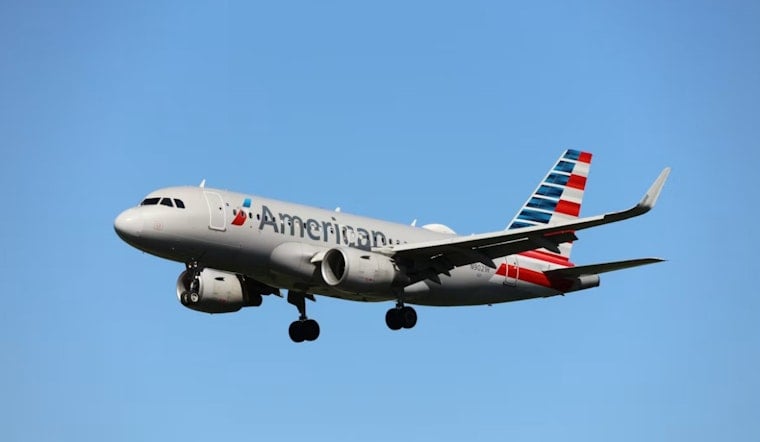
A laptop caught fire in the middle of the cabin aboard American Airlines Flight 2398 as the plane approached Dallas Fort Worth International Airport, prompting the pilot to radio air traffic control with concerns that several passengers had been burned. The flight, which originated in Atlanta and carried 133 people on board, landed safely at DFW after the crew contained the device and put out the fire.
According to CBS News, the pilot reported a cabin fire in the back of the airplane and said, per air traffic control audio, that about four to five passengers may have been burned by the laptop. Flight attendants worked to put out the fire, and the American Airlines crew ultimately contained the device about mid-aircraft. CBS News reported that it had reached out to the Federal Aviation Administration for comment on the incident.
The numbers coming out of the cockpit and the numbers coming from the ground told two different stories. While the pilot's radio transmission raised the possibility of multiple burn injuries, an airport statement said only one passenger was treated and released after the flight landed at DFW. American Airlines, for its part, said the flight landed safely after smoke was reported from a customer's device during landing — a more clipped account than the mid-flight fire described over the radio.
How a Laptop Battery Turns Into a Cabin Emergency
The process behind incidents like this one is known as thermal runaway, a chemical chain reaction inside a lithium-ion cell that can occur without warning. Per the report from CBS News, thermal runaway can result from an overheated, overcharged, improperly packed, damaged, or water-exposed battery — any of which can turn a laptop or phone into an open flame in seconds. The FAA has said lithium batteries in laptops and cell phones can pose risks on flights due to overheating, and the agency maintains size limits for lithium batteries permitted on board.
Standard cabin firefighting protocol calls for flight attendants to first put out any visible flame, then use water or another non-alcoholic liquid to continuously cool the battery, since a fire extinguisher alone will not stop the cell from reigniting, according to Airbus Safety First. Once cooled, the device is typically sealed inside a certified thermal containment bag to isolate it from the rest of the cabin. That is broadly consistent with how the Flight 2398 crew is described as having contained the laptop after extinguishing the fire.
Part of a Rising National Pattern
This is not an isolated event. The FAA has recorded at least 56 lithium battery incidents involving fire, smoke, or extreme heat on commercial flights in 2026, per FAA data, following 97 such incidents the year before, according to the Federal Aviation Administration. A separate industry report from UL Standards & Engagement found that inflight lithium-ion thermal runaway events rose 15% from 2024 to 2025, reaching an average of 2.36 incidents per week across more than 40 reporting carriers.
Those events carry a real financial toll. UL Standards & Engagement estimated that thermal runaway incidents cost commercial passenger airlines roughly $1.8 million annually in damages and disruptions between 2021 and 2024, averaging about $96,000 per event, with 12% resulting in diversions or emergency landings. FAA historical data covering 579 battery incidents on U.S. aircraft from 2006 through late 2024 found battery packs were the most common culprit at 229 events, followed by e-cigarettes, cellphones, and then laptops at 70 events — fewer than other devices, though laptop batteries' larger cell capacity tends to generate denser smoke when they do fail.
The FAA has already responded to the broader trend. Last September, the agency issued Safety Alert for Operators SAFO 25002, urging airlines to review cabin risk management and crew firefighting training, and specifically warning that lithium-ion devices tucked into hidden spots like overhead bins pose higher risk because problems are detected later. American Airlines has also imposed its own carry-on limits, capping passengers at two personal power banks or spare batteries under 100 watt-hours each and requiring that such devices stay visible during flight, per TripIt.
A Familiar Route for Battery Trouble
This is not the first time American Airlines crews have dealt with a device emergency involving DFW. In August 2025, an American Airlines flight from Madrid to Dallas Fort Worth had a passenger's cellphone overheat and emit smoke on the tarmac, requiring the crew to isolate the phone in a thermal containment bag; one passenger was injured in that incident. DFW serves as American Airlines' primary hub, handling thousands of flight operations daily.
Other airlines have faced similar scares in recent months. Hoodline previously reported that an Overheated Phone Sparks Midair Scare on an Alaska Airlines flight bound for Wichita, Kansas, in February, when a passenger's phone and power bank overheated and caught fire, forcing the plane to return to Seattle and sending one passenger to the hospital. Federal regulations require spare batteries and power banks to stay in carry-on luggage where crews can reach them quickly, but laptops and other devices with installed batteries remain scattered throughout passenger cabins on nearly every flight, leaving airlines to rely on crew training and containment gear rather than prevention alone.
Looking ahead, the International Air Transport Association has announced updated global passenger battery rules set to take effect January 1, 2027, introducing standardized restrictions on carry-on power banks and portable electronics across international carriers. Whether that tightens the rules meaningfully for U.S. domestic flights like Flight 2398 remains to be seen, but it signals that regulators worldwide are treating inflight battery fires as a problem that is only growing more urgent.


