

























































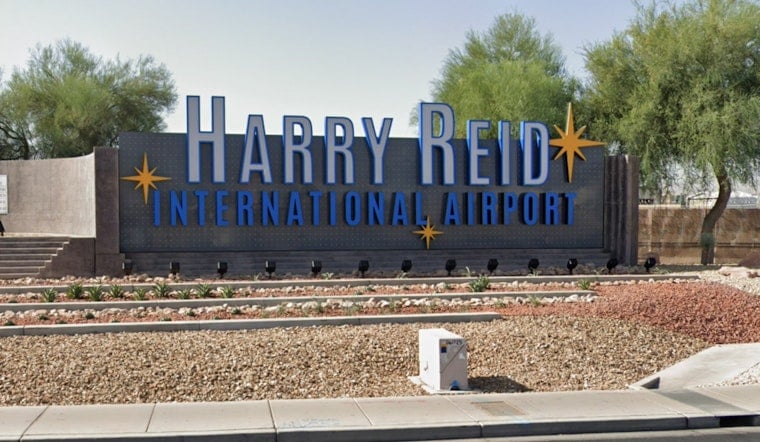
Travelers with TSA PreCheck at Harry Reid International Airport in Las Vegas can now walk through a security lane that works less like a checkpoint and more like a grocery store self-checkout, clearing their own alarms while officers step in only when needed. The setup lives at the Terminal 3 Innovation Checkpoint, and it's currently the nation's only self-service screening pilot open to eligible PreCheck flyers.
Harry Reid International Airport spelled out exactly what the checkpoint does in a social media post responding to a traveler's question, writing that "the Innovation Checkpoint in Terminal 3 is where TSA tests new screening technology in a live airport environment," according to Harry Reid International Airport. The airport added that the checkpoint is "home to the nation's first self service screening pilot for eligible TSA PreCheck travelers."
How the Self-Checkout-Style Lane Works
Before it ever touched a live checkpoint, the prototype was tested in a laboratory at the TSA Systems Integration Facility in Arlington, Virginia, by the Transportation Security Administration and DHS's Science and Technology Directorate. When it made its live debut at Harry Reid in March 2024, the system ran strictly in English and was limited exclusively to travelers already enrolled in TSA PreCheck, as reported by the Associated Press via WKYC-TV. Passengers followed step-by-step instructions displayed on individual video screens as they moved through the lane.
The system is built to let travelers self-resolve their own alarms and complete screening at their own pace, feeding on-person alarm information directly to the passenger rather than routing it through an officer. Automated exit doors open once a passenger finishes screening and is cleared to move on, and TSA says the lane holds the same rigorous standards and rules as any other PreCheck line, with transportation security officers on hand to assist and make sure protocols are followed. The goal, per the program's design, is to cut down on pat-downs and secondary screening for travelers who can clear themselves.
A Program Two Years in the Making
The lane traces back to late 2021, when DHS's Science and Technology Directorate awarded contracts to three companies under its Screening at Speed Program: Micro-X of Federal Way, Washington; Vanderlande Industries of Marietta, Georgia; and Voxel Radar of San Francisco, according to the U.S. Department of Homeland Security. Vanderlande's design, known as the PAX MX2, combines an automated conveyor system for carry-on bags with four passenger stations built into a single checkpoint lane, according to the same DHS account.
Micro-X Bets on Mini CT Scanners and Multi-Pod Lanes
Micro-X took a different approach, building individual pod-based screening consoles that pair miniature computed tomography X-ray scanning for carry-on bags with flat-panel body scanners, a concept designed for multi-pod lane testing in 2025, per Upgraded Points. Those alternative hardware concepts remain in laboratory development, with results feeding into future decisions about which designs, if any, move toward wider operational testing.
Facial Recognition and AI Keep Watch at the Checkpoint
Identity verification at the podium runs on TSA's second-generation Credential Authentication Technology units, which use facial recognition cameras to compare a live photo against a traveler's physical ID on a voluntary basis, according to the Transportation Security Administration. TSA says the captured photos are overwritten immediately after the match and are never stored.
DHS's Science and Technology Directorate also partnered with the Silicon Valley Innovation Program and outside artificial intelligence firms, including Lauretta AI and Deep North, to build video analytics and computer vision into the self-service stations, per a DHS program document. That software is designed to alert passengers if they've left items in their pockets or placed bags improperly in the bins.
20 Million Trusted Travelers, and a Rising Complaint Line
The pool of eligible travelers keeps expanding fast. TSA PreCheck hit a record 20 million active enrolled members in August 2024, pushing total enrollment across DHS Trusted Traveler Programs past 40 million, according to The Points Guy. PreCheck launched back in December 2013 with a target of keeping checkpoint waits under 10 minutes.
That growth hasn't come without friction. Annual passenger complaints to TSA about PreCheck climbed from more than 2,500 in January 2015 to more than 8,500 in January 2024, an increase that tracked an 800% growth in overall PreCheck enrollment over the same span, per federal records digitized by the Data Liberation Project and reported by FedScoop. TSA attributed the surge in complaints to expanded customer-service intake options alongside the rapid pace of new member sign-ups.
Why Las Vegas Is the Testing Ground
Harry Reid handled 54.98 million passengers in 2025, ranking as North America's seventh-busiest airport even after a 5.9% drop from its 2024 record of 58.45 million travelers, according to Airports Council International - North America. Las Vegas maintains direct air connectivity to more than 170 markets, making the airport's leisure-heavy traffic a natural stress test for new checkpoint technology.
The Innovation Checkpoint itself sits on Level Zero of Terminal 3 and runs on restricted hours, open daily from 5 a.m. to 1:30 p.m., according to Harry Reid International Airport. Terminal 3 also runs a separate, standard security checkpoint on Level 2 for travelers who fall outside the pilot's hours or eligibility.
What TSA Says Comes Next
TSA Administrator David Pekoske has said testing in Las Vegas will provide user data and insights the agency can use to explore applying parts of the prototype at other checkpoints, and that the self-service design allows trusted travelers to complete screening at their own pace. DHS Under Secretary for Science and Technology Dr. Dimitri Kusnezov has said rising airline passenger numbers are creating a need for innovative screening solutions, the kind of problem the DHS Science and Technology Directorate, created by Congress in 2003, was built to tackle.
For now, other self-screening concepts stay confined to the lab for future consideration in operational assessments, and TSA and DHS S&T say they'll study the results from Las Vegas before announcing any timeline for expanding the pilot to other checkpoint lanes or airports. Whether — and when — more PreCheck travelers nationwide get to skip the officer-guided line remains an open question.





