

























































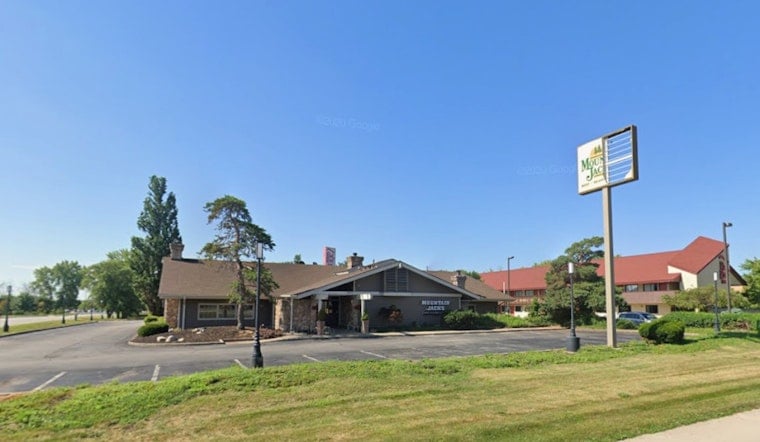
The last Mountain Jack's Steakhouse in the country served its final dinner on May 30, closing the book on a chain that once anchored dinner plans across metro Detroit with prime rib, dark wood dining rooms and a tableside salad cart. The Lafayette, Indiana location had operated for nearly 50 years before its property owner declined to renew the lease in favor of a national chain, even though the restaurant had just wrapped a record-breaking fiscal year.
As reported by The Detroit News, Mountain Jack's entered the metro Detroit market in the 1970s and eventually spread to Southfield, Dearborn Heights, Bloomfield Hills, Farmington Hills, Troy, Warren, Ann Arbor and Lansing during the 1980s, before later locations opened in Taylor, Harper Woods, Livonia, Roseville, Clinton Township and Auburn Hills. At its peak, according to 100.7 WITL, Michigan alone was home to as many as 21 Mountain Jack's locations, stretching from Grand Rapids and Lansing to Portage, Traverse City and Metro Detroit.
From Ralston Purina to a Family-Run Landmark
Mountain Jack's traces its roots to Continental Restaurant Systems, a subsidiary of Ralston Purina Company that also owned The Stag & Hound, The Dry Dock and J. Ross Browne's, a sister restaurant whose menu was nearly identical to Mountain Jack's. Restaurant critic Molly Abraham once described Mountain Jack's dining rooms as being positively awash in California gold rush trappings, and the chain's Auburn Hills outpost — one of the last in the area before it closed in 2010 — hosted live music from performers including Alexander Zonjic and Ron Coden.
Continental Restaurant Systems eventually evolved into what is now Darden Restaurants, the corporate parent of Olive Garden and Red Lobster. Ralston Purina sold off its restaurant holdings in the mid-1980s to refocus on its grocery and pet-product divisions, according to FundingUniverse, and in February 1984 Denver-based VICORP Restaurants acquired 71 specialty dinner-house locations, including Mountain Jack's, in a major portfolio expansion.
Corporate Debt, Two Bankruptcies and a Vanishing Footprint
Ownership kept shifting after that. In August 1989, per the Los Angeles Times, Paragon Restaurant Group brought in investment bank Donaldson, Lufkin & Jenrette to explore strategic sales or recapitalization for its holdings, which by then included Paragon Steakhouse Restaurants and the Mountain Jack's brand. The maneuvering saddled the chain with debt that outlasted the good times: in 1983, Continental Restaurant Systems' dinner house division — spanning Mountain Jack's, Hungry Hunter, Stag & Hound and The Dry Dock — had posted average annual sales of $1.8 million per restaurant, a strong figure for casual upscale dinner houses of that era.
The debt eventually caught up with the chain. Corporate parent Steakhouse Partners Inc. and its operating subsidiary, Paragon Steakhouse Restaurants Inc., filed for Chapter 11 bankruptcy in 2002 and then Chapter 7 liquidation in May 2008, a collapse that took down remaining steakhouses across seven states, the Ventura County Star reported at the time. That 2008 filing dismantled brands including Mountain Jack's, Hungry Hunter, Hunter Steakhouse and Carvers. The bankruptcy fit into a broader pattern; business and consumer bankruptcy filings nationwide had jumped 19% during the 2001-2002 economic slowdown to a record near 1.5 million cases, a stretch that hit mid-tier steakhouse operators already squeezed by rising beef costs and shifting consumer tastes, according to GlobeSt.
What Made the Menu, and the Room, Memorable
For diners, the corporate turmoil mattered less than what was on the table. Mountain Jack's built its reputation on prime rib dinners, and by 1982 a prime rib plate cost $10.95, per The Detroit News. The menu also featured the Beef Feast for Two — a combination of top sirloin, filet mignon and prime rib served with horseradish chablis butter and au jus — alongside dishes like the crab-stuffed New Yorker, mushroom-stuffed filet mignon and peppercorn filet mignon. In the 1980s, a full dinner for two ran $17.95 and included two house specialties.
The dining room itself had its own signature touch. As 100.7 WITL recalled, servers rolled a tableside salad wheel to each table — a lazy Susan-style cart loaded with fresh greens and toppings — and that gimmick remained a core part of the experience at the Lafayette location right up until it closed. It was a small ritual, but one longtime fans remembered as distinctly Mountain Jack's.
A Local Landmark Outlasted Its Corporate Parent by Two Decades
While the national brand fell apart in bankruptcy court, the Lafayette restaurant kept going under the ownership of independent restaurateurs Ed and Blanca Fauble, who also run Carvers Steaks & Chops in Dayton, Ohio. The Faubles kept the Lafayette location a family-run business for nearly 20 years after the 2008 collapse, preserving its traditional menu and service style even as every other outpost of the chain, including the Auburn Hills location that closed in 2010, disappeared from the map.
That made the restaurant's final closing this year sting differently for longtime regulars. The Lafayette location, which had operated at 4211 South Street for nearly 50 years, was not struggling when it shut its doors — it had just finished a record-breaking fiscal year, according to reporting shared on the Journal & Courier. Its landlord simply chose not to renew the lease, opting instead to bring in a national chain, a decision that echoes a broader pattern of long-standing local dining institutions losing ground to rising commercial real estate values and chain expansion.
Auction Cleared Out the Last Physical Traces
With the doors closed, the restaurant's physical legacy went up for sale. From June 12 to June 25, Heartland Auction Services ran an online liquidation auction covering all of the location's operational assets — kitchen equipment, dining furniture, fixtures and service ware. The sale, detailed by Heartland Auction Services, marked the complete liquidation of the last operating site of what had once been a national chain, effectively closing out Mountain Jack's decades-long run.
For Detroit-area diners who came of age eating prime rib under the chain's California gold rush-themed decor, the closure marks the end of an era that had already faded from the local landscape years ago. The name Mountain Jack's, later stylized as Mountain Jack's with an apostrophe, will now live on only in memory and in the auction records of a Lafayette warehouse sale.





