

























































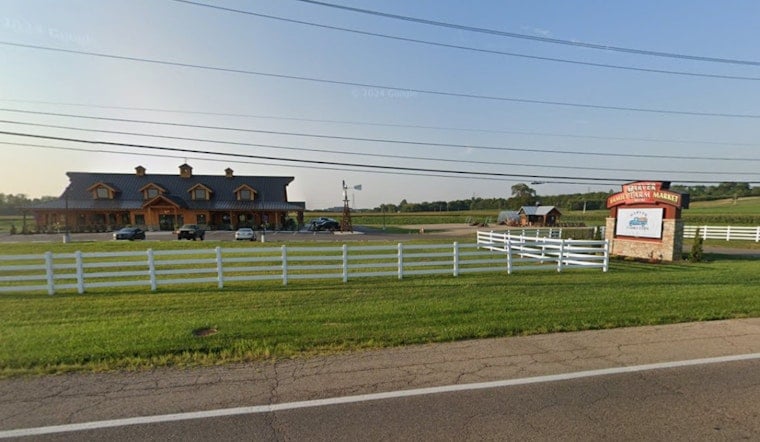
A fifth-generation farm market in Lemon Township is fighting Butler County in court over whether its deli sandwiches, coffee counter, bar and wine tastings still count as agriculture. Garver Family Farm Market, at 6790 Hamilton Lebanon Road, opened a 12,000-square-foot building in May 2024 to replace the roadside stand that had sold produce on the property since 1991. County officials now say the expanded operation crossed a line the state's farm-market law was never meant to allow.
The dispute traces back to September 2025, when Butler County Building and Zoning staffers visited the site and, according to the Cincinnati Enquirer, observed activity they considered consistent with commercial, assembly and entertainment uses rather than a simple produce stand. That visit led the county's Building and Zoning Division to issue a formal violation notice on September 3, 2025, claiming the market exceeded roadside-stand permissions and ran unpermitted commercial operations inside an agricultural zone, according to Journal-News reporting on the case. County staff argued the building operated primarily as a commercial enterprise rather than an agricultural produce stand.
Garver Family Farm Market sells sweet corn, tomatoes and okra alongside fruits and vegetables the Garvers grow themselves, but the building also houses deli sandwiches, coffee and baked goods, guest seating, a bar, wine tastings and entertainment events, per the Enquirer's reporting. County officials argue that seating, entertainment and wine tastings are not incidental to agriculture, while the Garvers counter that the market should be permitted because those additions are incidental to their farming operation. Michael Garver has said he was working with county officials throughout the process and did not build the market behind their backs, adding that he gave officials plans back in March 2021 for a similar structure on a different parcel of land.
Zoning Board Sided With the Farm, County Pushed Back
The fight escalated into a formal hearing before the Butler County Board of Zoning Appeals, which voted 4-1 in March 2026 after a five-hour session to overturn the violation notice and affirm the market's agricultural zoning status, the same Journal-News coverage of the case notes. The Garvers had argued that more than half of their gross revenue came from agricultural products, which they say qualifies the market for protection under state zoning law. That win was short-lived: on July 27, 2026, Butler County commissioners voted to direct the county prosecutor's office to take steps to overturn the zoning board's ruling, and Zoning Administrator Dennis Dickard formally appealed the decision to Butler County Common Pleas Court on June 18, 2026, arguing the board's ruling violated state law, the county zoning resolution and due process rules.
Garver Family Farm Market's attorney, Jonathan Roach, responded on July 16, 2026, with a motion to dismiss the county's lawsuit, arguing Dickard lacked legal standing and express authority to challenge his own board's decision. The motion also claimed Dickard failed to join necessary parties and misapplied procedural rules in appealing an administrative body. It is a defense strategy squarely aimed at knocking out the case before it reaches the merits of what counts as agricultural use.
Commissioners Split Over Whether to Keep Fighting
The politics around the case are not unanimous. The Butler County Board of Commissioners voted 2-1 on August 4, 2026, to continue funding the legal challenge against the farm market, with Commissioner Cindy Carpenter casting the lone dissenting vote, according to WCPO. Carpenter argued that county leaders need to adapt zoning policies to help family farms survive amid mounting suburban development pressure, a position that puts her at odds with the majority still backing the prosecutor's appeal.
Court filings from Butler County zoning staff in August 2026 laid out the county's core factual argument: more than half of the market building's physical floor space, they contend, is dedicated to commercial uses like the deli, bakery, coffee shop and event space. County inspectors maintain that physical footprint allocation, not gross sales figures alone, should determine whether a structure counts as commercial under zoning rules — a standard that would cut against the revenue-based defense the Garvers have relied on.
What State Law Says About Farm Markets and Wineries
Ohio law gives farm operators real leverage in disputes like this one. Under Ohio Revised Code § 519.21(C)(1) and § 303.21, local governments cannot prohibit farm markets on agriculturally zoned land if 50% or more of gross income comes from produce raised on farms the market operator owns or runs, according to background compiled by Ohio State University Extension. The statute does let local authorities regulate basic health and safety factors, such as setbacks and ingress, but it bars outright bans on qualifying markets.
A related provision, Ohio Revised Code § 519.21(A), similarly strips local zoning resolutions of power to prohibit buildings used primarily for vinting and selling wine on land devoted to growing grapes, and the Ohio Supreme Court reaffirmed that protection in its 2011 ruling in Terry v. Sperry. Whether that framework covers a building that also includes a bar, seating and hosted entertainment is precisely the question now before Butler County Common Pleas Court, and it remains legally unresolved.
This is not the first time Dennis Dickard has clashed with a local agricultural business over similar exemptions. He previously issued a stop-work order against Seven Mile Winery in Wayne Township in 2018 after that operation also claimed state agricultural zoning protections, a dispute that drew its own local pushback at the time. The recurring friction points to a broader tension across Ohio between traditional zoning enforcement and state protections designed to let farms diversify into agritourism, delis, tasting rooms and event space without losing their agricultural status.
For now, the outcome hinges on two open legal questions before the court: whether Dickard had standing to appeal his own zoning board's ruling in the first place, and whether agricultural exemptions should be measured by revenue split or by how a building's square footage is actually used. Neither question has been resolved, and both sides are waiting on the Common Pleas Court to weigh in.





