

























































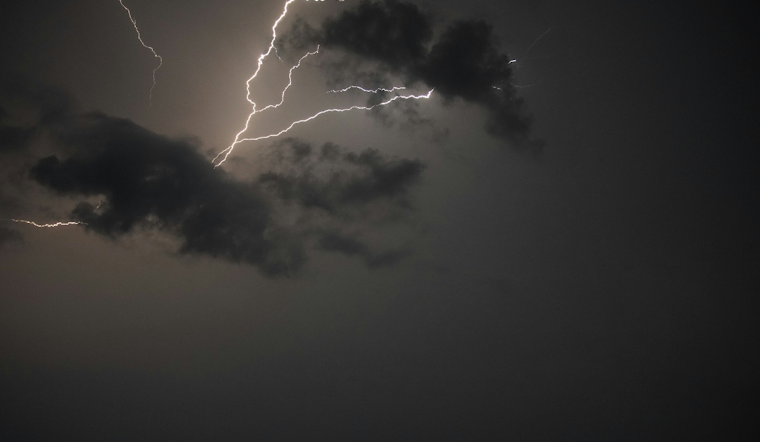
Evgenia Pamer and her family were walking near Lake Baldwin in Winter Park one evening when lightning struck no more than 20 feet away, an explosion of sound and light that sent her husband and 5-year-old son to the hospital along with her. What followed were hours of unsettling symptoms — static electricity standing their hair on end, a metallic taste in the mouth, ear pain, nausea, dizziness — and, for her husband, a heart scare serious enough that doctors kept him under close watch overnight.
“It sounded like an explosion,” Pamer said, describing the moment the bolt hit near where her family stood. According to WKMG ClickOrlando, Pamer said she did not feel like herself in the moments and hours afterward, and she described the ordeal as traumatizing. She and her son were evaluated at the hospital and found to be fine, but the experience has stuck with her — she is now urging others to take storms seriously and to have a plan in place for rain and lightning before heading outdoors.
A Cascade of Strange Symptoms
Pamer told the outlet she experienced ear pain, shaking, nausea and a severe headache after the strike, along with the sensation of her hair standing up and an iron-like taste in her mouth. Those symptoms line up with what happens to a person's body when lightning discharges nearby without a direct hit. Rapid atmospheric electrostatic buildup right before a lightning strike produces distinct warning signs in people close by — hair standing on end, skin tingling, an ozone smell, and a sharp metallic taste caused by electrical charges reacting with saliva or metal dental fillings — according to the National Weather Service. Those are the very sensations that can signal a strike is imminent within seconds.
The ear pain, headache and nausea Pamer described also have a documented medical explanation. Acoustic pressure waves and peripheral vascular spasms triggered by nearby lightning frequently cause neurological and ear-related symptoms, including temporary shaking or numbness known as keraunoparalysis, according to research published by Core EM. Much of this can be traced to ground current, the phenomenon in which electricity from a nearby strike spreads outward through the earth and into a person's body; ground current accounts for 50% to 55% of all lightning-related deaths and injuries, per the Journal of Emergency Trauma.
Husband's Heart Device Under Watch
Pamer's husband experienced similar symptoms to hers but felt dizzy and nearly fainted, the report states. He has a previous heart condition and carries an implantable cardioverter-defibrillator, and at the hospital, tests showed heightened heart activity that led doctors to keep a closer watch on him than on the rest of the family. Medical case studies document that high-voltage energy from lightning ground currents can induce rapid ventricular tachycardias, and that ICDs like his are built to detect and deliver corrective shocks for the kind of abnormal heart rhythms that electrocution can trigger, according to research published in the Journal of the Louisiana State Medical Society.
The family's close call happened amid a stretch of extreme weather across the region. In mid-August, East Central Florida saw a record-setting heat wave with 11 consecutive days under heat advisories, conditions that combined with high humidity to fuel widespread afternoon thunderstorms and frequent lightning across the Orlando area, as reported by ClickOrlando. Central Florida already averages roughly 90 thunderstorm days a year during its May-to-October wet season, driven by collisions between Atlantic and Gulf sea-breeze fronts over the peninsula, according to the National Weather Service in Melbourne.
Florida's Long, Deadly History With Lightning
The Pamer family's experience is a stark reminder of just how dangerous Florida's storms can be. Between 1959 and 2007, the state recorded 2,117 total lightning casualties — 449 deaths and 1,788 injuries — more than double any other state in the nation, per historical data from the National Weather Service in Melbourne. More recently, while a 2025 climate report ranked Oklahoma first nationally for total lightning flash density, Florida still led the country in lightning fatalities that year with four recorded deaths in Gulf, Volusia and Highlands counties, according to WTSP.
Nationally, the danger has not gone away even as overall deaths have declined with better forecasting. Through late June, the National Weather Service had recorded nine lightning fatalities across the country for the year, including a July strike that killed an 18-year-old kayaker in Santa Rosa County. The agency's longstanding guidance is simple: when thunder roars, head indoors, and never use a tree as shelter during a storm.
Winter Park itself operates automated lightning-warning systems in some municipal parks, including Ward Park and Martin Luther King Jr. Park, which sound a 15-second horn blast and trigger flashing strobes when the system detects potential lightning activity nearby, according to the City of Winter Park. Whether such a warning system was active near Lake Baldwin at the time of this strike remains unclear. Pamer, for her part, said the experience has left her urging others in the community to take storm warnings seriously and to have a plan ready before rain rolls in.



