

























































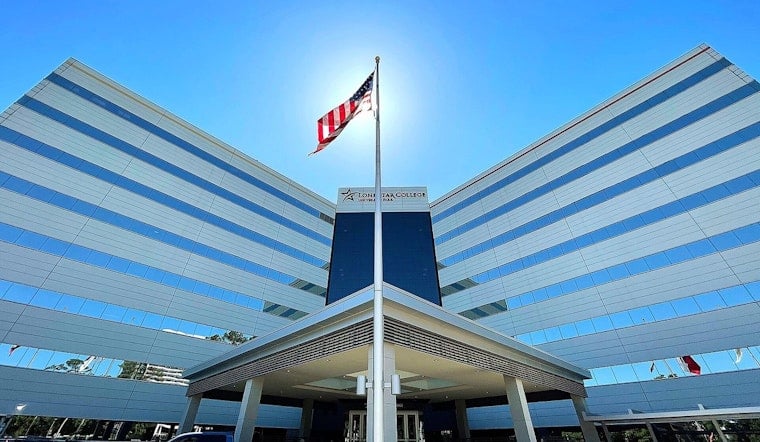
Lone Star College System trustees unanimously approved a balanced $577.5 million budget for fiscal year 2026-27 this week, locking in 2% raises for employees while keeping tuition rates untouched for a third straight year. The budget, adopted Thursday, marks a $29.5 million jump over the system's FY 2025-26 spending plan and comes as the community college network serves a record number of students across the Houston region.
The vote, which took place August 6, was reported by Community Impact. Kristy Vienne, LSCS chief financial officer and vice chancellor of finance and administration, said the budget is built on strong financial foundations and maintains operational needs while positioning the system to invest in student success, workforce development, employee excellence and long-term institutional resilience. The new spending plan includes $577.5 million in both revenues and expenditures, according to the outlet's report.
The 2% raises apply broadly across the workforce: full-time employees hired on or before March 31, part-time hourly non-instructional staff (excluding student assistants and work-study participants), and adjunct faculty paid per contact hour will all see the bump. That's a step down from the 3% raise LSCS approved for the prior fiscal year, when the system's FY 2025-26 budget of $548 million was backed by $34.95 million in new revenue.
Tuition Holds Steady as Enrollment Hits Record Highs
Trustees approved unchanged tuition rates for the 2026-27 school year back in April, meaning in-district students will continue paying $111 per credit hour, out-of-district students $249 per credit hour, and out-of-state and international students $313 per credit hour. Dual-credit tuition remains frozen at $43 per credit hour, a rate that matters for the more than 28,000 high school students taking LSCS dual-credit courses in Fall 2025 — a 54% surge since 2020 that represents roughly 10% of all dual-credit public college enrollment statewide, per data cited by the Texas A&M data science blog. LSCS last raised tuition in March 2024, when new rates were expected to generate $10.1 million in additional revenue.
The tuition freeze arrives against a backdrop of surging demand. LSCS reached an all-time record enrollment of 97,294 students in Fall 2025, a 5.9% jump over the previous year and a 15.9% expansion over the past decade, the system announced. Over 67% of those students attend part-time, and nearly 30,000 were entirely new to the system last fall.
Property Tax Rate Dips, But Bills May Still Rise
Trustees are slated to consider the FY 2026-27 total tax rate in October, but the preliminary figure stands at $0.1058 per $100 valuation — slightly below the FY 2025-26 rate of $0.106 and part of a multi-year decline from $0.1076 in FY 2024-25. That rate remains far below the Texas community college statewide average of $0.1606, according to My Neighborhood News.
Still, a lower rate doesn't guarantee a lower bill for everyone. Taxpayers in the Montgomery Central Appraisal District and San Jacinto County Appraisal District are expected to see higher FY 2026-27 property tax bills because median property values increased year over year in those areas, per the district's figures. Harris Central Appraisal District taxpayers, by contrast, are expected to see a decrease in the LSCS portion of their annual bills. A homeowner's bill can also rise if their property value exceeds the 10% appraisal cap, if their home or land value increases, or if they lose a property tax exemption. LSCS does offer relief measures, including an 8% homestead exemption (or $5,000, whichever is greater) off market value, plus a $75,000 exemption for residents 65 or older and individuals with disabilities.
Local property taxes remain the single largest funding source for the system, generating $263 million — nearly 46% of the $577.5 million operating budget. The FY 2026-27 budget includes $18.5 million in additional local-tax funding compared with the prior year.
State Funding Formula Adds $7 Million, With Strings Attached
Part of the new revenue traces back to a 2023 overhaul of how Texas funds its community colleges. Under House Bill 8, state aid shifted from a headcount-based model to an outcome-based formula rewarding credential completions, university transfers, and dual-credit course completions, according to Texas 2036. That performance tier now accounts for 95% of formula funding across the state's public junior colleges, and it delivered LSCS $7 million more in state revenue for FY 2026-27 compared with the year before.
But Chancellor Mario K. Castillo, testifying before state lawmakers in July, said the system deliberately avoids using those performance-based HB 8 dollars to pay for permanent employee positions. As reported by The Texas Tribune, Castillo's reasoning centers on preventing potential layoffs if state performance allocations were to drop in a future year — a hedge that larger, better-resourced districts like LSCS are more able to afford than smaller community college systems around the state.
Castillo took over as the fifth chancellor of Lone Star College System in August 2023, having previously served as the system's chief operating officer and general counsel. The system's finances also drew outside validation this year: S&P Global Ratings reaffirmed its highest AAA long-term credit rating and stable outlook on LSCS revenue and limited-tax bonds in May, a distinction the system has held since 2009. An institutional economic impact report has credited LSCS with contributing nearly $3 billion annually to the Greater Houston economy, returning $6 in higher future earnings for every $1 students invest in their education.





