

























































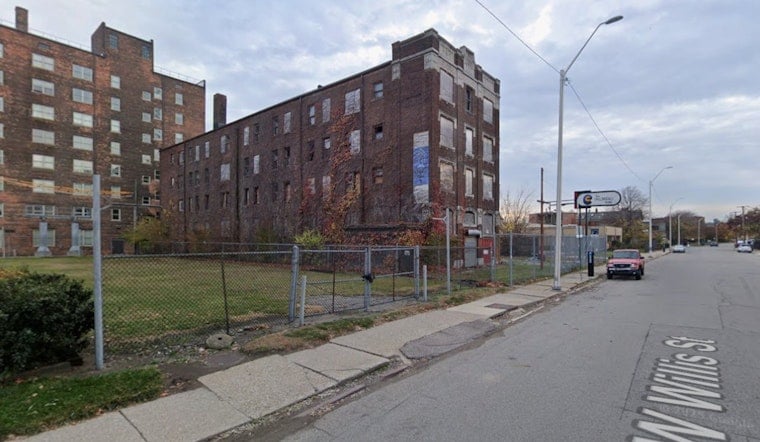
A 104-year-old Midtown Detroit hotel that has sat empty for decades is finally headed toward new life as apartments and street-level shops, after the Michigan Strategic Fund Board approved roughly $3.8 million in tax incentives and loan support for its redevelopment. The Billinghurst Hotel at 69 W. Willis St., described as one of the few remaining vacant and blighted structures left in the area, will be transformed into a 31-unit mixed-use development under the plan.
The project is being led by Billinghurst Apartments LLC, which is headed by Detroit developer Scott Lowell, according to The Detroit News. The company sought funding for a $9.5 million rehabilitation of the building, and the Michigan Strategic Fund Board signed off on the incentive package on Tuesday. Lowell called it a milestone moment for the property, saying, “Finally getting the Billinghurst to the starting line is very exciting, and we look forward to being part of Detroit's continued renaissance.”
The finished project will include 4,341 square feet of commercial space intended to give local businesses room to grow in Midtown, per the same report. Rents in the new apartments will target residents earning between 60% and 100% of area median income, and the developer must maintain that affordability commitment for 30 years — a requirement tied to the state's Michigan Community Revitalization Program loan, which is an MEDC gap-financing tool built to support costly historic rehabs that include long-term affordable housing.
A Building With a Painful and Complicated History
The Billinghurst first opened on August 6, 1922, as a 107-room “bachelor hotel” built for auto workers, offering furnished long-term rooms for $8 to $12 a week, according to Historic Detroit. It was designed by the Detroit firm Lundblad & Lundblad in the Late Gothic Revival style, the same architects behind a nearly identical twin hotel on Woodward Avenue that still operates today as the Hotel Normandie.
The building's history took a devastating turn in February 1989, when a four-alarm fire killed four residents, injured 57 people, and left 100 low-income and welfare recipients homeless, Historic Detroit reports. After being repaired, the structure spent the 1990s serving as the Doorstep Homeless Shelter for women and children, housing 287 people — including more than 150 children — in 1994 before overcrowding, which pushed occupancy well past the building's official 200-person capacity, forced the shelter to relocate to Highland Park.
Lowell purchased the abandoned building in 2012 to stabilize it, adding the Billinghurst to a portfolio that already included the fire-ravaged Forest Arms Apartments, which his development team restored in 2016, and his operation of Cliff Bell's and the Bronx Bar. He also previously ran the historic Traffic Jam & Snug restaurant in Midtown until it was destroyed by a fire in 2022, per Historic Detroit.
Stacking Public Incentives to Cover Rising Costs
The Michigan Strategic Fund Board's action included up to a $1.84 million loan for the project, delivered as a Michigan Community Revitalization Program loan participation award, alongside an estimated $831,597 in local tax incentives through an Act 381 work plan and a 15-year payment-in-lieu-of-taxes reduction valued at about $3 million. Developers are also drawing on federal historic tax credits and Michigan State Housing Development Authority housing tax increment financing to close the funding gap, according to The Detroit News. The incentives were needed because of increased construction costs, historic-standard rehabilitation expenses and the developer's desire to maintain affordable rents.
Michigan's Public Act 381 of 1996 allows developers restoring blighted or historic properties to use tax increment financing to capture future property tax increases and offset eligible cleanup, infrastructure and historic rehab costs, according to the Detroit Economic Growth Corporation. The law has backed more than 250 brownfield redevelopment plans across Detroit since it took effect. As part of the local approval process, the DEGC hosted a public hearing on March 9 at the nearby Bronx Bar to gather community feedback on the proposed Brownfield TIF plan for the Billinghurst.
Architectural plans submitted to the Detroit Brownfield Redevelopment Authority in February 2026 call for a new addition on the building's west side to house an elevator and create ground-floor commercial space, Historic Detroit reports — a necessary upgrade for turning a 1922 bachelor hotel into apartments that meet modern accessibility standards.
State Officials Tout Midtown Impact
Governor Gretchen Whitmer said the renovation will create more housing options in Midtown Detroit, including affordable homes that can help lower housing costs for families, according to The Detroit News. MEDC Chief Executive Quentin L. Messer Jr. said in the state's August 25 announcement that the project honors Detroit's past while creating economic opportunities, and the funding package drew legislative endorsements from Rep. Joe Tate and Sen. Stephanie Chang, who highlighted the site's location between Wayne State University and Downtown Detroit.
The Billinghurst sits within the Willis-Selden Historic District, which was listed on the National Register of Historic Places in 1997 after evolving from an elite late-19th-century neighborhood into a dense corridor of auto suppliers and apartment buildings, according to the Detroit Historical Society. Roughly 41% of the district's commercial buildings constructed between 1910 and 1930 were auto-related, a legacy of the construction boom driven by autoworkers who needed housing close to the factories. More than a century later, the Billinghurst's long-delayed rehab aims to finally close that chapter of vacancy and put the building back to use for Midtown residents.



