
























































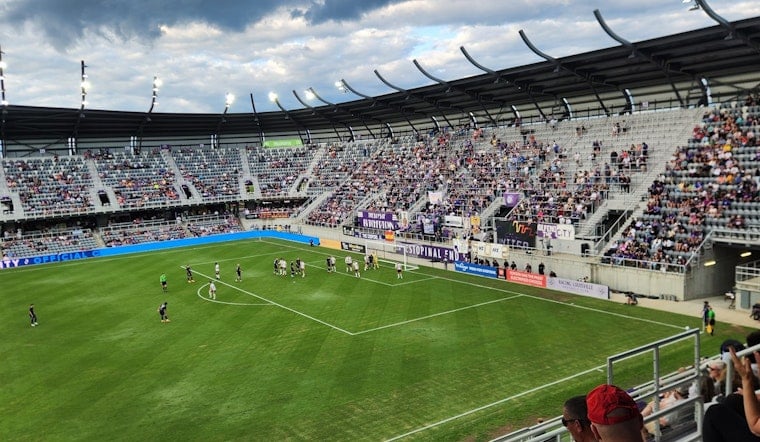
Racing Louisville FC is actively seeking outside investment to keep pace with a National Women's Soccer League that has turned into one of the fastest-appreciating properties in American sports, and its longtime owner is being candid about what that could mean for the Butchertown club's future. John Neace, the only NWSL owner who has not sold a stake in his club or taken on significant outside investment, says he has no plans to move the team — but acknowledges economic reality could ultimately force his hand.
The tension driving that admission is stark. According to The New York Times, the average NWSL franchise was worth roughly $184 million in 2026, a 77 percent jump from just two years earlier. Racing Louisville, by contrast, was reported to be valued at $127 million and ranked 11th among the league's 16 clubs by revenue, generating $10.4 million compared to the $42.9 million posted by the Kansas City Current, the league's top earner. Neace's search for additional capital remains active, per the outlet's reporting.
A League Transformed Since 2013
The NWSL launched with just eight teams and has since added seven new markets and at least ten ownership groups between 2020 and 2026, according to The New York Times. That growth has been fueled by dramatic gains in labor economics and media exposure. In August 2024, the league and its players' union ratified a collective bargaining agreement running through 2030 that abolished college and expansion drafts, created unrestricted free agency, and set the base salary cap on a path from $3.3 million in 2025 to $5.1 million by 2030, according to Fast Company.
Television money has grown just as fast. The league secured a four-year, $240 million domestic media rights deal in November 2023 with CBS Sports, ESPN, Prime Video, and Scripps Sports, quadrupling audiences in its first year, per Front Office Sports. By September 2025 the league had expanded that footprint further, adding the free streaming service Victory+ to air 57 matches annually starting in 2026 as it grew to 16 clubs, according to SportsPro.
Expansion Fees Keep Climbing
The price of entry has ballooned almost beyond recognition. Early expansion owners like those behind Angel City and the San Diego Wave paid roughly $2 million to $5 million in fees to join the league, and Bay FC's ownership paid a $53 million expansion fee to join in 2024, according to The New York Times. That trajectory has since exploded: Arthur Blank's ownership group agreed to pay $165 million for an Atlanta franchise set to begin play in 2028, a Denver ownership group agreed to pay $110 million for its team, and the Haslam Sports Group agreed to a record $205 million expansion fee for Columbus in 2026.
Those escalating figures track with broader industry benchmarks. Sportico reported in March 2026 that the 14 competing NWSL teams generated $262 million in total revenue during 2025, with an average revenue-to-value multiple of 9.8x — a ratio matching top North American men's sports leagues, according to SportsPro. Forbes reported in April 2026 that the median team value jumped 79 percent year-over-year to over $192 million, with the league's lowest valuation rising to $140 million, double the 2025 floor. Angel City itself, once acquired by Disney CEO Bob Iger and USC dean Willow Bay in a then-record $250 million deal in 2024, was valued at $335 million by 2026 per Sportico, generating $36.7 million in revenue against an original expansion fee of roughly $2 million paid in 2022.
A Cautionary Tale From Kansas City
League commissioner Jessica Berman has said the NWSL prefers to maintain continuity in its teams' locations, but she has also said the league will not rule out relocating a team if necessary, and that the league itself describes relocation as a last resort. The precedent looms large in Louisville's case. FC Kansas City ceased operations after the 2017 season due to severe financial problems, and its player assets were transferred to the newly created Utah Royals. That Utah franchise ceased operations after three years, while Kansas City returned to the league in 2021 as the Current after Angie and Chris Long bought the franchise from the NWSL.
The rebuilt Kansas City Current now plays at CPKC Stadium, which opened in 2024 as the world's first soccer stadium purpose-built for a women's professional team and has sold out every game since opening, according to The New York Times. The Current has since become the league's top revenue generator at $42.9 million and carries a reported valuation of $315 million — the same market that once collapsed under FC Kansas City's financial strain now stands among the NWSL's crown jewels.
What's at Stake for Louisville
Racing Louisville plays home matches at Lynn Family Stadium in Butchertown, a venue whose cost rose to $60 million-$65 million, with an initial configuration of 11,700 seats and total capacity of 15,304 with a safe-standing area or expansion capability, opened in July 2020 by Soccer Holdings, LLC, which also owns USL Championship club Louisville City FC, according to Wikipedia. That infrastructure was built when NWSL entry fees ran under $5 million — a far cry from the nine-figure sums now required of new owners, including the training complex Arthur Blank's group is building for Atlanta's 2028 club after Marietta's city council approved a $21 million land deal for the project.
According to a Louisville Metro Government development agreement, Louisville City Stadium must pay the city 10% of its operating cash flow above the agreement's specified threshold. WDRB reported that the development agreement requires the soccer group to provide Louisville $14.5 million through lease and other payments before April 2040. A Louisville Metro Government economic-development plan calls for infrastructure improvements including parking garages, roads, sidewalks and trees to support entertainment and mixed-use development in the area. Louisville Metro Government said the Butchertown Apartments project will add 200 upscale apartments, including 128 one-bedroom and 72 two-bedroom residences, near the stadium.
Sources close to the league told The New York Times that an acquisition and relocation of Racing Louisville would cost at least $205 million, while the league says it could instead gain a $200 million-plus expansion opportunity by retaining Louisville and preserving another desirable market elsewhere. The NWSL says it plans to evaluate ways to keep Racing Louisville in Louisville and expects any new ownership group to make stadium and training-facility infrastructure commitments, operating as it does under a single-entity system in which investor-operators hold interests across the league.
For now, Neace maintains that Racing Louisville is not planning to move. But with the league's valuation floor doubling in a single year and expansion suitors willing to pay nine figures for a spot in the NWSL, the pressure on the league's only owner without significant outside investment shows no sign of easing.





