

























































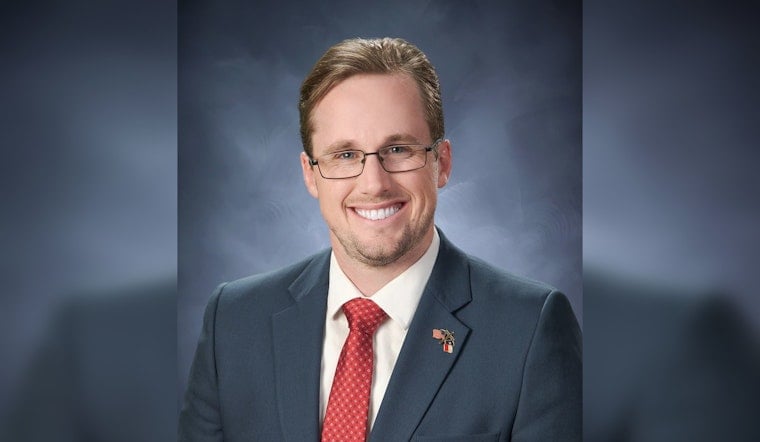
Manvel Mayor Dan Davis says he can no longer support keeping the city's Flock Safety license plate cameras running, pointing to resident worries over privacy, data security, and cost as he pushes the city council to reconsider its contract with the surveillance company. The cameras, installed under a four-year deal the Manvel Police Department signed in 2024 for 21 units, are set to come up for discussion at the city council meeting on September 8.
Davis has raised concerns about how Flock data is used and shared, the cybersecurity of the broader camera network, and the financial commitment tied to the system, according to Click2Houston. He said the money Manvel spends on Flock could be better allocated elsewhere, since those taxpayer dollars compete directly with other public-safety and infrastructure needs in a city that has grown rapidly in recent years. Still, Davis has stressed he supports the Manvel Police Department and technology that genuinely helps officers keep the community safe, framing his objection as being about safeguards rather than opposition to law enforcement tools generally.
To gauge public sentiment, Davis ran a Facebook poll asking whether Manvel should keep using the cameras. The results were lopsided: 66% of respondents said the city should stop or discontinue using the Flock cameras, while only 21% said Manvel should continue using them, per the same report. Davis said resident concerns should factor into how the city evaluates its contract going forward, and he has now called for Manvel to reconsider its relationship with Flock Safety entirely.
A Split Council, and a City Still Sorting Out Its Position
Not every council member is approaching the issue the same way. Council member Garrett Knox said he wasn't on the council when the cameras were originally approved and installed, but he's now listening to residents and has no issue with removing them. Knox described the matter as a non-partisan issue, saying he serves Manvel citizens rather than any particular faction. The outlet noted it had reached out to other Manvel City Council members for their views on the cameras and the contract, but the story did not report additional responses beyond Davis and Knox.
The cameras themselves capture license plates and vehicle characteristics as cars pass, and Flock Safety markets the system as a tool to help identify vehicles connected to criminal investigations. Automated license plate readers are widely viewed as a potentially valuable law enforcement tool, but the debate in Manvel echoes a broader reckoning playing out across Texas this summer over how that data gets shared once it's collected.
Texas Cities Are Increasingly Walking Away From Flock
Manvel's contract review lands amid a wave of Texas municipalities cutting ties with Flock Safety. The Pflugerville City Council voted unanimously to terminate its Flock contract and deactivate its 28 cameras after discovering 459 outside agencies had run 1.6 million searches through the city's system, with Mayor Doug Weiss saying the city could not engage with organizations it could not trust. In Lago Vista, the city council voted unanimously to immediately end its Flock contract and remove all municipal plate-reader cameras, with local leaders citing low crime rates and flaws in the original approval process, according to a report from KVUE. Austin canceled its own Flock contract back in June 2025 after an internal police audit found more than 20% of automated searches failed to meet departmental documentation requirements, a move the Electronic Frontier Foundation says was driven by local civil liberties advocates.
Misuse cases elsewhere in the Greater Houston region have added fuel to the debate. A former Katy Police Department officer was indicted in Fort Bend County on stalking and official misconduct charges this past April after allegedly running more than 2,300 unauthorized searches to track a woman over 11 months, a case Hoodline previously reported. Separately, public records showed the Houston Police Department accounted for more than 1.7 million searches, over a third of all queries, on Weber County, Utah's 10 Flock cameras between February 2022 and July 2026.
The Cost of Walking Away, and the Data Web Underneath
Flock Safety operates on a subscription lease model, typically running $2,500 to $3,000 per camera per year plus installation costs, and the company retains ownership of the hardware, meaning cities don't build any equity in the equipment and lose the cameras entirely if they cancel. As of mid-2026, Flock was valued at $8.4 billion and operated more than 120,000 cameras across over 5,000 communities in 49 states, according to Sacra, underscoring how deeply embedded the company has become in local policing nationwide.
The stakes extend beyond any single city's contract. The Texas Department of Public Safety maintains ALPR data-sharing agreements with more than 200 local law enforcement agencies, creating a statewide web of vehicle tracking data that stretches well past municipal boundaries, per reporting from the Texas Tribune. A 2025 legislative effort, House Bill 2083, sought to limit government ALPR data retention to 48 hours and ban sharing with federal or non-governmental entities, though its fate underscores that statutory guardrails have yet to catch up with the technology's rapid spread.
For Manvel, a city whose population has grown from 10,138 in the 2020 Census to an estimated 22,934 in 2026, the Flock debate is unfolding alongside other fast-growth pressures, including recent council fights over development along State Highway 6. Whether the council follows Davis's lead or opts to keep the cameras running will become clearer when the matter comes up on September 8.





