

























































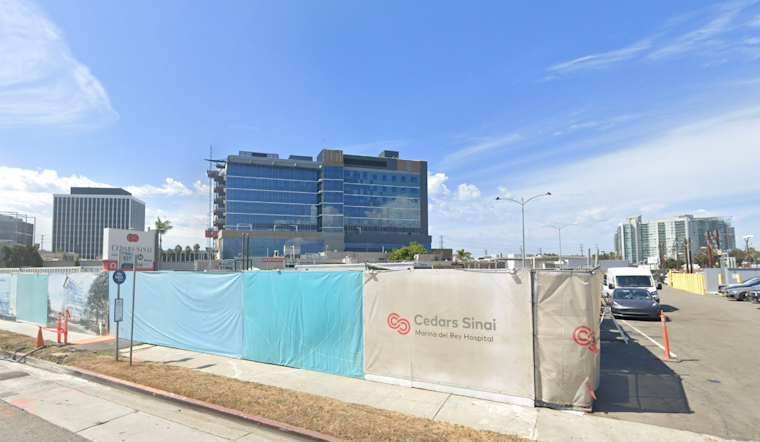
For roughly six weeks, residents near Cedars-Sinai Marina del Rey Hospital say a foul, sewage-like odor has hung over their neighborhood, making some people nauseous and forcing others to simply leave the area until it passed. Neighbors eventually zeroed in on a likely source: a major excavation project underway at the hospital's campus on the southwest side of its property, where crews have been digging to install an emergency sewer holding tank.
Resident Laura Clementi described waking at 5 a.m. to the smell and feeling sick to her stomach, telling the New York Post that the odor smelled distinctly like sewage rather than ordinary standing water. Fellow resident David Levy compared the stench to a rotting outhouse, according to the same report. Neighbors say they even formed a group chat to try to track down exactly where the smell was coming from, eventually landing on the hospital's construction site as the likely culprit.
Craig Lightner, another nearby resident, told the outlet the odor had grown especially severe in recent weeks. He said he experienced headaches, nausea, dizziness and difficulty concentrating that he believed might be connected to the smell, and he reported spotting dead barnacles near the marina. Lightner also captured video appearing to show murky water bubbling near the marina and said he was concerned about what the discharge might mean for marine life, while separate cellphone footage from residents appeared to show runoff entering the marina itself.
Hospital Confirms Link, Pauses Work
Cedars-Sinai has acknowledged that its construction work is connected to the odor. The hospital said it had been treating groundwater before discharging it into storm drains, but that the treated water developed an odor once it mixed with storm-drain runoff. Groundwater entered the construction area periodically during excavation, and water flow near the site was ultimately shut off. According to Lightner, that temporary shutdown appeared to bring an immediate improvement in the smell.
The hospital said it paused excavation work out of an abundance of caution, apologized for the disruption, and said it has been working with the Los Angeles Sanitation Bureau to address the problem while staying in contact with area residents. Cedars-Sinai has said it is prioritizing the safety of the surrounding community as the issue gets sorted out. FOX 11 Los Angeles reported that hospital officials made a similar acknowledgment connecting the smell to dewatering and excavation activity at the site.
Why Cedars-Sinai Is Digging in the First Place
The excavation is not optional. State law under California's Alquist Hospital Facilities Seismic Safety Act, amended by Senate Bill 1953, requires acute care hospitals to meet Nonstructural Performance Category 5 standards by 2030, which includes on-site holding tanks capable of storing at least 72 hours of emergency wastewater and sewage, according to NWPX Park. The mandate followed the 1994 Northridge earthquake and is meant to keep hospitals functioning after a major disaster. The tank Cedars-Sinai is installing is intended to let the hospital keep operating during a major earthquake or other natural disaster.
City of Los Angeles planning documents show the broader project at 4650 Lincoln Blvd is a nine-story, roughly 258,500-square-foot replacement hospital with 160 patient beds, replacing an existing 96,480-square-foot, 133-bed facility, according to the City of Los Angeles City Clerk. Cedars-Sinai has said construction on the new tower is anticipated to finish in May 2027, with the existing hospital remaining fully open throughout. Those same planning records note that construction along Lincoln Boulevard and Mindanao Way requires specialized sewer connection permits and capacity reviews due to a sanitary sewer easement along the property's northern boundary.
Regulators Watching, Penalties Possible
The South Coast Air Quality Management District confirmed to FOX11 that it is aware of the complaints and is conducting an active investigation. Under AQMD Rule 402 and California Health and Safety Code Section 41700, violations for discharging air contaminants that cause public nuisance can carry civil penalties ranging from $1,000 to $75,000 per day, per LA Local. Before issuing a formal Notice of Violation, AQMD protocol requires inspectors to independently confirm an odor across multiple separate residences or workplaces and trace it directly to a specific facility.
It remains an open question whether AQMD will ultimately issue a formal violation over the Cedars-Sinai site, or whether local water quality agencies will require additional filtration permits before excavation resumes. The marina's enclosed water circulation has drawn regulatory scrutiny before; the Los Angeles County Department of Public Health regularly issues bacterial advisories for Mothers Beach tied to stormwater runoff and urban discharge, as Hoodline has previously reported.
Part of a Larger Building Push
The Marina del Rey tank project is one piece of a much larger capital expansion for Cedars-Sinai across Los Angeles, which also includes a permitted 10-story, 300,000-square-foot research tower on Alden Drive in Beverly Grove and planned expansion towers near its main campus, Hoodline has reported separately. A RAND Corporation study for the California Hospital Association estimated that California health systems statewide will spend between $34 billion on seismic retrofits and $143 billion on full building replacements to meet the state's 2030 seismic deadlines, according to the Desert Healthcare District — a cost pressure pushing many hospitals toward full rebuilds rather than retrofits given the strict 72-hour operational standard.
For now, residents near the marina are left watching for whether the pause in excavation holds and whether the smell stays gone. Cedars-Sinai has said it remains in contact with the community as it works through the wastewater issue alongside city sanitation officials.




