

























































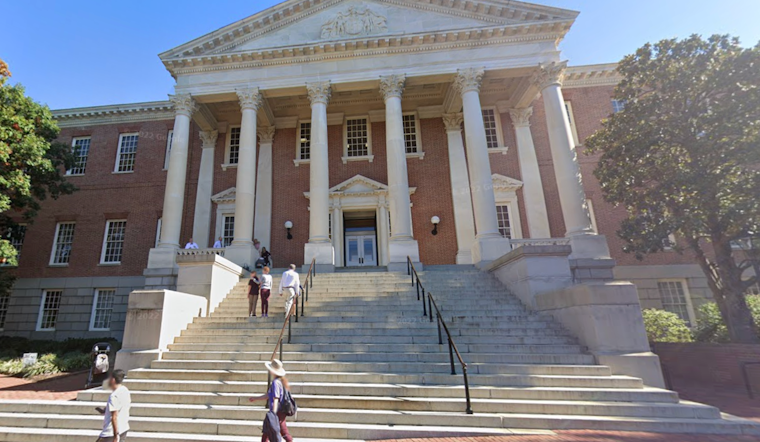
Maryland's first-in-the-nation tax on digital advertising is dead, and the state now owes refunds with interest to some of the biggest names in tech. The Maryland Tax Court ruled on challenges brought by Apple, Google and Peacock TV, finding the 2021 law illegal and ordering the state to return money it had already collected.
The ruling strikes at a law that targeted big tech firms including Apple, Meta and Google, and it lands as Maryland already faces a projected structural budget gap of more than $3 billion next year. According to the Baltimore Sun, the tax court determined the law violated the federal Internet Tax Freedom Act, the 1998 statute made permanent in 2016 that bars states from imposing higher tax rates on digital transactions than on comparable offline advertising, according to the Tax Policy Center.
Doug Mayer hailed the decision, saying elected officials should empower entrepreneurs rather than create illegal taxes, per the Sun's report. The state Comptroller's office said it reviewed the ruling, according to a spokesperson quoted in the same account.
A Law Born From a Veto Fight
The digital ad tax traces back to a partisan clash in Annapolis. Then-Governor Larry Hogan vetoed the legislation in May 2020 over economic concerns, but the Democratic-controlled General Assembly overrode his veto in February 2021 to enact House Bill 732, according to the Sales Tax Institute. Senate President Bill Ferguson sponsored the 2021 bill, per the Sun's reporting.
The law set a progressive rate structure, levying a 2.5% tax on companies with global annual gross revenue between $100 million and $1 billion, and increasing the levy in increments of 2.5% up to a maximum tax rate of 10% for companies exceeding $15 billion in gross global revenue, according to EY Tax News. Maryland became the first and only state in the nation to enact a specialized gross receipts tax on digital advertising, though legislatures in states including New York, California, Texas and New Mexico have debated similar digital services tax proposals, per the California Chamber of Commerce.
The tax has faced multiple state and federal court challenges since 2021. In May 2023, the Maryland Supreme Court vacated a lower circuit court decision against the tax on procedural grounds, ruling that corporate challengers like Comcast had to exhaust administrative remedies in the Maryland Tax Court before suing in state court, according to Forbes. That procedural ruling funneled the corporate challenges into the tax court, where Chief Judge Anthony Wisniewski presided over the consolidated refund suits and summary judgment motions from Apple, Google, Meta and Peacock TV, Forbes reported.
First Amendment Fight Over Pass-Through Ban
Separately, a federal appeals court struck down portions of the law in 2025 as violating the First Amendment. The U.S. Court of Appeals for the Fourth Circuit held that Maryland's ban on companies passing the tax cost to customers via a line-item on invoices violated free-speech protections, comparing the state restriction to taxation censorship under the British Stamp Act of 1765, according to Inside Salt. The opinion was authored by Judge Julius N. Richardson.
Following that decision, the U.S. District Court for the District of Maryland entered a final judgment in October 2025 permanently enjoining the state from enforcing the anti-pass-through provision, after Attorney General Anthony Brown agreed to the entry, per NetChoice. The lawsuit that led to that injunction was brought by trade associations including NetChoice and the Computer & Communications Industry Association.
Education Funding Now in Question
The financial stakes go well beyond the companies involved. The Office of the Comptroller reported collecting more than $400 million related to the tax in 2025, money the state could now be forced to return with interest under the tax court's order. Maryland had projected it could collect as much as $250 million annually from the digital ad tax going forward.
That revenue was earmarked for the state's education reform program, the Blueprint for Maryland's Future — a 10-year, $30 billion to $38 billion plan enacted in 2021 that mandates sweeping school improvements statewide, including raising minimum teacher starting salaries to $60,000, according to MyMCMedia. The education program's costs are projected to contribute to billions of dollars in state structural budget gaps, a burden that now grows heavier without the digital ad tax revenue stream to help offset it.
With the tax court's ruling and the earlier federal court losses combined, Maryland's experiment in taxing big tech's advertising revenue appears to be over, at least in its original form. The Comptroller's office has not detailed how it plans to handle refunds to Apple, Google, Meta and Peacock TV, or how lawmakers intend to fill the resulting gap in education funding.



