

























































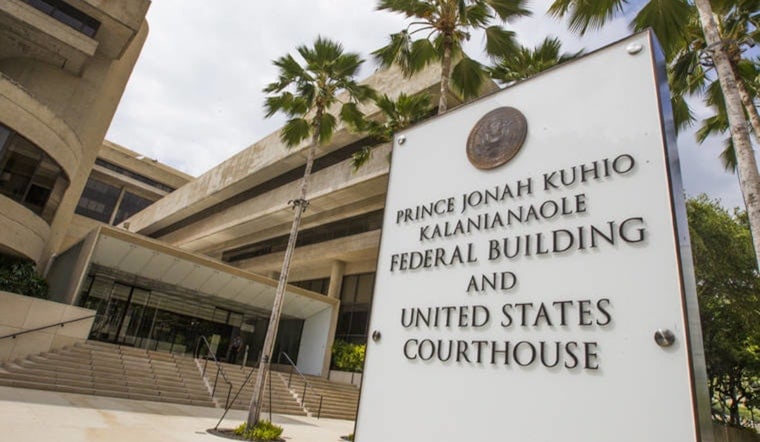
A national voter-list advocacy group has sued Maui County Clerk Moana Lutey and Kauaʻi County Clerk Jade K. Fountain-Tanigawa in federal court, accusing them of withholding records related to the 2024 elections. The Public Interest Legal Foundation filed the complaint after both clerks declined earlier requests for voter data, with Lutey asking for a signed affidavit confirming an election or government purpose and Fountain-Tanigawa telling the group the county simply did not maintain the records being sought.
The lawsuit, filed August 7 in the U.S. District Court for the District of Hawaii under case number 1:26-cv-00421, is the latest chapter in a broader legal battle over public access to Hawaiʻi's voter files, according to Aloha State Daily. PILF alleges the two clerks violated the National Voter Registration Act by failing to make voter records available for public inspection and by not maintaining election records for the required two-year period. The federal law requires counties to keep such records for at least two years, and the group is asking the court to order the clerks to produce whatever records they do have.
According to the Aloha State Daily report, PILF first requested a list of registered voters who submitted ballots in the 2024 elections back in February, and separately sent both clerks requests for reports on undelivered absentee ballots from that same election cycle. Lutey reportedly responded that the affidavit request itself might raise ethics concerns. Neither Maui County nor Kauaʻi County has formally responded to the new federal filing, and Lutey and Fountain-Tanigawa did not respond to requests for comment.
A Legal Strategy Shift After a Ninth Circuit Loss
The suit against the two county clerks follows a setback for PILF at the federal appellate level. The group originally sued Hawaiʻi Chief Election Officer Scott Nago in 2023, alleging he failed to comply with federal laws requiring statewide voter records to be made publicly available. On April 28, a three-judge panel of the U.S. Court of Appeals for the Ninth Circuit ruled against PILF on the merits, holding that the statewide voter rolls themselves are not “list-maintenance records” subject to disclosure under the National Voter Registration Act, according to Courthouse News. U.S. Circuit Judge Michelle Friedland authored that opinion, though the panel did find that PILF had legal standing to bring its claims and that the case was ripe for review, clearing a jurisdictional path even as the underlying request was denied.
PILF has since appealed that loss to the U.S. Supreme Court, filing a petition for writ of certiorari on July 17 that argues the Ninth Circuit's ruling creates a direct split with a First Circuit decision permitting public access to statewide voter rolls, per the group's own announcement. The Supreme Court has not agreed to hear the case, and the petition remains pending. In the meantime, PILF appears to have shifted its strategy toward pursuing county-level list-maintenance and voter cancellation records rather than the statewide rolls, a distinction that helped shape the narrower complaint now aimed at Lutey and Fountain-Tanigawa.
State Privacy Law Sets Up the Core Conflict
The friction driving these disputes traces back to Hawaii Revised Statutes § 11-97, which restricts access to the state's complete electronic voter registration system to approved election or government purposes. Unauthorized use or false statements made to obtain that data can bring Class C felony charges carrying up to five years in prison and a $10,000 fine, a legal backdrop that has made county clerks cautious about releasing raw voter information without a signed affidavit or a clear court order.
Hawaiʻi's voting system itself has operated entirely by mail since 2020, after the state legislature passed Act 136 and then-Governor David Ige signed it into law in June 2019. The law sends ballots automatically to every registered voter and replaced traditional polling places with voter service centers. Under that system, county election staff use automated sorting equipment to match signatures on returned ballot envelopes against the signatures already on file before any ballot is opened or counted, a chain-of-custody step detailed by KHON2.
Elections Commission in Disarray Amid Ballot Discrepancy Claims
Separately, the Hawaiʻi Elections Commission, the nine-member bipartisan body responsible for overseeing Nago's office and investigating voting complaints, has been mired in its own dysfunction. The commission has gone more than a month without meeting, according to a petition filed by commissioners Ralph Cushnie and Tamara McKay, who allege the failure to convene resulted from a lack of support by Nago and the Office of Elections. The Office of Elections has told the two commissioners that a quorum is needed before a meeting can be convened, while Cushnie has argued the commission cannot reach quorum without first meeting, leaving the body in a bureaucratic standoff.
The commission has also been without a chairperson since former chair Michael Curtis's term expired on June 30, according to Honolulu Civil Beat. Cushnie and McKay petitioned the Hawaiʻi Supreme Court in July to intervene in the commission's operations and to compel election officials to provide a full accounting of 2024 ballots before the 2026 election is certified. The court rejected Cushnie's petition in June, though a related decision involving the commission remains pending before the state's high court.
Cushnie, who is also a co-plaintiff named in the broader dispute, has argued for months that election officials mishandled or misreported ballots during the 2024 election. At a March 11 commission meeting, he formally requested an audit of ballot return envelopes, citing what he described as discrepancies between Hawaiʻi County's reported mail ballots counted — 76,595 — and its return-ID envelope documentation, which showed 57,553. Cushnie has also alleged a discrepancy of more than 19,000 ballots between Hawaiʻi County and USPS records for mail-in submissions, though these figures reflect his own claims rather than an independent audit finding.
The renewed litigation arrives months after Hoodline reported on efforts by Nago's office to verify voter mailing addresses and urge Honolulu residents to check on missing registration cards ahead of 2026 election mailings. That earlier public outreach now sits alongside a widening legal fight over how much of the state's underlying voter data — and its 2024 election record — the public and outside groups are entitled to see.





