

























































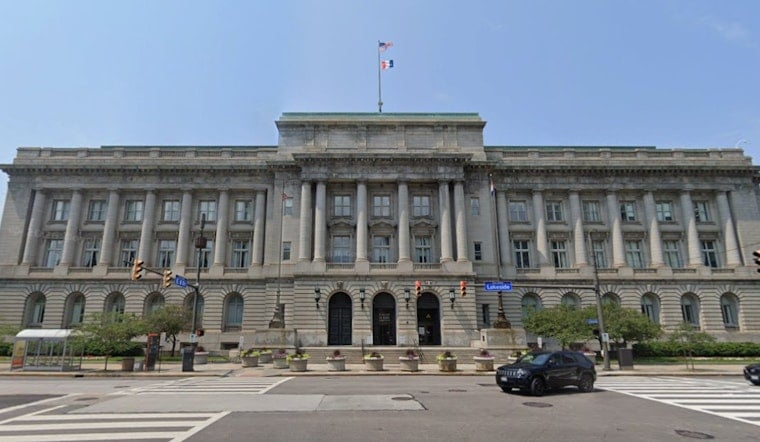
A Cleveland nonprofit that most residents have never heard of holds real power over which local businesses get public money — sometimes deciding on grants worth hundreds of thousands of dollars with barely any public notice. The Cleveland Citywide Development Corp. gives out business loans and grants ranging from a few thousand dollars up to $250,000, and on August 20 its board considered 27 agenda items totaling more than $600,000 during an executive session before taking its votes in public.
As reported by Signal Cleveland, reporter Nick Castele found that CCDC operates as a nonprofit that approves public money for local businesses, drawing on philanthropic dollars along with business grant and loan fees. The organization was founded in 1981 under then-Mayor George Voinovich, and Cleveland City Council legislation in 2010 authorized it to approve grants up to $250,000 without council approval. Under Cleveland City Ordinance No. 90-10, CCDC serves as the approval authority for Department of Economic Development loans and grants under $250,000, and it evaluates larger loan requests before submitting formal recommendations to city council, according to the City of Cleveland's economic development office.
A Board With One Foot in City Hall
CCDC is legally organized as a Community Improvement Corporation under Chapter 1724 of the Ohio Revised Code, a statute that lets local governments designate nonprofits as official agents for economic and civic development, according to the Ohio Revised Code. The board itself blends public and private interests: mayoral appointees and elected officials make up 40% of the CCDC board, alongside bankers and nonprofit executives, the Signal Cleveland report notes. Members include Cleveland City Council member Jasmin Santana, Ward 12's Tanmay Shah, economic development director Joevrose B. Small, and board chair J. Stefan Holmes, a banker who said CCDC was intended to be an independent body that could streamline assistance and bring new ideas for helping businesses.
Yet that independence has its limits. The Justin Bibb administration has said CCDC is separate from the city because it is a nonprofit, per a city spokesperson cited in the report. Still, the board reviews project summaries, financing-source breakdowns, and delinquent-loan reports much like a city agency would, and it plays what the Signal Cleveland report describes as the roles of watchdog, custodian of city business, and project partner.
Why the Doors Close for Financial Talk
Ohio law allows CCDC's board to privately discuss financial and proprietary information connected to business expansions, relocations, or improvements. Division (G)(8) of Section 121.22 of the Ohio Revised Code explicitly permits public bodies to hold executive sessions to discuss confidential financial statements, business strategies, marketing plans, or trade secrets tied to economic development assistance applications, according to the Ohio Revised Code. Ohio law still requires CCDC's decision-making meetings to be open to the public, and per meeting minutes reviewed for the report, the board takes initial votes during executive session before voting again in public to formally approve agenda items.
That structure has drawn scrutiny. Shah said he learned about the August 20 meeting just 30 minutes before arriving, and told Signal Cleveland he was trying to understand the private involvement in directing public money. Dale Lenzer, a vice president at First Commonwealth Bank, said people outside the businesses seeking help do not often attend CCDC meetings. Compounding the access problem, CCDC's website does not list meeting agendas, and while it lists a 2025 meeting schedule, it has posted no 2026 schedule, per the same reporting.
Heinen's Got $250,000 — and Still Left Downtown
The stakes of these closed-door discussions became clear with Heinen's downtown store. CCDC approved a $249,999 grant for the store in February 2025, and the city and county separately assembled $400,000 to assist Heinen's and other downtown businesses. A city spokesperson told Signal Cleveland the Heinen's grant avoided a more closely watched city council hearing because it did not exceed $250,000. The store nonetheless shrunk its footprint to cut costs before Heinen's announced in June 2026 that the location would close permanently on July 31, 2026 — a closure that, per co-president disclosures reported by Signal Cleveland, came after the grocer absorbed $18 million in cumulative losses over 11 years in the historic Cleveland Trust rotunda.
After the closure announcement, Downtown Cleveland Inc. received $100,000 from CCDC, split into two grants to expand food options and analyze the downtown grocery market. The civic organization went on to commission consulting firm Streetsense for a comprehensive downtown grocery market analysis aimed at recruiting new food retailers.
Small Grants, Big Portfolio
Most of what crosses the CCDC board's table is far smaller than the Heinen's deal. On August 20, the board approved $7,650 for a vintage video game store on Memphis Avenue and $250,000 to help a real estate company buy a building on West 25th Street. Other applicants on that agenda included Larder Supply Company, Joy Machines, Plum Cafe on Lorain Avenue, and Flavor Bomb restaurant in Slavic Village, while Slavic Village Development presented plans for art projects in the Broadway area.
CCDC's reach extends well beyond storefront loans. The nonprofit has helped businesses that fell behind on economic development loan payments, and the Cleveland Community Benefits Law gives it a role overseeing community benefits agreements. Famicos Foundation received more time to repay a loan tied to a Glenville home rehabilitation project, and CCDC draws on federal money along with proceeds from tax-increment financing tied to Steelyard Commons to fund its work.
The Money Behind the Neighborhoods
CCDC's 2024 audited financial statements show the nonprofit brought in $838,639 in total revenue — including $664,455 in grant funds and $173,459 in fees — according to the Ohio Auditor of State. The organization spent more than $387,000 combined on down payment assistance and home rehabilitation in 2024, and almost $92,000 on the GlenVillage Retail Incubator in Glenville, part of the $16 million Glenville CircleNorth mixed-use development that former Mayor Frank Jackson set aside funds for under the Neighborhood Transformation Initiative, which targeted the Glenville, Buckeye, and Clark-Fulton neighborhoods.
The same 2024 audit shows CCDC allocated $90,000 to the Fund for Our Economic Future's Opportunity Corridor Project and $95,000 to the Cleveland Foundation's Cleveland Incentives Scorecard, underscoring how the nonprofit funds civic planning studies well beyond individual business grants. Separately, tax filings compiled by ProPublica show CCDC has held 501(c)(3) tax-exempt status since September 1981 and recorded total revenue of $554,196 against expenses of $668,746 for fiscal year 2025, leaving net assets of $139,578 — a gap that points to an operational deficit even as the nonprofit continues distributing public grant dollars.
Holmes, the board chair, said the board is very active and checks whether applicants are financially stable before approving assistance. CCDC's model has counterparts elsewhere in Cleveland's development landscape: Gateway Economic Development Corp. owns and repairs Progressive Field and Rocket Arena using public money, the North Coast Waterfront Development Corp. advocates for the city's lakefront vision, and the Cuyahoga Land Bank demolishes vacant homes, develops housing, and assembles land for projects. Together, they form a web of quasi-public nonprofits making decisions that shape Cleveland's neighborhoods — often with far less public visibility than city council itself.



