

























































Morgan & Morgan, the Orlando-based personal injury giant, filed a federal lawsuit against the Florida Bar on August 14, arguing that the state's ban on celebrity voices and images in attorney advertisements is unconstitutional. The firm says the rule blocked it from running ads featuring Shaquille O'Neal, Frankie Muniz, John Daly and Kyle Busch — even though it uses celebrity endorsements in other states without issue.
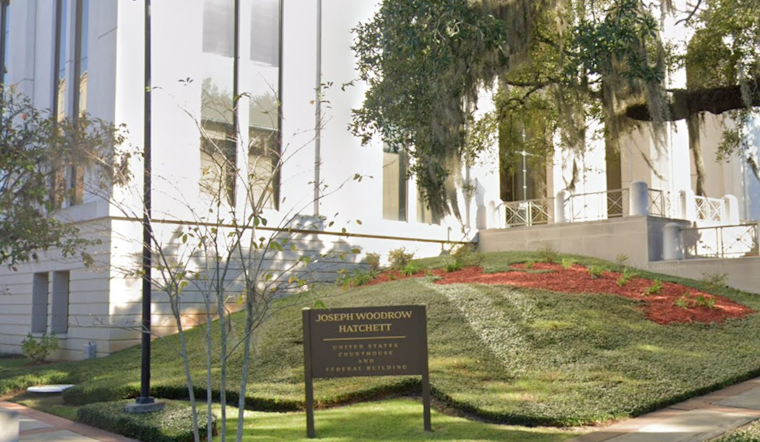
The lawsuit, filed in the U.S. District Court for the Northern District of Florida's Tallahassee Division, targets Florida Rule of Professional Conduct 4-7.15(c), which classifies any attorney advertisement containing a celebrity's voice or image as unduly manipulative and bans it outright in print, broadcast and digital ads, according to Tampa Free Press. The rule defines a celebrity broadly as anyone recognizable to an intended audience on a national, regional or local level, and it applies not just to television and print but to websites and social media platforms as well.
Named as defendants are the Florida Bar itself, along with executive director Joshua E. Doyle, chief ethics counsel Jonathan Grabb, and Orlando branch chief discipline counsel Laura N. Gryb. Deepak Gupta, counsel for the plaintiffs at Gupta Wessler LLP, argues the rule does the opposite of protecting consumers. “This rule doesn’t protect the public, it protects the industries and interests that already have the upper hand against consumers,” Gupta said, adding that “the First Amendment protects a lawyer's right to advertise” and that Florida has imposed highly restrictive measures on attorney advertising for decades.
The Rejected Ad Roster
According to the filing, the Florida Bar rejected a proposed Morgan & Morgan advertisement featuring Shaquille O'Neal, as well as separate proposed spots featuring Frankie Muniz, John Daly and Kyle Busch. The Bar also rejected a billboard for a free youth football camp featuring Malachi Toney because it included the firm's branding, per the filing described by the same outlet's report.
The lawsuit alleges the rule is unconstitutionally vague and violates both the First Amendment and the Due Process Clause of the Fourteenth Amendment. Plaintiffs are asking the federal court to declare Rule 4-7.15(c) unconstitutional both on its face and as applied to Morgan & Morgan, and to issue an injunction blocking the Florida Bar from enforcing the prohibition.
An Old Rule With Narrow Carve-Outs
The current version of Rule 4-7.15(c) traces back to a comprehensive 2013 overhaul of Florida's lawyer advertising rules, which took effect May 1 of that year and explicitly prohibited what the rule calls unduly manipulative or intrusive advertisements, according to Justia. Effective January 1, 2017, the Florida Supreme Court amended the rule to carve out an exception allowing celebrity testimonials if the celebrity is an actual current or former client of the firm, per sunEthics. The rule also includes a narrower exception for non-endorsing local radio announcers.
Beyond celebrities, the same rule bars legal ads from using authority figures such as actual or portrayed judges and law enforcement officers as spokespersons, a provision sunEthics notes was designed to keep legal marketing from appealing to emotion over rational evaluation. The filing points to a 2011 public survey conducted by the Florida Bar itself, which found that consumers ranked celebrity endorsements as by far the least important consideration when choosing legal counsel — a finding Morgan & Morgan's lawyers may use to argue the rule does little to advance any substantial state interest.
Florida Stands Alone, Filing Says
According to the filing, Florida is the only state in the nation enforcing a blanket ban on celebrity voices and likenesses in legal marketing. Attorneys seeking to run non-exempt ads in Florida must submit them to Bar headquarters in Tallahassee at least 20 days before publication along with a $150 filing fee, per Lawyer Legion; ads not flagged within 15 days of receipt are deemed approved by default.
Any restriction on non-misleading commercial speech faces intermediate scrutiny under the U.S. Supreme Court's 1980 Central Hudson Gas & Electric Corp. v. Public Service Commission decision, which requires the government to show that a restriction directly advances a substantial state interest and is no broader than necessary, according to Cornell Law School. The Supreme Court first extended First Amendment protection to attorney advertising in the 1977 case Bates v. State Bar of Arizona, ruling that states cannot impose blanket prohibitions on truthful attorney marketing, per Wikipedia.
Florida's Mixed Record Defending Ad Rules
Florida has previously won at the Supreme Court on attorney advertising restrictions. In the 1995 case Florida Bar v. Went For It, Inc., justices upheld the state's 30-day ban on targeted direct-mail solicitations to accident victims, but only after the Bar relied on a two-year public survey documenting consumer privacy concerns, according to the Oyez case summary. Whether the Bar can similarly document concrete harm from celebrity endorsements — as opposed to citing its 2011 survey showing such endorsements barely register with consumers — will likely shape how the Northern District of Florida rules.
The lawsuit also arrives weeks after the Florida Supreme Court's own unanimous ruling in a case restricting the Bar's reach, decided July 9, which found that applying bar disciplinary rules to restrict an attorney's political campaign speech violated the First Amendment. That decision, Florida Bar v. Crowley, held that lawyers do not receive diminished free-speech protections, according to The Rutherford Institute.
A Firm With Deep Pockets and a Big Stake
Founded in Orlando in 1988, Morgan & Morgan has grown into the largest personal injury law firm in the country, with more than 1,000 attorneys across 50 states and more than 140 offices nationwide. The firm spent an estimated $350 million annually on marketing as of 2025, according to The Richmonder, underscoring how much is riding for the firm on the outcome of this challenge.
The Florida Bar, which operates as an official arm of the Florida Supreme Court and regulates more than 100,000 licensed attorneys statewide, has not publicly responded to the lawsuit. Membership in the Bar is mandatory for anyone practicing law in Florida, meaning the outcome of this case could reshape advertising rules for the state's entire legal profession.


