

























































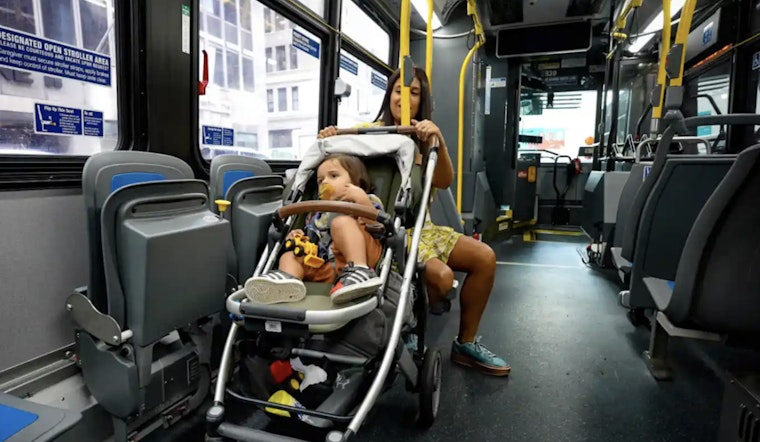
New York City parents pushing strollers onto MTA buses no longer have to fold them up first, wrestle a toddler onto their hip, and hope nobody behind them is in a hurry. The Metropolitan Transportation Authority announced it is expanding its Open Stroller Pilot Program to every bus in the city, designating a stroller space on each vehicle so caregivers can roll straight on without breaking down their gear.
The move builds on a policy that began as a small experiment years ago. As reported by WABC-TV, the expansion means every New York City bus will now have a designated place for strollers, eliminating the previous requirement that adults remove their children and fold the stroller for storage before boarding. State Sen. Andrew Gounardes framed the change as part of a broader accessibility push, saying bus-system accessibility is just as important as subway and elevator accessibility, and that accessibility should extend to people pushing shopping carts, strollers, and other devices.
New York State funding made the citywide expansion possible, according to the same report. Riders had long complained that the old folding requirement made taking the bus too difficult, particularly for solo parents trying to manage a squirming child and a bulky stroller at the same time while a bus idled at the curb.
How the Pilot Grew From Seven Routes to a Systemwide Rule
The open stroller concept isn't new. The MTA first launched the pilot in September 2022, outfitting 142 buses across seven routes spanning all five boroughs — the M31, B1, Bx23, Q50, Q12, S53, and S93, per the MTA. That initial trial was evaluated over six months using feedback from drivers and riders alike.
By March 2023, the agency pushed into what it called Phase II, retrofitting open stroller areas onto more than 1,000 buses across 57 local and Select Bus Service routes operating out of six depots, according to the MTA's own announcement. Those 57 routes served a combined 250,000 daily passengers, but even at that scale, the 1,000 retrofitted buses represented only about 17% to 20% of New York City Transit's roughly 5,800-bus fleet — meaning the remaining 80% of the system still required parents to fold up before boarding, per the Amsterdam News.
Design Rules Keep Stroller Space Separate From Wheelchair Access
The retrofits themselves follow specific design standards. Designated stroller spaces sit near the rear door, created either through open floor space or flip-up seating, and are marked with exterior and interior decals so caregivers can spot which buses have room before they even board, according to 6sqft. Those exterior decals near the front boarding doors let parents check for space before paying fare.
Crucially, MTA rules require that these stroller zones stay separate from front-of-bus wheelchair priority seating, a safeguard meant to ensure disability access isn't compromised by the new accommodation. Disability rights groups had previously raised concerns about stroller crowding encroaching on shared spaces, and the agency's separation policy was designed to address that tension directly.
Years of Advocacy Behind the Policy Shift
The reform didn't happen in a vacuum. It followed years of organized pressure from parent groups and advocacy organizations like UP-STAND, which argued that forcing solo parents to fold heavy strollers while holding toddlers made bus transit physically hazardous or simply unusable, as documented by Streetsblog New York City. Advocates also noted that transit barriers like this frequently pushed families toward buying private vehicles instead of relying on public transit.
That pressure appears to have paid off in the numbers. MTA customer satisfaction data published in 2025 showed that more than 80% of surveyed bus riders supported the open stroller program, according to the Mayor's Office for People with Disabilities, with feedback gathered through digital forms and agency surveys.
Why Buses Matter So Much for Families Getting Around
The stakes for bus accessibility run deeper than convenience. Only 117 of the city's 472 subway stations — roughly a quarter — are equipped with elevators or step-free entrances as of 2026, according to Big Brave Nomad. Stair-only stations present major physical barriers for parents traveling alone with children and gear, which helps explain why bus access has become such a focal point for family mobility across the five boroughs.
Notably, the same outlet points out a policy inconsistency that remains unresolved: while the MTA is lifting the stroller-folding requirement across all city buses, official transit regulations still require passengers to fold strollers before entering subway train cars. Parents transferring between bus and subway will still need to remove children and collapse strollers at the turnstile, even as the bus system opens up.
New Buses on the Way as Part of Broader Modernization
The stroller expansion also fits into a much larger infrastructure push. Through the MTA's $68 billion 2025–2029 Capital Program, funded via the New York State FY26 Enacted Budget, the authority plans to purchase approximately 2,500 new buses, replacing 40% of its aging fleet with modern accessible designs, according to NYC.gov. The new bus models are expected to feature wider boarding doors and enhanced flexible seating rows, building on the accessibility groundwork the stroller program has already laid.





