

























































Three very different Charlotte venues turned into one shared dance floor this weekend as Music Without Borders brought Bhangra dancers, Mariachi musicians, tabla drummers, and Arabic hip-hop DJs to stages across the city. The free two-day festival ran Friday and Saturday, moving from Camp North End to East Charlotte and finally to South End, stitching together neighborhoods that rarely share a stage.
Friday night kicked off at Camp North End's Loyd Studios, where Camp North End showcased Latin, Afrobeats and Middle Eastern music, according to WSOC-TV. The venue, a historic 76-acre adaptive reuse campus that once served as a military quartermaster depot, regularly hosts free outdoor Friday night music series and markets, as reported by Charlotte On The Cheap. DJ Øra Blvck headlined the opening night, blending Afro house, Latin house, Punjabi hip-hop, and Arabic hip-hop alongside live percussionists and local Dabke dancers, per WCNC.
A DJ's Mission to Bridge a Divided City
Øra Blvck intentionally structured her set to connect residents across Charlotte, describing the city as culturally diverse yet socially segregated, the station's report notes. Organizers and artists behind the festival viewed music as a tool to break down linguistic and neighborhood barriers, using cross-cultural fusion — pairing Dabke dancers with Punjabi hip-hop, for instance — as a deliberate act of civic bridging, per the same account.
Festival organizer Faris Khaleeli said the artists connected, performed unique independent music and found an opportunity to bring it to the community, according to WSOC-TV. Khaleeli is a Charlotte-based actor, writer, director, producer, and tech professional who draws on his second-generation immigrant background for his creative work, according to his FilmFreeway profile. He self-funded and directed the short film Dead Fast in 2026 after it reached semi-finalist status in a national short pitch competition, per that same profile. The festival featured independent artists from across the state, according to WSOC-TV, and included Arabic music, Punjabi music, and attendees heard Punjabi and Arabic versions of hip-hop throughout the weekend.
Saturday's Journey From East Charlotte to South End
Music Without Borders moved to Manolo's Bakery and Changebaker Place in East Charlotte on Saturday before continuing to Haraz Coffee House on South Boulevard, per WSOC-TV. Changebaker Place is owned by Manolo Betancur, a Colombian immigrant and activist whose community leadership inspired the 2025 documentary short The Changebaker, according to By Immigrant Hands. Betancur's East Charlotte bakery served as a community hub for immigrant advocacy following federal ICE raids in the area, the outlet reports.
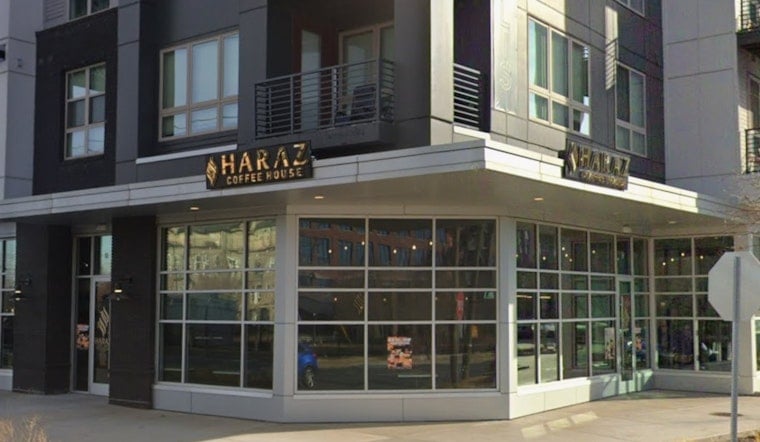
The weekend showcase featured performances by tabla drummer Jeetu Singh, UNC Charlotte Bhangra dancers, Mariachi Azteca, Maria Valdez, Husam Hasroune, and Fouad Roustom, alongside live henna art and floral crafts, according to Charlotte On The Cheap. Haraz Coffee House, the South End venue that closed out the festival, is part of a Yemeni coffee franchise that introduced North Carolina's first traditional Yemeni café experience, featuring spiced coffees and chai, according to Uber Eats listings.
Behind the Scenes: Who Funded the Festival
The two-day festival was co-promoted by Charlotte United for Palestine in collaboration with the North Carolina Arts and Science Council, according to WCNC, which organized performances across the three city venues. That organizational partnership situates a grassroots cultural event within a broader network of arts funding and community advocacy groups operating in the region.
The festival's premise — that music can knit together a fractured city — is backed by demographic data. Mecklenburg County has North Carolina's highest share of foreign-born residents at 16.5%, while Charlotte's citywide foreign-born population reaches 18.7%, according to Carolina Demography. North Carolina's foreign-born population has grown 763% since 1990, concentrated heavily in urban centers like Charlotte, per the same analysis. Roughly 25.3% of Charlotte residents — more than 222,000 people — speak a language other than English at home, according to Census Reporter, and Charlotte-Mecklenburg Schools serve students speaking more than 160 different native languages.
Organizers in Charlotte celebrated the festival's run as a success, WSOC-TV reported, with the two-day series moving from Camp North End's opening night into East Charlotte and South End for its Saturday finale. For a city where more than one in six residents were born abroad, the free, multi-neighborhood format offered a rare shared stage.





