

























































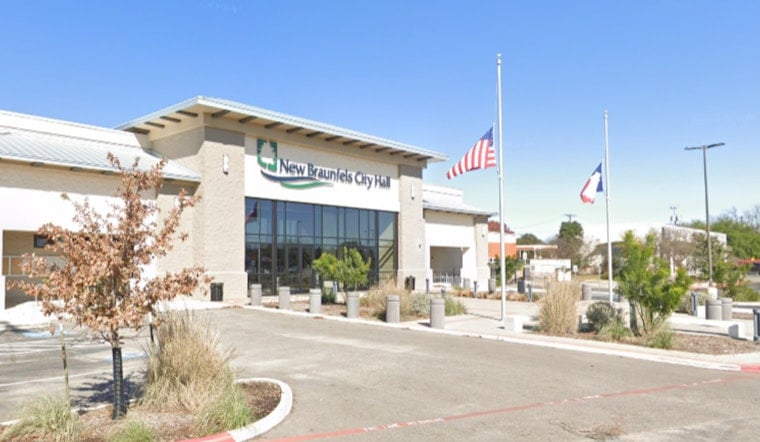
New Braunfels city leaders are weighing a $118.5 million General Fund budget for Fiscal Year 2026-27 that would hand eligible sworn personnel step increases and give city employees a 2.5% cost-of-living adjustment, all while keeping the proposed property tax rate below the no-new-revenue threshold for a second straight year. The New Braunfels City Council is set to consider the budget and tax rate on September 14. If approved, the plan would add 19 new full-time positions and pump $2.2 million into recruitment, retention and market competitiveness for city staff.
The proposed $118.5 million General Fund is part of a larger total proposed municipal budget of roughly $305 million for the fiscal year, up from the $277.7 million adopted the previous year, according to Citizen Portal. As reported by Community Impact, the city's General Fund is considered structurally balanced, and the council is weighing a proposed tax rate of $0.4089 per $100 valuation — below the calculated no-new-revenue rate of $0.4156. That gap matters because the no-new-revenue rate is the figure needed to generate the same revenue as the prior year on existing properties, meaning New Braunfels is poised to collect less per $100 of value even as its overall tax base expands.
Homeowners See Modest Savings Under Flat Rate
Community Impact's reporting indicates the median homestead property in Comal County would pay $24 less in city property taxes under the proposed rate, while a median homestead in Guadalupe County would save $39. New Braunfels Assistant City Manager Jared Werner said growth in existing and new property values gave the city flexibility to reduce the tax rate by approximately 9 cents. The city has not increased its tax rate since Fiscal Year 2014, per the same outlet's reporting.
Despite the lower rate, city General Fund revenue could still climb by $6.6 million, or 5.9%, year over year if the council approves the proposed budget — growth the outlet attributes to sales tax collections, franchise taxes and charges for services. Sales tax collections alongside property taxes remain the principal drivers of that revenue growth, according to Citizen Portal, as local retail activity keeps expanding across the city.
What Actually Shows Up on the Tax Bill
City property taxes make up only about 27% of the average New Braunfels homeowner's total tax bill, with New Braunfels ISD and Comal County accounting for the remaining share, the report notes. That means even a flat or reduced municipal rate may only modestly affect what residents ultimately pay each year. New Braunfels ISD trustees, for instance, approved a $114.68 million balanced budget in June for the 2026-2027 school year with a 2% pay increase for district personnel and a proposed tax rate of $1.0522 per $100 valuation, according to New Braunfels ISD.
The proposed tax rate splits into two components: 0.215015 cents for Maintenance & Operations, which funds the General Fund, and 0.193921 cents for Interest & Sinking, which covers city debt obligations such as vehicle replacement tax notes, per the City of New Braunfels. New Braunfels has held its overall property tax rate at $0.408936 per $100 valuation across Fiscal Years 2025, 2026 and the proposed 2027 budget, staying at or below that level since Fiscal Year 2014-15.
A Regional Pattern of Raises and Rate Discipline
This year's proposal follows a similar move last September, when the city council approved a $114.6 million General Fund budget for FY 2025-26 that granted a 3% cost-of-living adjustment to non-uniform employees and a 2.5% COLA plus step increases for uniform public safety staff, according to Community Impact. The pattern is playing out beyond city hall, too. Neighboring Comal County proposed a $213 million total budget for FY 2026-27 with a flat property tax rate of $0.305015 per $100 valuation, as Hoodline previously reported, as county officials weigh employee raises and capital spending against slowing growth in existing taxable property values.
Under Texas Truth-in-Taxation laws expanded by Senate Bill 2 in 2019, cities must calculate a Voter-Approval tax rate that caps Maintenance & Operations revenue growth at 3.5% over the prior year, plus debt service and any unused increment, without triggering a required election, per the Texas Comptroller of Public Accounts. That framework helps explain why New Braunfels, even as it grows revenue by nearly 6%, is still able to propose a rate below the no-new-revenue threshold — the added dollars are coming from new construction and stronger sales tax collections rather than higher rates on existing homeowners.
Growth Pressure Behind the New Hires
U.S. Census Bureau estimates put New Braunfels' population at 122,492 in 2025, an increase of more than 35% over the 90,403 residents counted in the 2020 Census. That surge helps explain the push for 19 additional full-time city positions in the proposed budget, as rapid growth along the San Antonio-Austin corridor continues to strain municipal services and public safety staffing.
Public Hearings Set Ahead of September Vote
Two public hearings are scheduled before the council's final vote. The first will be held September 10 at 6 p.m. at New Braunfels City Hall, followed by a second and final hearing on September 14 at 6 p.m., also at City Hall, when the council is expected to take up both the budget and tax rate for consideration.





