

























































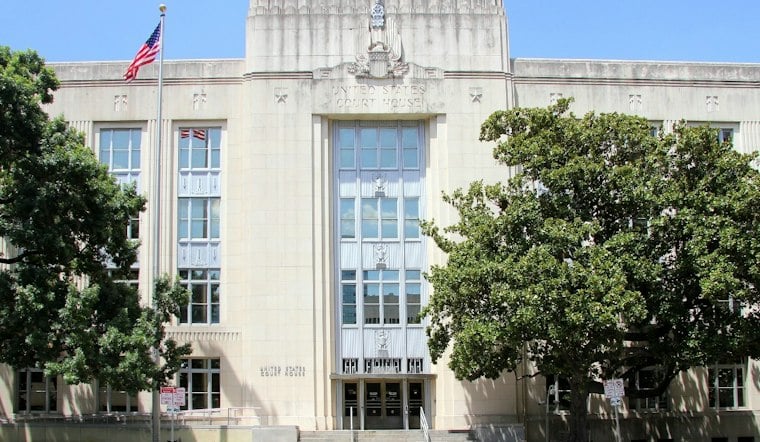
A federal jury in Austin convicted 45-year-old Indian national Bhavesh Kumar Thakkar on Monday on two felony counts of conspiracy to commit wire fraud and conspiracy to commit money laundering, marking the fourth conviction in a sprawling international call center scheme that targeted elderly Americans across the country.
Thakkar, who lived in the United States on a spousal visa, served as a U.S.-based coordinator who managed regional couriers tasked with receiving, storing and transporting cash and physical gold taken from victimized seniors between September 2022 and September 2025, according to the U.S. Department of Justice. The verdict came out of a trial in the Austin Division of the U.S. District Court for the Western District of Texas, as reported by U.S. Attorney WDTX
.
Federal prosecutors directly linked Thakkar to more than $150 million in fraud proceeds. Those proceeds were shipped via couriers to transit hubs in Los Angeles and New York before being laundered overseas back to co-conspirators in India, the Justice Department said. The case involved an international call-center scheme and couriers handling victims’ cash and physical gold.
How the Courier Network Operated
The case involved an international call-center scheme targeting elderly Americans. Thakkar served as a U.S.-based coordinator who managed regional couriers.
Two of those couriers have already been sentenced. Co-defendant Kishan Rajeshkumar Patel, a 20-year-old Indian national living in the U.S. on a student visa, was sentenced on June 18, 2025, to 63 months in federal prison after pleading guilty to money laundering conspiracy involving at least $2.69 million in intended losses across 25 elderly victims. Patel was arrested in Granite Shoals, Texas, in August 2024 after retrieving a box containing $130,000 in cash from a victim's home.
Co-defendant Dhruv Rajeshbhai Mangukiya, 21, also living in the U.S. on a student visa, was arrested in New Jersey in December 2024, where federal agents seized $73,422 in cash along with a printer for fake identification documents. Mangukiya later pleaded guilty to money laundering conspiracy and received an eight-year federal prison sentence in late 2025 — a case Hoodline previously covered in a related $250M gold scam bust out of Tarrant County.
What Thakkar Now Faces
Thakkar was convicted of conspiracy to commit wire fraud and conspiracy to commit money laundering. The case will proceed to sentencing after the conviction.
The scale of Thakkar's case reflects a much larger national problem. Older Americans ages 60 and older lost $7.75 billion to cybercrime and fraud across 201,266 complaints in 2025, a 59% increase in financial losses from 2024, according to the FBI Internet Crime Complaint Center's 2025 Elder Fraud Report as detailed by HousingWire. The average financial loss per reported senior victim nationwide reached $38,500 last year.
Investment fraud accounted for $3.52 billion in losses, while tech and customer support scams accounted for $1.04 billion, the outlet reported.
Local Enforcement and Cross-Border Pursuit
Closer to home, the San Antonio Police Department operates a specialized Financial Crimes Unit with dedicated Forgery and White Collar divisions, Hoodline reported in its earlier coverage of a hospital elder fraud case.
Federal law enforcement agencies pursue cases involving international elder-fraud schemes. That international reach remains central to the broader fight: while federal prosecutors in the Western District of Texas have successfully convicted key U.S.-based organizers like Thakkar, pursuing and prosecuting the top-level call-center ringleaders who remain overseas continues to pose a far greater challenge for investigators.
Thakkar's conviction follows a string of related Texas cases this fall, including federal indictments against four North Texas boarding-home operators accused of separate elder-fraud schemes, which Hoodline also covered in reporting on indictments across Texas. Together, the cases underscore how deeply call-center fraud networks have embedded themselves in the logistics of everyday American neighborhoods, one courier pickup at a time.





