

























































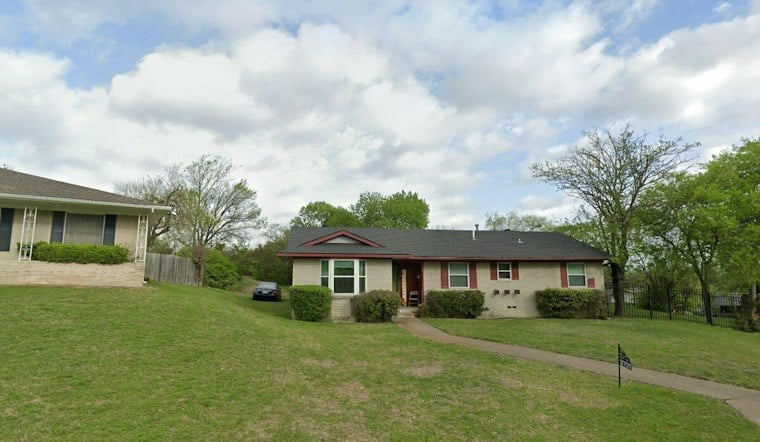
Four North Texas boarding-home operators are facing federal charges in two separate cases involving alleged financial exploitation of vulnerable residents. The indictments, returned Aug. 26, concern the alleged sale of a 79-year-old woman's Garland home and the alleged diversion of Social Security benefits connected to a resident who later died, according to Dallas Express.
The defendants are Donella Locke, Suekya Whitney, Shakoya Crenshaw and Krystle Locke. The allegations involve people who prosecutors say were entrusted with access to residents' property, identities or benefits. An indictment is an accusation, and the defendants are presumed innocent unless prosecutors prove the charges in court.
What prosecutors allege
In the Garland case, Donella Locke, Whitney and Crenshaw are charged with conspiracy and four counts of making false statements to a financial institution. The indictment alleges that the three obtained power of attorney over a woman identified as W.S. and arranged for her longtime home to be sold to Whitney and Crenshaw. The transaction generated more than $156,000, and prosecutors allege that funds moved through several accounts before $147,000 was transferred to Donella Locke, according to the Dallas Express account.
The second indictment names Krystle Locke in four counts of theft of government money and one count of aggravated identity theft. Prosecutors allege that S.T. gave Locke durable power of attorney in December 2022, after which Locke applied for Social Security Disability Insurance and Supplemental Security Income for S.T. and directed the payments into her own account. The indictment further alleges that more than $50,000 in benefits was taken and that deposits totaling more than $44,000 were recorded in October 2024, around the time of S.T.'s death, as reported by Dallas Express.
Why the allegations fall within elder-exploitation safeguards
The alleged conduct corresponds to examples of exploitation identified by the Texas Department of Family and Protective Services, which says exploitation can include using an elderly or disabled person's resources for personal or monetary benefit, including taking Social Security or SSI checks or property. That definition provides general protective-services context; it does not establish that the allegations against these defendants are true.
Texas Adult Protective Services investigates reports of abuse, neglect and financial exploitation involving people who are 65 or older or have disabilities, according to the agency's data book. Its work can include people living in community settings such as unlicensed adult foster homes and unlicensed board-and-care homes, the agency says in its investigations and services guidance.
The Social Security Administration's Office of Inspector General separately lists representative-payee misuse and deceased-payee fraud among the disability-insurance fraud categories it investigates, while cautioning that the general categories do not determine whether a particular alleged scheme occurred. In Texas, boarding-home oversight can also vary by locality: a presentation on the Texas regulatory model says House Bill 216 gave local governments the option to regulate boarding homes subject to certain requirements.
What remains unresolved
The indictments establish the charges, not guilt. The supplied records and published reporting do not identify defense attorneys, detention decisions or plea entries. They also do not, by themselves, show how the homes were licensed or regulated locally, whether other residents were affected, or whether the alleged transactions resulted in any recovery of property or benefits.
If convicted, the three defendants in the home-sale case face up to five years on the conspiracy charge and up to 30 years on each false-statement count, according to Dallas Express. Krystle Locke faces up to 10 years on each theft count, while the aggravated-identity-theft charge carries a mandatory consecutive two-year sentence. Those are statutory maximums, not predictions of the sentences that would follow a conviction.





