

























































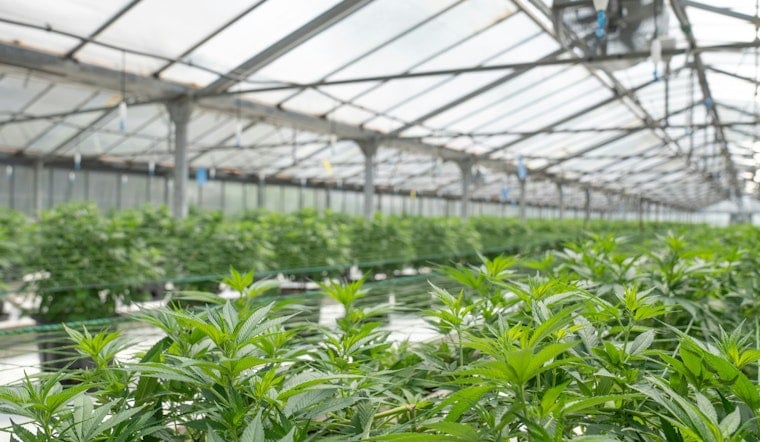
New York cannabis growers, retailers and their advocates are pressing Gov. Kathy Hochul to veto a bill that would create a state wage board for the marijuana industry, warning it could send already-taxed legal weed prices even higher and push minority-owned shops out of business. The proposed board would have three members and would recommend wages across the cultivation, processing, distribution and retail sectors of New York's cannabis market.
The legislation, Senate Bill S10643, was sponsored by state Sen. Jessica Ramos and passed both chambers of the Legislature in early June alongside a companion Assembly bill from Assemblymember Harry Bronson, according to LegiScan. As reported by the New York Post, licensed marijuana merchants are urging Hochul to veto the measure, arguing it would drive legal weed prices sharply higher. The bill would seat one representative from the licensed cannabis industry, one from the New York State AFL-CIO, and a public member chosen by the state labor commissioner to chair the panel.
Growers Say They Can't Absorb More Costs
Joseph Calderone, chief operating officer of Grateful Valley Farm in Corning and co-founder of the Cannabis Farmers Association, said New York cannabis farmers invested heavily to build a legal industry under demanding regulations and cannot absorb another layer of costs, per the Post's report. Licensed cannabis farmers have already been left holding hundreds of pounds of spoiled marijuana crops, according to the same account, a consequence tied to the slow rollout of the legal market.
Osbert Orduña, founder of The Cannabis Place in Queens and chairman of the Safe Affordable Cannabis New York Coalition, said that if Hochul signs the bill, cannabis businesses will close and industry workers will lose their jobs. He said cannabis retail budtenders already earn approximately $25 an hour excluding tips, and argued that higher prices would only cause communities to lose while the illicit market wins. Orduña warned the bill would drive customers toward what he described as an illicit market run by an international drug trafficking cartel.
The Tax Burden Already Facing Legal Weed
New York cannabis merchants currently collect a combined 13% tax on customer sales, with the state taking 9% and local governments receiving 4%, per the Post's reporting. Distributors also pay a 9% fee when selling to retailers. Research cited in the same report, from the International Journal of Drug Research, found that a 10% cannabis tax increase reduces legal cannabis sales by 12.6%, while a 10% price increase reduces legal sales by 18%.
New York's regulated adult-use market generated $1.7 billion in sales in 2025, a tenfold increase over 2023, and posted nearly $250 million in sales during just the first three weeks of February 2026, according to MJBizDaily. State regulators project the market could reach $2.6 billion in sales in 2026 as more dispensaries open. As of February 2026, the New York State Cannabis Control Board had approved 2,110 adult-use licenses statewide, including 484 retail dispensaries, 514 processors, 319 microbusinesses and 239 cultivators.
Labor Leaders Defend The Proposal
Mario Cilento, president of the New York State AFL-CIO, which represents 2.5 million members including cannabis workers, defended the wage board proposal, saying it seeks adequate wages and benefits for cannabis industry employees and supports the state's social equity and economic development goals. The 2021 cannabis law that legalized recreational marijuana in New York was intended to help minorities, people convicted of cannabis offenses during prohibition, women and disabled military veterans, according to the Post's reporting. Local 338 of RWDSU/UFCW had no immediate comment when reached by the Post.
Licensed cannabis businesses in New York are currently required to have labor peace agreements giving employees the right to organize, a mandate written into the 2021 Marihuana Regulation and Taxation Act, per the Cornell University ILR School. That requirement was designed to protect the state's proprietary interests by preventing strikes and picketing at licensed cannabis sites. New York has authorized labor commissioners to appoint tripartite industry wage boards since the 1930s, a mechanism last notably used in 2015 to set a $15 minimum wage for fast-food workers, according to the Center for American Progress.
Federal Courts Complicate The Picture
The push toward a wage board comes as federal courts have begun striking down similar labor mandates elsewhere. In August, a federal judge in the U.S. District Court for the District of New Jersey ruled in Curaleaf Holdings Inc. v. New Jersey Cannabis Regulatory Commission that the National Labor Relations Act preempts state-mandated labor peace agreements for cannabis licensees, according to Duane Morris. New Jersey regulators have since filed a notice of appeal with the 3rd Circuit Court of Appeals.
That ruling followed a similar decision in May 2025, when a federal judge in Oregon struck down Measure 119 for requiring state-licensed cannabis businesses to execute union labor peace agreements, a move the Employment Law Letter says violated federal labor preemption. Recent court rulings have indicated that cannabis labor peace mandates conflict with federal law more broadly, a pattern that has left New York's own labor peace requirement facing similar legal exposure.
Trade Group Opposition And What Comes Next
The Cannabis Association of New York issued an action alert in late July urging Hochul to veto the bill, warning that a wage board would introduce economic instability for licensed operators and disproportionately endanger small social equity businesses, according to Marijuana Moment. CANY represents licensed operators who have already faced multi-year startup delays, high tax burdens and illegal market competition. New York cannabis advocates have said a wage board would harm licensed growers and could force minority-owned retail shops to close.
The Safe Affordable Cannabis New York Coalition plans to distribute stickers reading “Tell Gov. Hochul to stop the weed price hike” at the New York State Fair in Syracuse, complete with QR codes directing consumers to keepnycannabisaffordable.com, a site that lets consumers message Hochul demanding a veto. A spokesperson for Hochul said the governor is reviewing the wage board bill. The debate arrives against the backdrop of the state's own troubled cannabis rollout, which Hochul has called a disaster; her office conducted a scathing audit of the Office of Cannabis Management, which lost two CEOs during its early period, was sued for allegedly discriminating against disabled military veterans, and admitted it had mistakenly calculated cannabis shop separation distance rules, prompting the Legislature to change them. Delays in approving and opening dispensaries allowed hundreds of illegal operators to fill the market void in the meantime.
Hoodline has previously reported on New York's rapidly growing legal cannabis market, which hit record $2.5 billion in sales earlier this year, and on new rules letting craft growers sell directly to the public. Whether Hochul signs or vetoes S10643 now looms as the next flashpoint in a market still working through the growing pains of its earliest years.





