

























































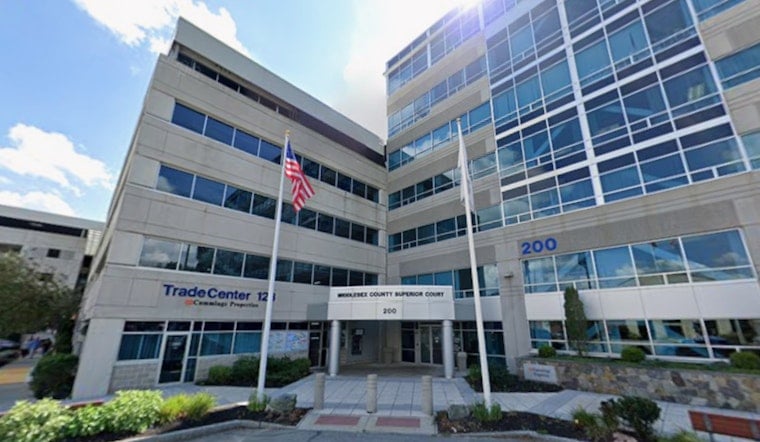
A Middlesex Superior Court judge has ordered the City of Newton to repay more than $2 million to three local marijuana companies, ruling the city collected community impact fees for years without ever proving those fees matched actual costs the businesses caused. Among the expenses the city tried to justify with the money: $71,734 spent on Officer Leo, a golden retriever who visits schools and senior centers as part of the police department's community outreach.
Judge Asha White granted summary judgment in favor of Ascend Mass LLC, Cypress Tree Management Inc. (doing business as REDI), and Garden Remedies Inc. in their lawsuit against Newton, according to The Boston Globe. White found that Newton failed to provide sufficient evidence that the fees it collected were reasonably related to the operation of the three dispensaries, and concluded that none of the seven spending categories the city pointed to actually resulted from costs the businesses imposed. Notably, White found that the concerns Newton had cited about increased crime, substance abuse, and traffic never came to pass because of the three pot shops.
Newton collected roughly $2.4 million from Ascend, REDI, and Garden Remedies between 2018 and 2022, per the Globe's reporting. Garden Remedies alone paid $1.7 million in community impact fees, while Ascend paid $492,855 and Cypress Tree Management paid $200,937 on REDI's behalf. All three companies stopped paying the fees after 2022, and eventually sued the city, a dispute Hoodline first reported when the three Newton dispensaries threatened legal action over their Host Community Agreements.
What the Fee Money Actually Paid For
Beyond Officer Leo, Newton's spending included $601,808 to hire two part-time school substance abuse counselors and more than $1 million on public school curricula and programs, according to the Globe's account of the case. The city also spent $500,000 on a proposed redesign of Washington Street and put money toward free Narcan kits, substance abuse services, and a drug drop-off kiosk. Newton has described Officer Leo, a five-year-old golden retriever who joined the police department in 2021, as trained to provide comfort, help find lost people, and be present in the community, per the department's 2021 announcement. The city has said Leo helps children learn about healthy choices concerning drugs and alcohol, including marijuana, though the dog is not trained to sniff drugs or serve as an attack dog. Leo has more than 2,200 Instagram followers.
Jim Smith, an attorney representing the dispensaries, said no money is owed without proof of direct business impact, and added that the companies will pay if the city documents impacts actually caused by their businesses. Former Mayor Ruthanne Fuller had called the lawsuit's argument debunked in 2025, before the ruling came down. Jeffrey Herold, another figure connected to the case, said cannabis companies should be treated fairly and legally like any other business.
Part of a Statewide Pattern
State lawmakers clarified in 2022 that municipalities must prove impact fees reasonably relate to costs imposed by marijuana establishments, a change that eliminated automatic collection of the fees without a specific expenditure list. That reform, Chapter 180 of the Acts of 2022, capped the fees at 3 percent of gross revenue, limited them to eight years, and gave dispensaries an explicit right to sue for refunds, according to KP Law. Starting in March 2024, the Massachusetts Cannabis Control Commission took on authority to review and approve all Host Community Agreements statewide to keep local fees in line with those restrictions, per the Cannabis Control Commission.
Newton is far from the only Massachusetts community facing this reckoning. Middlesex Superior Court ordered the Town of Great Barrington to pay a $4.71 million final judgment last year to reimburse cannabis operators Theory Wellness, Rebelle, and Farnsworth Fine Cannabis, according to Todd & Weld LLP, the firm that handled that case. The Town of Uxbridge reached a $1.2 million settlement with Caroline's Cannabis in early 2024, refunding roughly 80 to 93 percent of the fees it had collected, and the City of Haverhill agreed to a $612,500 settlement with dispensary Stem in January 2025 after failing to document its fees, as reported by the Provincetown Independent. Some cannabis businesses across the state have received up to 80 percent of their money back in settlements, and dozens of cannabis businesses have challenged community impact fees through lawsuits and negotiations.
Other Cities Changed Course Early
Not every municipality fought the issue in court. Boston announced in November 2022 that it would stop collecting the fees altogether and refunded $2.86 million previously collected from adult-use retailers since 2020, according to Regulatory Oversight. Worcester reduced its annual fees to a flat $5,000 per business in 2022 before eliminating them entirely in January 2023, after collecting nearly $5.2 million between fiscal 2019 and 2023, per the Worcester Business Journal.
More lawsuits are still working their way through Massachusetts courts. Commonwealth Alternative Care Inc. sued Taunton in March for $3.3 million in previously paid impact fees, alleging the city had no records of actual costs incurred, and Curaleaf sued the Town of Provincetown in November 2024 seeking to recoup $372,260 in fees collected between 2020 and 2022 without documented proof of municipal costs. Municipalities across the state had been permitted to charge up to 3 percent of gross revenue from licensed marijuana businesses under these host community agreements, a structure now under sustained legal pressure statewide.
Newton has said it is reviewing the court decision and considering its legal options, leaving open whether the city will appeal Judge White's ruling or how it plans to budget for the repayment. Garden Remedies has conducted several rounds of layoffs over the years, according to the Globe's reporting, though the dossier does not specify whether those layoffs were tied to the fee dispute.




