

























































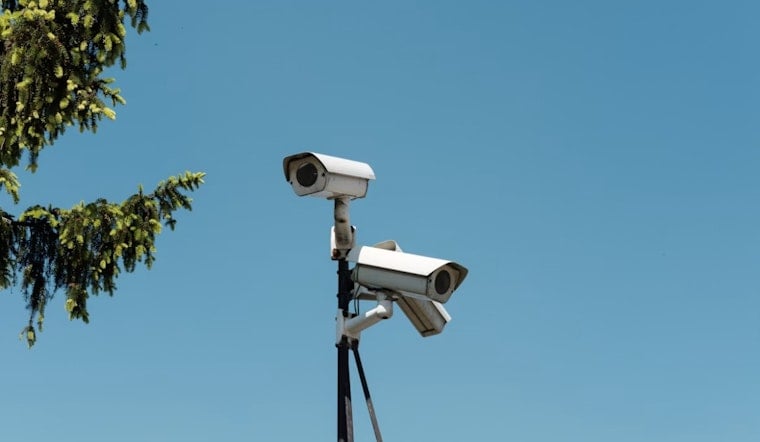
Norwalk residents are calling on city council to terminate the city's contract with Flock Safety, arguing that the network of eight automated license plate reader cameras amounts to unconstitutional mass surveillance of everyday drivers. The pushback came to a head during a July 28 city council work session, where resident John Fell argued that the system tracks far more innocent motorists than it ever helps catch criminals.
Fell told the council that Norwalk's camera system logged 128,775 vehicle passes in a single month, and that the driving data collected is searchable by law enforcement agencies across dozens of states and by federal entities, according to News 5 Cleveland. He also cited the Flock transparency portal, which he said recorded more than 128,000 vehicles logged against just 121 searches — a ratio he used to argue that sharing local driving logs without individualized suspicion constitutes what he called an unconstitutional digital dragnet, as reported by the Sandusky Register. By his math, each search corresponded to roughly 1,064 cars whose data was logged and stored.
Norwalk's eight cameras were first installed in March 2025, per the same Sandusky Register account of Fell's public comment. Fell told council that residents should get a vote on whether the contract, which expires in the spring, gets renewed, and he pressed officials for a quick decision based on the public outcry.
Police Say the Cameras Have Closed Cases
Norwalk Police Chief Scott Dahlgren pushed back on the characterization that the cameras monitor all citizens, telling News 5 Cleveland that the system is not used for blanket surveillance. He said Flock cameras have helped close 30 cases and assisted in investigations involving sex offenses, armed robbery and shoplifting. In one case, the system identified suspects from Cleveland connected to an appliance theft investigation, helping recover $3,000 in appliances stolen from a local store through fraudulent credit card transactions.
City official Dave Light said he was surprised by the scale of community pushback, defending the cameras' value to law enforcement and noting that access is tightly controlled — restricted to vetted personnel rather than every officer on the force. Light said the Flock system requires officers to document a legitimate law enforcement reason for every search, maintains audit logs, and automatically deletes collected data after 30 days. The Norwalk Police Department uses the technology as an investigative tool for crimes that have already occurred and to help locate vehicles tied to active investigations, and the department conducts regular reviews intended to ensure compliance and prevent misuse, Light said. He added that officials will work together to review the contract and determine what is best for the community.
Resident Tim Bryant offered a different view than Fell, telling council he supports keeping the cameras because they help police catch people committing crimes and serve an important public safety purpose. Fell, for his part, argued the cameras violate the Fourth Amendment and raised concerns about potential misuse of the system by officers.
A Statewide Reckoning Over Flock Contracts
Norwalk's debate is unfolding against a broader wave of scrutiny over Flock Safety's automated license plate readers across Ohio. The ACLU of Ohio has issued statements condemning municipal renewals of Flock contracts statewide, describing the systems as warrantless mass surveillance that threatens Fourth Amendment privacy rights, according to the ACLU of Ohio.
Cleveland City Council approved only a temporary six-month extension of its own Flock contract in July, while adding filters that restrict outside agencies from querying the city's license plate data, as reported by WEWS News 5 Cleveland. In Columbus, an internal audit revealed that local Flock data had been queried more than 15,000 times for potential federal immigration enforcement, prompting the mayor to disable nationwide lookups and schedule a public hearing, per WOSU Public Media. Dayton temporarily covered its 72 Flock cameras with plastic bags while investigating its own data-sharing practices with outside agencies, Hoodline previously reported on officer misuse tied to Columbus cameras.
The concerns extend beyond data sharing. A suspended police officer in Lorain County was indicted on eight felony charges in July for allegedly misusing the automated law enforcement database system connected to license plate tools, and pleaded not guilty in Lorain County Common Pleas Court, according to The Chronicle-Telegram. The same outlet reported that police and sheriff's departments in Lorain and Ashland counties have documented multiple acts of vandalism against Flock cameras, including cut wires and shattered solar panels.
Costs Are Climbing Too
The financial stakes are also rising for institutions that rely on the vendor. Ohio State University signed a $378,000 two-year contract extension with Flock Safety on July 1 to operate 63 campus cameras, a 20 percent annual cost increase per camera compared to its original free pilot program that began in June 2022. Municipal police departments elsewhere in Ohio typically cover such subscription costs through state programs like the Ohio Violent Crime Reduction Grant, administered by the state's Office of Criminal Justice Services.
For now, Norwalk officials have not announced a decision on the contract's fate ahead of its spring expiration. Light said the city intends to weigh the public safety record cited by police leadership against the mounting privacy objections raised by residents like Fell and Bryant before determining what comes next.





