

























































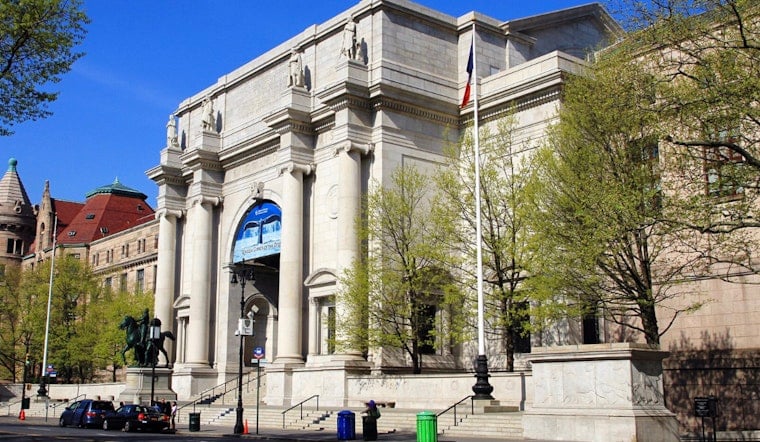
New York City's most prominent museums and even a restaurant inside Central Park have racked up tens of thousands of dollars in fire code fines over the past couple of years — and the city has not collected a dime of it. The Fire Department issued dozens of summonses to institutions including the Metropolitan Museum of Art, the American Museum of Natural History, and the Museum of the City of New York, mostly for failing to prevent fire alarms from going off when there was no actual emergency.
The reason the money never gets collected comes down to who technically receives the bill. As reported by Gothamist, the FDNY assigned at least 65 of these summonses not to the private nonprofits that actually run the museums, but to the city's own Department of Cultural Affairs, which technically owns the land and buildings under a public-private arrangement known as the Cultural Institutions Group. Because the fines are issued to a city agency rather than a private entity, New York generally does not collect fines issued to its own agencies, according to a city spokesperson cited in that reporting.
How the Loophole Works
The Cultural Institutions Group model dates back to 1869, when New York State authorized the city to build a home for the American Museum of Natural History on public land — establishing a structure where the city owns the physical property while private nonprofits handle day-to-day operations and programming, per the Cultural Institutions Group's own account of its history. That framework now covers 39 institutions across the five boroughs, and it means violation notices addressed to the property owner land on the Department of Cultural Affairs' desk instead of the museum's.
Marisa Senigo, spokesperson for the Office of Administrative Trials and Hearings, which adjudicates city summonses, put it bluntly: city fines paid to city agencies are effectively the city paying money to itself. The Cultural Institutions Group Procedures Manual states that institutions are responsible for paying fines from regulatory agencies, but the Department of Cultural Affairs told Gothamist that nonprofits are responsible for addressing all violations at their institutions — leaving open who, if anyone, is actually settling the underlying safety issues.
The Met, AMNH, and a Central Park Restaurant
The Metropolitan Museum of Art alone received five FDNY summonses between March and May of 2025, and nine of its violations were assigned to the Department of Cultural Affairs rather than the museum directly. The Met recorded more than $400 million in net income in 2025, and it is currently pursuing a $550 million capital expansion to build the five-story Oscar L. Tang and H.M. Agnes Hsu-Tang Wing, designed by architect Frida Escobedo and slated to begin construction this year, as Hoodline previously reported. The museum did not respond to a request for comment on the fines.
Violations also turned up at the Brooklyn Children's Museum in Crown Heights and at Snug Harbor on Staten Island. Even the Central Park Boathouse, a city-owned building that isn't a museum at all, picked up at least eight FDNY violations. Legends Hospitality, which operates boat rentals and the restaurant there under a 10-year lease announced by then-Mayor Eric Adams in February 2023, oversaw kitchen, roof, and HVAC ventilation overhauls before reopening the lakeside restaurant in mid-2026, as Hoodline detailed in its report on the venue's tasty new chapter. Legends Hospitality did not respond to a request for comment on the fire code violations, and the FDNY did not explain why it assigned the boathouse's summonses to the Department of Cultural Affairs rather than to the operator itself.
A Question of Fairness
Under Title 3 of the Rules of the City of New York, private building owners face statutory fines of up to $1,000 for a first unwarranted fire alarm and up to $5,000 for repeat offenses within an 18-month window, according to the Nacmias Law Firm. Those summonses are adjudicated at the Office of Administrative Trials and Hearings, where hearing officers lack authority to alter the penalty schedule, and unpaid fines against private entities get referred to the Department of Finance for civil judgment and collection, per OATH's own guidance. In 2024, the FDNY issued more than 22,000 fire code violation notices citywide, carrying fines between $500 and $5,000 apiece, according to Total Fire Protection.
Stephen Louis, a law professor and former chief of the legal counsel division at the city's Law Department, said the practice is likely a benefit the city extends to its important cultural partners — an unofficial way to help those organizations avoid paying fines they would otherwise owe. He added that the arrangement could raise questions about fairness, and separately suggested the city may simply be trying to help cultural organizations stay afloat. The FDNY summonses tied to the alarm violations were also unsigned and missing both an issuance date and the issuing employee's printed name, and the department did not say whether the underlying alarm issues at these buildings had actually been corrected.
Big Budgets, Small Fines
The uncollected fines represent a tiny fraction of what the city already pours into its cultural institutions. For Fiscal Year 2027, New York City approved a record $323.8 million budget for the Department of Cultural Affairs, including $183 million in direct municipal funding for Cultural Institutions Group members, according to Hyperallergic. That's on top of rent breaks the city gives nonprofits operating on its property and separate capital investments cultural institutions receive. The Department of Cultural Affairs distributed another $74.3 million in Cultural Development Fund grants to 1,171 non-CIG cultural organizations in March, as Hoodline reported at the time.
In December 2025, Cultural Institutions Group members elected Stephanie Hill Wilchfort, president of the Museum of the City of New York, as coalition chair, with Atiba Edwards, CEO of the Brooklyn Children's Museum, as executive vice chair, according to Hyperallergic's coverage of the leadership vote. The Cultural Institutions Group referred questions about the fines to the city rather than answering directly. To formally resolve a fire alarm summons, property owners are supposed to submit technical documentation explaining the cause of the alarm along with a certified Certificate of Correction — a step that, per the reporting, remains unclear for many of the buildings named in these violations.





