

























































Oak Ridge North homeowners could see their property tax bill climb by nearly $79 a year under a rate increase city leaders are now considering for fiscal year 2026-27. The proposed rate would rise from the current $0.4268 per $100 valuation to a recommended $0.4615 per $100 valuation, reversing a rate cut the city made just a year earlier.
City Manager Heather Neeley told council members that shrinking tax revenue is forcing the increase, according to Community Impact. Appraisal protests and adjustments are expected to reduce the city's tax revenue in fiscal year 2026-27, and Neeley recommended the total property tax rate of $0.4615 per $100 valuation to offset that decline. Under the recommended rate, the average homeowner would pay roughly $34.70 more annually for every $100,000 of taxable home value, or about $78.95 more per year for a median homestead valued at $230,176.
The proposed rate is made up of two components: a recommended maintenance and operations rate of $0.3250 per $100 valuation and a debt service rate of $0.1365 per $100 valuation, which stays fixed regardless of which overall rate the council ultimately adopts. Those two figures combine to form the total tax rate that funds both day-to-day city operations and existing debt obligations, the outlet's report notes.
A Statewide Squeeze on Local Tax Bases
Much of the pressure tracing back to Austin. House Bill 9, passed during the 2025 legislative session, increased the business personal property tax exemption from $2,500 to $125,000, effective January 1, 2026, according to the Office of the Texas Governor. Texas voters approved the change as Proposition 9 in November 2025, and the measure is projected to deliver $500 million in annual personal property tax relief to businesses statewide — a windfall for companies but a direct hit to the taxable value that cities like Oak Ridge North depend on.
That exemption increase reduced Oak Ridge North's taxable value, compounding the effects of appraisal protests already trimming the city's tax rolls this year. It's a sharp reversal from the prior fiscal year, when the city actually lowered its tax rate to $0.4268 per $100 valuation for FY 2025-26, down from $0.4408 the year before. That rate was adopted as a no-new-revenue rate meant to keep total municipal property tax collections roughly flat at about $1.22 million, per the same Community Impact report.
Sales Tax Revenue Also Sliding
Property taxes aren't the only revenue source under strain. Local sales tax allocations to Oak Ridge North totaled $3,146,648 through August, down 9.47% compared with the $3,476,100 collected over the same eight-month stretch in 2025, according to the Texas Comptroller of Public Accounts. Sales tax revenue typically exceeds what the city collects in property taxes, and Oak Ridge North had projected $3.38 million in sales tax collections for the current fiscal year — a target now trending well below expectations.
Under Chapter 26 of the Texas Tax Code, a municipality's voter-approval tax rate caps maintenance and operations revenue growth at 3.5% over the prior year, plus debt service, before a public vote is required. That formula, enacted through Texas Senate Bill 2 in 2019, is how Oak Ridge North arrived at its voter-approval threshold of $0.3962 per $100 valuation, while the city's no-new-revenue rate sits even lower, at $0.2927 per $100 valuation.
A Higher Ceiling Gives Council Room to Maneuver
At the August 11 council meeting, Neeley recommended setting the public-hearing rate ceiling as high as $0.5327 per $100 valuation, explaining that doing so would still allow the council to ultimately adopt the lower $0.4615 rate. Texas property tax law allows local governing bodies to lower a published tax rate proposal at the public hearing but bars them from raising it beyond the noticed ceiling — meaning the higher number is a procedural safeguard, not a preview of the final bill.
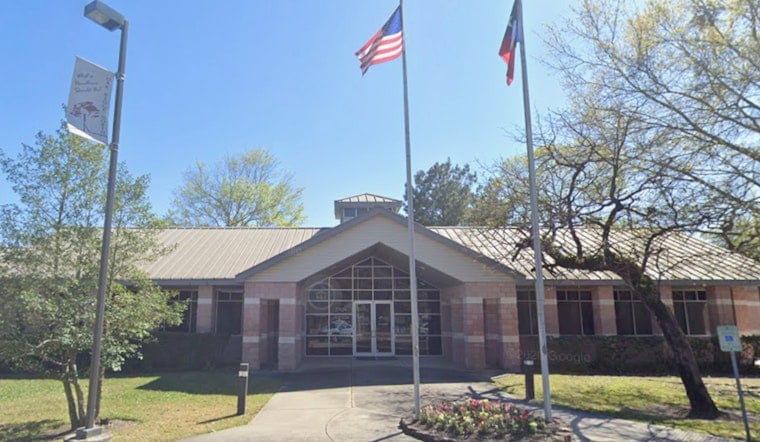
It's a maneuver Oak Ridge North has used before. During FY 2023-24 budget proceedings, Neeley similarly recommended a higher preliminary voter-approval rate to preserve flexibility ahead of the council adopting a lower final rate, Community Impact has reported. The city council will hold its public hearing on the FY 2026-27 tax rate and budget on August 24 at City Hall, located at 27424 Robinson Road.
Weighing the Bill Against Bigger Levies
Any increase from Oak Ridge North represents just one piece of the total property tax bill for the city's roughly 3,034 residents and 1,124 households, who have a 96.9% homeownership rate and a median household income of $109,167, according to MMCG Analytics and U.S. Census Bureau data. The city's slice is dwarfed by Conroe Independent School District, which maintained a tax rate of $0.9496 per $100 valuation for the prior fiscal year and serves 73,000 students across 348 square miles of Montgomery County, per the district's own figures. Property owners also pay into Montgomery County Drainage District No. 6, which held a maintenance and operations tax rate of $0.113 per $100 valuation in 2024 and 2025 to fund regional stormwater and flood-prevention infrastructure.
The timing of the proposed increase comes as Oak Ridge North pushes forward with a major capital investment along Robinson Road. The city council approved the release of $1.8 million in escrow funds in late July following substantial completion of the first retail building in its Plaza District town center project, an 18,038-square-foot shell that's part of a larger 60,000-square-foot development on eight acres of city-owned land. That multi-phase project will eventually include a new City Hall and an 8,000-square-foot central green space, tying the city's redevelopment ambitions directly to the same tax base now under pressure from state exemption changes and declining sales tax collections.





