

























































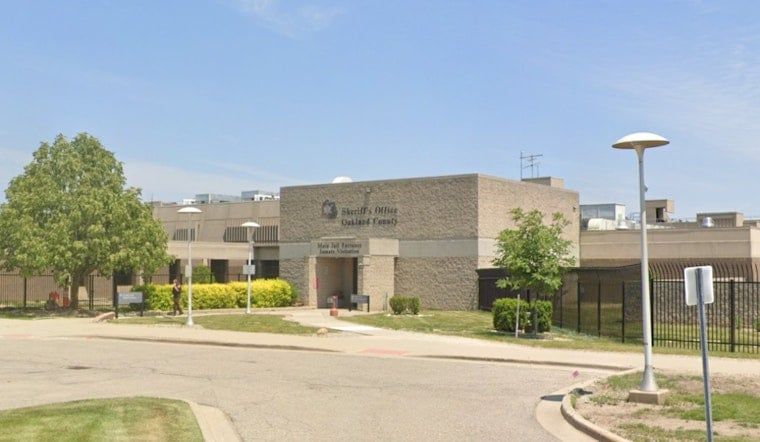
A three-person Oakland County Sheriff's Office team that tracks down overdose survivors and people in mental health crisis to connect them with help is running out of money, and county leaders are scrambling to figure out how to keep it alive past September. The Crisis Response Unit, made up of one sergeant and two deputies, has spent the past several years following up with people who received Narcan after an overdose, identifying people in need from substance-abuse-related calls, and linking them with services meant to keep them out of jail and out of the morgue.
The funding for the unit runs out on September 30, according to The Detroit News, which reports that Oakland County Sheriff Mike Bouchard says his office simply lacks the budget to keep funding the existing positions. Bouchard has said the department cannot rearrange its responsibilities internally to keep the program running, meaning the unit's survival now hinges on decisions outside his office. Federal money that had supported the program was cut in the first half of 2025, according to Oakland County Commissioner Gwen Markham, who said the loss of that funding stream is what triggered the current crunch.
The Sheriff's Office applied for a $375,000 grant from the U.S. Department of Justice to help bridge the gap, but as of the Detroit News report, that grant has not been approved by the federal agency. Fully funding the unit for the next fiscal year would cost roughly $250,000, and commissioners have been discussing where that money might come from. Markham has said she believes commissioners will probably fund the unit for another year regardless of whether the federal grant comes through, and Oakland County commissioners have indicated they want to sustain the program.
A Track Record Commissioners Don't Want to Lose
Commissioner Marcia Gershenson has said multiple county department heads have specifically cited the value of the Crisis Response Unit in their own work. Commissioner Angela Powell has said the unit helps patrol officers by taking on the labor-intensive work of managing people in crisis, freeing deputies to handle other calls. Powell has also pointed to rising homelessness in Pontiac and Royal Oak, the two communities the unit serves, as a reason the program remains necessary.
Powell has said the unit is changing lives and reducing the number of people who end up jailed instead of connected to treatment. Markham has separately described the unit as important and effective at what it does. Among the cases the Detroit News highlighted was one in which the unit saved a person who had overdosed a second time after previously being revived, illustrating the kind of repeat, high-risk contact the team is built to catch.
Broader Budget Context Around the County
The Oakland County Sheriff's Office has been operating with lean staffing more broadly, which is part of why Bouchard says the office cannot simply absorb the crisis unit's costs elsewhere in its budget. County commissioners had already approved $650,000 for the Crisis Response Unit in the fiscal year 2026 triennial budget passed last September, according to Oakland County, and in October 2024 the county board separately accepted a $400,000 federal Promoting Access to Crisis Teams grant covering October 2024 through September 2026, intended to add a traveling co-responder clinician and a non-patrol vehicle to the unit's operations.
The unit partners with Oakland Community Health Network, which runs a broader co-responder initiative embedding mental health clinicians across 20 local police agencies countywide. That network received 9,479 law enforcement referrals between August 2021 and October 2025, according to Oakland Community Health Network's own service data, showing how widely Oakland County police agencies have come to rely on embedded mental health support. Locally, Orion Township's sheriff's substation logged 91 mental health calls in 2025, with 28 of those resulting in direct referrals to the Crisis Response Unit or a Crisis Intervention Team, according to township millage documentation.
A Fragile Regional Safety Net
The funding uncertainty around the Crisis Response Unit comes as the county's broader behavioral health system has already shown signs of strain. In January, Oakland Community Health Network temporarily told local law enforcement to divert mental health patients in crisis to hospital emergency departments rather than the county's crisis center in Pontiac, after contract negotiations collapsed with longtime operator Common Ground, according to Bridge Michigan. Common Ground had served roughly 8,000 individuals annually at the Pontiac Resource and Crisis Center before its contract ended in early 2026, including 1,300 people brought in directly by police in 2025.
The stakes of losing dedicated overdose follow-up are set against otherwise encouraging trend lines. Oakland County Medical Examiner data published last September showed a 37 percent decrease in fatal drug overdoses in 2024 compared to 2023, along with a 13.3 percent drop in local EMS responses to non-fatal overdoses, per Oakland County figures. Statewide, preliminary 2025 data from the Michigan Department of Health and Human Services projected fewer than 1,800 overdose deaths, a 47 percent decline from 2021 and the fourth consecutive year of falling fatalities across Michigan.
There may also be untapped money sitting on the table. A statewide accounting released by the Michigan Attorney General's Office in May found that local Michigan governments had spent only 17.7 percent of national opioid settlement funds received over three years, leaving $176 million unspent in local accounts, according to a CBS News Detroit report. Whether Oakland County taps any of that settlement money to bridge its own crisis unit's funding gap remains an open question that county officials have not yet answered.


