

























































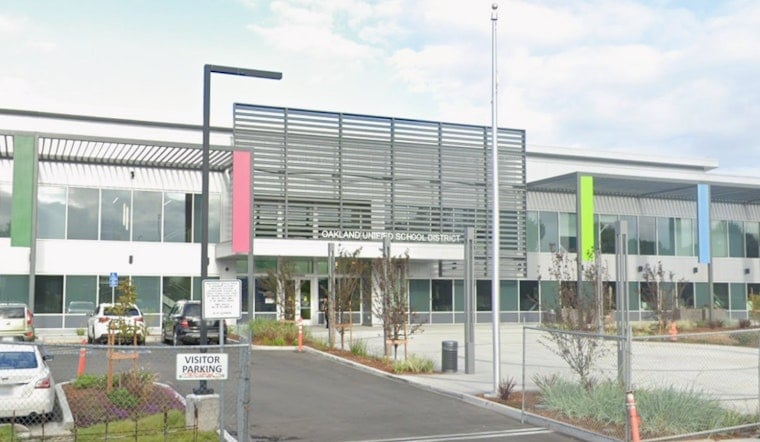
Oakland Unified School District's school board rushed through a vote to place a parcel tax renewal on the November ballot, only for the district to blow past the county's filing deadline entirely, leaving the measure off the ballot and pushing any renewal attempt to 2028. The mishap comes as the district grapples with a severe budget crisis and a teachers contract worth $105 million with no identified funding source to cover it.
According to the San Francisco Chronicle, the school board called a hastily arranged special meeting with just one day's notice, tacking the parcel tax item onto a scheduled board retreat and taking the vote shortly after the meeting started at 10 a.m. Alameda County election officials confirmed they never received a filing from Oakland Unified, and district leadership may have failed to submit the required documents in time, per the Chronicle's reporting. State law requires local agencies to submit ballot measure paperwork at least 88 days before a general election, which sets last Friday as the statutory deadline for the November 3 election, according to the Official Election Site of Alameda County.
A Vote Nobody Saw Coming
Board member Patrice Berry, who abstained from the vote, said the proposal was not ready and that voter trust was fragile, the Chronicle reported. Berry questioned the last-minute meeting and the lack of communication with community members, and she said she had not heard from district officials confirming the measure would not appear on the ballot after all. She also questioned whether the district would even be able to place the parcel tax before voters in 2028, and separately described the whole decision-making process as bizarre and desperate, even if well-meaning, per the same account.
Fellow board member Brandon Wall said he was relieved the measure would not be on the ballot, telling the Chronicle that the G1 commission overseeing the tax was not consulted about the vote. Wall said the process felt haphazard and reflected more of the same dysfunction that has plagued the district. Members of the G1 commission itself said they were blindsided by the board's vote, the Chronicle's reporting noted.
What the Renewal Would Have Done
The vote would have increased the annual cost of Measure G1 to $195 once the current measure expires, up from the $120 per year property owners currently pay, according to the Chronicle. Oakland voters first approved Measure G1 in November 2016 with 82.24% support, authorizing a 12-year, $120 annual parcel tax intended to raise roughly $12 million a year for educator retention and middle school programs, per Ballotpedia. Valarie Bachelor said the parcel tax revenue was needed to recruit and retain teachers and to fund effective middle school programs, the Chronicle reported. Measure G1 is one of three property tax measures currently helping fund Oakland Unified facilities and schools, and it does not officially expire until 2028 or 2029, meaning the district technically still has time to bring a renewal before voters in a future election, per Ballotpedia.
Without a replacement measure, Oakland students will lose millions of dollars each year, the Chronicle reported. Oakland Unified's central office did not return requests for an explanation, according to the same reporting.
A District Already Under Watch
The missed deadline lands amid a much larger financial reckoning at Oakland Unified. In April, Alameda County Superintendent of Schools Alysse Castro issued a formal Going Concern Notice warning that the district risked insolvency after a pattern of board inaction on budget deficits, according to the Oakland Report. The county superintendent's office holds statutory authority to intervene or appoint a fiscal trustee under state law, the outlet noted. Oakland Unified's unrestricted general fund balance dropped from $118 million to $55.8 million in a single fiscal year, leaving its core operational reserve at just $3.4 million as of September 2025, according to Families in Action for Quality Education Oakland, which reported the district was deficit-spending nearly $4 million a month.
County oversight officials argue the district's core problem is structural rather than a lack of funding. Oakland Unified collects more than $800 million a year for roughly 33,000 to 34,000 students — the highest per-pupil spending level among large Alameda County districts — while still operating a facility footprint built for its 1960s peak enrollment of 64,000 students, according to The Oaklandside. The outlet reported that county leadership has repeatedly urged the board to consolidate underenrolled schools to reduce overhead. The district's ongoing overspending, including the $105 million teachers contract with no identified cuts to fund it, has only heightened those concerns, the Chronicle reported.
Echoes of a Painful History
The stakes around county intervention carry particular weight in Oakland, which spent 22 years under state receivership and oversight after a 2003 financial collapse forced the district to accept a $100 million state emergency bailout loan, per the Oakland Report. Local school board authority was only fully restored in recent years after decades of state-managed loan repayment, which helps explain the alarm triggered by renewed county warnings.
Internal frustration had already been building before the parcel tax mishap. More than 40 Oakland Unified principals signed a joint letter to the board in April expressing concern over district governance, a lack of transparent planning, and the exclusion of school leaders from key financial decisions, according to KQED. The principals urged the board to resume its permanent superintendent search, which Hoodline previously reported the board had paused while confronting the district's multi-million dollar structural deficits. Separately, the district's chief of staff resigned after reportedly not being seen at work for months, the Chronicle reported.
Tax Fatigue Across Oakland
The failed filing also lands in a climate of broader voter resistance to new taxes. Oakland's Measure E parcel tax, which would have increased funding for crime prevention, homelessness and other city services, failed at the June ballot, forcing city leaders to rely on one-time reserves and vacant-position savings to balance the budget, as Hoodline previously reported in its coverage of the city's budget after Measure E's defeat.
A local tax analysis from April found that Oakland's cumulative flat-rate parcel taxes create an effective tax rate on median home values up to 48% higher for East Oakland homeowners, at 2.22%, than for residents of wealthier North Oakland neighborhoods like Rockridge, at 1.50%, according to the Oakland Report. Because flat-rate parcel taxes charge the same dollar amount regardless of a property's market value, the burden falls disproportionately on lower-income areas — a dynamic likely to shape any future push to renew Measure G1.
The district's fiscal friction with local government isn't new either. Oakland Unified agreed in March to pay $860,000 to settle a lawsuit filed by the City of Oakland over nearly $1.5 million in unpaid municipal election administration costs dating back to 2020, a dispute Hoodline detailed in its report on the district's $860,000 election tab. Oakland Unified started its new school year on Monday, opening the fall term with the parcel tax question — and the district's broader financial future — still unresolved.





