

























































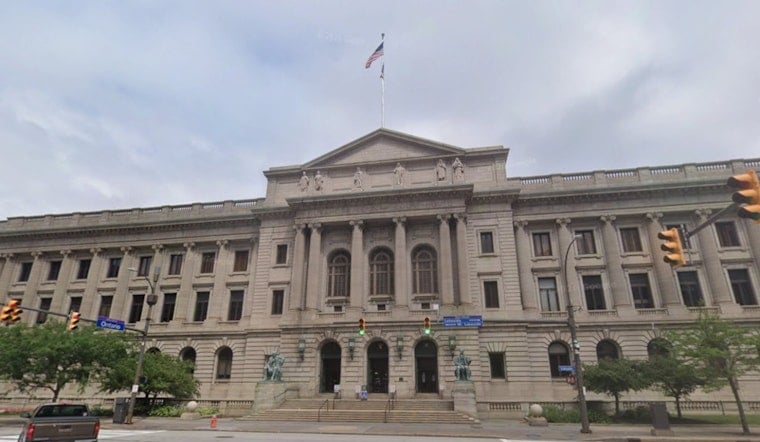
Protesters coated in paint during a tense 2024 confrontation at Case Western Reserve University's Spirit Wall are now waiting on an Ohio appeals court to decide a question that could shape their entire case: can a private university's police department even be sued over what happened that morning? The 8th Ohio District Court of Appeals in Cleveland heard oral arguments from attorneys representing CWRU and the protesters, with the answer hinging on whether campus officers count as a public entity entitled to the same legal shield that protects municipal police.
What Happened at the Spirit Wall
The confrontation unfolded on May 7, 2024, when university-hired contractors sprayed protesters who were trying to stop CWRU from painting over pro-Palestine messages on the campus's designated Spirit Wall, according to the seed facts underlying Cleveland.com's reporting. CWRU police stood by as the spraying happened, according to protesters and video of the incident. That same footage, cited in federal court records, captured CWRU officer Milo Drumm warning protesters not to touch the paint sprayers because they were dangerous, and telling another officer, “if they don't move, it's on them,” as contractors continued applying the spray. The standoff came near the end of a 10-day pro-Palestine encampment that student demonstrators had set up at CWRU's KSL Oval starting April 29, 2024, demanding the university divest from weapons manufacturers linked to Israel, according to WKYC. That encampment led to 20 initial detentions before demonstrators voluntarily dismantled it on May 10, 2024.
In the aftermath, CWRU President Eric W. Kaler sent a community-wide email apologizing for the spray-painting, saying he was disturbed by what occurred and promising to hold both the contractors and the CWRU police officers on scene accountable, according to The Observer. Despite that apology, the university has fought the resulting lawsuits in court, arguing it and its police department are immune from liability.
Multiple Plaintiffs, One Central Legal Question
Several plaintiffs have filed suit against CWRU, its police department, the painters, and the painters' employer, including Ameer Alkayali, Weillin Fang, and Kevin Kennelly, all in 2025. Alkayali is not a CWRU student; his family owns the Algebra Tea House cafe and restaurant near campus in Cleveland's Little Italy neighborhood, according to WVXU. The lawsuit names three CWRU officers as defendants.
CWRU's campus police authority traces back to Ohio Revised Code Section 1713.50, a state law that allows private colleges and universities to establish police departments whose commissioned officers hold the same statutory powers and arrest authority as municipal police, per Ohio law. According to the seed facts, CWRU's police department also derives authority through a memorandum of understanding with the Cleveland Division of Police, one that allows campus officers to make arrests and carry out law enforcement functions. State law generally prevents public entities from being sued over personal injury claims, per the Ohio State Bar Association, but whether that protection extends to a private university's police force is precisely what the Ohio Supreme Court has yet to decide.
Arguments Before the Appeals Court
Attorney Carole Rendon, representing CWRU, argued to the appeals court that the university's police department should not count as a public entity because CWRU itself is a private university. Rendon asked the court to decide whether Case Western and its police officers are entitled to statutory immunity from tort claims, telling the court the case concerns statutory immunity from tort claims rather than the Israeli-Palestinian conflict or the unsanctioned student encampment itself.
Attorney Peter Pattakos, representing the protesters, argued the opposite: that CWRU's police department should count as a public entity because it performs a government function. Pattakos said he remains confident in the case because university police were wanton and reckless enough to overcome the immunity statute. That standard traces to Chapter 2744 of the Ohio Revised Code, under which political subdivisions and public employees generally hold immunity from civil tort suits, but forfeit that immunity if employees act with malicious purpose, in bad faith, or in a wanton or reckless manner, according to Ohio case law.
How the Case Reached the Appeals Court
CWRU and the painting companies had asked Cuyahoga County Common Pleas Judge Mollie Ann Murphy to dismiss the lawsuit. In November 2025, Murphy denied that motion and allowed the case to continue, prompting CWRU and the other defendants to appeal to the 8th Ohio District Court of Appeals. That appeal is what produced the oral arguments now before the appellate panel.
The case has also moved on a separate federal track. On March 5, 2026, U.S. District Court Judge Christopher A. Boyko dismissed federal civil rights claims brought under 42 U.S.C. § 1983 against CWRU President Kaler and campus police officers, ruling that CWRU and its officers are private entities rather than state actors, according to federal court records. That ruling closed off the federal constitutional route, since Section 1983 claims require state action, but it did not affect the separate state court tort claims for assault, battery, and negligence that remain alive before the Ohio appeals court.
Where the Named Officers Are Now
The three CWRU officers named in the lawsuit have all since left the university. Kurtis Bialosky now works for Cleveland Metroparks police. Milo Drumm, who resigned from CWRU's police department in October 2024, now works for the Vermilion Police Department. Michael Jastatt, who resigned from CWRU in April 2025, now works for the Bratenahl Police Department. According to state records, all three resigned in good standing with no pending discipline and remain police officers in different departments.
Administrative Fallout Beyond the Courtroom
The Spirit Wall incident also drew federal regulatory scrutiny separate from the lawsuits. In November 2024, the U.S. Department of Education's Office for Civil Rights opened a Title VI investigation into CWRU over alleged anti-Palestinian and anti-Muslim discrimination, following a complaint from CAIR-Ohio that cited the spray-painting incident. In October 2024, CWRU also established a unified Student Advocacy and Spirit Wall Policy governing the designated wall panels between the Tinkham Veale University Center and Eldred Hall, requiring registered student groups to submit approval forms before painting, according to the university. The appeals court's ruling on the immunity question will determine whether the underlying tort case against CWRU's police department proceeds toward trial or gets thrown out entirely.





