

























































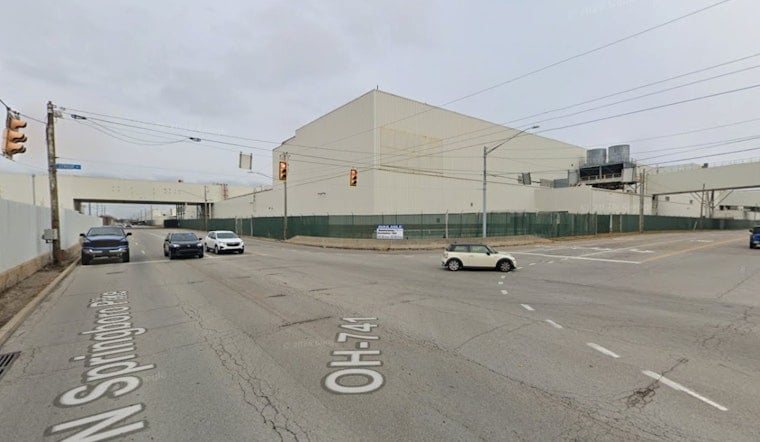
Three of Ohio's biggest shuttered auto plants have been reborn as glass factories, warehouses and, soon, a hospital operations hub — but none of them have come close to matching the workforces they employed at their industrial peak. At the former GM assembly plant in Moraine, Fuyao Glass America now employs 3,022 workers, nearly three times the number GM had on-site the day production stopped. Yet that figure is still only about 70% of the roughly 4,300 union workers GM employed there a decade before the plant closed.
The pattern repeats across Northeast Ohio's old auto corridor, according to a Cleveland.com analysis by Michael Johnson and the Advance Local Express Desk. Redevelopment has, in some cases, produced or is projected to produce enough jobs to match or exceed the workforce that existed on closing day at these plants — but it has not recreated the much larger peak workforces from decades earlier, when these were single-tenant manufacturing giants anchoring entire towns.
Moraine's GM Plant Becomes a Glass Factory Powerhouse
GM stopped production at its Moraine assembly plant on December 23, 2008, in the depths of the auto industry's collapse. An Ohio auto-industry report attributed to a 2009 state analysis found the GM closure directly affected 2,400 workers, while the plant's hourly headcount stood at 1,080 when it shut down. The site was later redeveloped as an automotive-glass factory operated by Fuyao Glass America, and today's workforce of 3,022 is about 600 workers greater than the number directly affected by the original GM closing.
The Moraine site's transformation also became internationally known well beyond Ohio business circles. The plant's rebirth, including cultural friction between Chinese management and American workers, was chronicled in the 2019 documentary American Factory, which won the Academy Award for Best Documentary Feature in February 2020, according to Wikipedia.
Twinsburg's Chrysler Site Falls Short of Peak-Era Employment
Chrysler's Twinsburg Stamping Plant employed more than 5,000 people at its peak, but had shrunk to about 1,200 workers by the time the closure was announced in 2009, the same year Chrysler entered bankruptcy. The site was redeveloped as Cornerstone Business Park, which had roughly 1.64 million square feet of industrial space and 303,000 square feet under construction at the end of 2020, according to figures in the Cleveland.com report.
A 2016 developer estimate cited in that reporting projected the park could eventually support 3,200 jobs when fully built out. Twinsburg officials have projected about 2,000 workers and roughly 2 million square feet of development at the park, a workforce the report notes would be about 40% of Chrysler's peak employment there, even though the park's projected workforce — including about 1,200 part-time positions — would still exceed the roughly 1,200 workers on staff when the Twinsburg closure was announced. Today the site, per Terry Coyne Properties, has expanded to roughly 3 million square feet housing tenants including FedEx Ground, Amazon, Lowe's and PepsiCo, after developers Scannell Properties and DiGeronimo Companies demolished about 1.8 million square feet — roughly 65% — of the original stamping plant, according to REBusinessOnline.
Walton Hills Still Chasing Ford's Old Numbers
Ford's Walton Hills Stamping Plant closed in 2014 with only about 260 jobs remaining, a steep drop from the roughly 5,000 workers it employed at its 20th-century peak, according to the U.S. Environmental Protection Agency. The property was redeveloped as Forward Innovation Center East, and not all of the redevelopment commitments made for the site have been fulfilled, per the Cleveland.com report.
Cleveland Clinic now plans to build a Unified Operations Center on the former Ford property, a project Hoodline has previously reported rattled the small village. The 600,000-square-foot facility carries an estimated project cost of $142 million and is seeking a 15-year, 75% tax abatement from Walton Hills, with completion targeted for late 2028, according to NEOtrans. The Cleveland Clinic center could employ 526 people and add as many as 145 jobs through 2035 — but 381 of those positions would be transferred from other Northeast Ohio facilities, meaning they would not represent additional jobs for the region overall, even as they add workers and payroll to the former Ford site.
Even with those transfers counted, Walton Hills redevelopment could eventually exceed the roughly 260 jobs remaining when Ford closed the plant, though it would remain far below Ford's historical peak workforce. Medical supply company Cardinal Health has already established a 247,000-square-foot distribution hub at the same Forward Innovation Center East campus, replacing a smaller facility in nearby Solon, according to Weston, Inc. A 248,000-square-foot warehouse leased to Cardinal Health at the same site sold for nearly $40 million in April, a sale Hoodline covered in a report on the Walton Hills sale.
State Cleanup Money Made the Sites Shovel-Ready
None of this redevelopment happened without public money going into environmental cleanup first. Ohio awarded a $10 million brownfield remediation grant in June 2022 to clean up historic lead and cyanide heat-treatment contamination at the former 108-acre Ford Walton Hills site, according to the Office of the Governor of Ohio. The grant went to developer DROF WH I LLC, while a separate entity, DROF WH#3 LLC, filed for the Community Reinvestment Area tax exemption tied to the Cleveland Clinic project in June.
Beyond Ohio, a similar pattern has played out at a national scale through RACER Trust, the entity established after General Motors' 2009 bankruptcy to remediate and redevelop former GM properties. RACER reported in August 2025 that its cleaned-up sites across 13 states have generated more than 72,000 jobs and $25.8 billion in annual economic output, per the trust's own accounting.
Other manufacturers have added jobs to the same three towns more recently. Great Day Improvements announced an expansion in 2025 creating 412 jobs spread across Walton Hills, Bedford Heights and Twinsburg, including more than 200 jobs planned at a new Walton Hills manufacturing facility, according to figures attributed to JobsOhio in the Cleveland.com report. Statewide, Ohio's motor vehicle and parts manufacturing sector employed approximately 62,200 people as of July, per the Bureau of Labor Statistics, reflecting a long-term shift toward automated component production and logistics work rather than the assembly-line jobs these towns once relied on.
Taken together, the numbers paint a consistent picture: redeveloped former Ohio auto plants have matched or exceeded closing-day employment at some sites, but they remain well below the historical peak employment these same properties once supported when they were single-employer manufacturing giants.





