

























































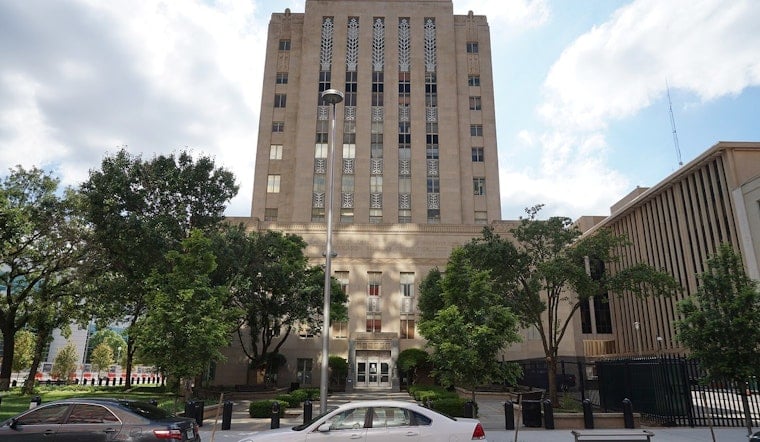
Oklahoma County has frozen its Amazon vendor accounts and rewritten sections of its employee handbook after firing a purchasing officer in the County Clerk's office who is now the subject of a state fraud investigation. County Clerk Maressa Treat revealed the embezzlement allegations and fired the employee, though the exact dollar amount of the alleged misappropriation has not been released.
The Oklahoma State Bureau of Investigation is still investigating fraud allegations against the fired purchasing officer, according to Hunter McKee, as reported by The Oklahoman. Brook Arbeitman said the district attorney's office had no information to release on the matter, according to the same report. No formal criminal charges have been filed as of publication.
The probe prompted the Oklahoma County Board of County Commissioners to approve changes to the county handbook on August 26, submitted by Kimberly Zuhdi, who serves as vice chairman of the county handbook committee. The revised handbook now includes both lines of credit and county vendor accounts, such as Amazon, within its Use of County Property section, closing gaps that officials say left room for unauthorized purchasing.
New Rules Target Vendor Accounts and Final Paychecks
Under the updated policy, county employees must return property paid for with county funds upon separation from their job, and the handbook now spells out that workers may be held financially responsible for theft, embezzlement, misappropriation, conversion, or other unauthorized use of county funds or property. The county says it may pursue recovery of money owed by an employee through lawful means.
The handbook still requires the county to pay terminated employees their wages in full at the next regular designated payday, subject to lawful offsets and bona fide disagreements. To make offsets possible, the county's wage withholding authorization form now includes explicit authorization to deduct traced and attributed losses from an employee's final paycheck, and the county may offset employee debt against that last paycheck.
Those changes reflect a legal reality unique to Oklahoma workplaces: state administrative rules generally bar employers from deducting pay for alleged theft or property losses without the employee's advance written consent, according to myHRcounsel. Without an updated authorization form on file, the county risked being unable to legally claw back traced losses from a departing employee's pay.
Clerk Says Office Backs Stronger Guardrails
Treat said the clerk's office supports clarifying and strengthening the expectations and consequences governing county funds and property, according to the same Oklahoman report. The handbook's guidelines for appropriate conduct now specifically list embezzlement and conversion of property to cash among prohibited behavior.
The purchasing function itself carries broad authority in Oklahoma county government. Under state law, the county purchasing agent operates under the county clerk or budget board to oversee vendor bidding, purchase orders, and centralized purchasing across county agencies, per the Oklahoma State University Extension — authority that gave the fired officer broad oversight over vendor accounts like Amazon in the first place.
A Second Financial Headache for the Clerk's Office
The embezzlement probe lands just months after Treat's office faced separate scrutiny over a $14 million spreadsheet bookkeeping error that went unreported to other county leaders for months after it was first discovered in fall 2025, as previously covered by Hoodline's earlier report. That windfall later helped Oklahoma County commissioners approve a $163.2 million annual budget in June that, for the first time in years, fully funded county jail operations. County officials have emphasized that the spreadsheet error and the embezzlement investigation are separate matters, though both point to vulnerabilities in financial oversight within the clerk's office.
Treat's tenure has already included one prior leadership shakeup. She assumed the county clerk post following the June 2022 resignation of former clerk David Hooten, who stepped down amid a sheriff's investigation and removal threats from the district attorney over workplace harassment and misuse of county staff for campaign activities.
Statewide Penalties Have Grown Steeper
Any charges that eventually emerge from the OSBI probe would fall under recently toughened state law. Effective January 1, 2026, Oklahoma's updated embezzlement statute under Enrolled HB 2104 established that misappropriation of $15,000 or more constitutes a Class C2 felony under 21 O.S. § 1451, according to the Addison Law Firm. Separately, public officers such as county clerks, purchasing agents, and deputies face specific felony exposure under 21 O.S. § 341 if they misappropriate, convert, or fail to properly account for public funds entrusted to their office, per the Urbanic Law Firm.
The case also fits a broader pattern of scrutiny facing Oklahoma clerks' offices this year. In July, a state forensic audit found that a former town clerk in Washington, Oklahoma allegedly misappropriated more than $1 million in public funds by processing unapproved payments over multiple years, a case Hoodline detailed in its report on the small-town clerk accused of blowing $1 million. In a separate 2024 case, the Oklahoma State Bureau of Investigation arrested a former Jones assistant city clerk on felony embezzlement charges after a forensic audit revealed $38,000 in unposted court citations and altered receipts.
Richard Mize, who covers Oklahoma County government and the city of Edmond for The Oklahoman, reported the handbook changes and the status of the OSBI investigation. As the state bureau's probe continues, county officials say the revised handbook is meant to prevent a repeat, regardless of how the current case is ultimately resolved.


.jpg)