

























































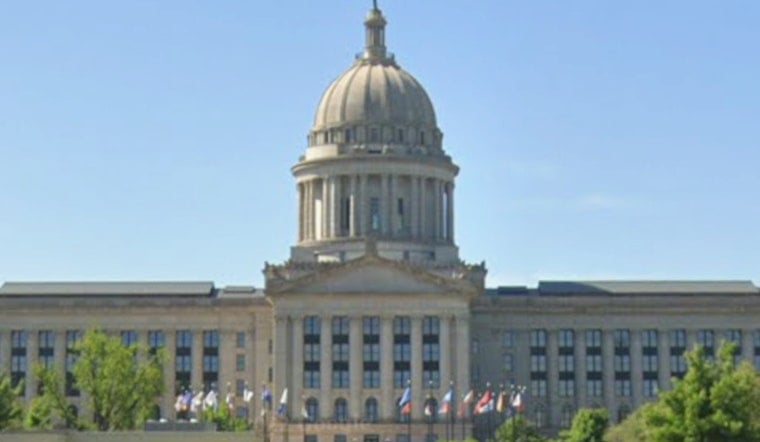
An Austin-based IT vendor is demanding $6 million from the Oklahoma Ethics Commission, escalating a legal fight over a campaign finance software overhaul that left candidate and lobbyist filings offline for months. RFD & Associates filed a counterclaim in Oklahoma County District Court seeking $5.1 million in lost profits and business opportunities plus more than $1 million in unpaid labor, according to court filings, arguing the commission wrongly terminated its contract to build the Guardian 2.0 system.
The dispute traces back to January, when Attorney General Gentner Drummond, representing the commission, sued RFD & Associates first. As reported by Oklahoma Voice, the state's lawsuit accuses the vendor of breach of contract, fraud, unjust enrichment, negligent misrepresentation, breach of warranties and violations of the Oklahoma Deceptive Trade Practices Act. Drummond has said the system failures cost the state more than $800,000, and the commission is seeking to recover that money after paying RFD based on the contract's promises, according to the same report. The Oklahoma Attorney General's Office alleged in its January filing that RFD failed to meet six of seven major contractual milestones after winning the contract in December 2024.
Vendor Says It Delivered, State Says It Didn't
RFD & Associates counters that it completed testing and delivered a system that was accurate and available for active filers by December 12, 2025, per the vendor's counterclaim as detailed by Oklahoma Voice. The commission had described the new system's status as good just three days later, on December 15, 2025 — then entered a new contract with the original Guardian system's host four days after that, on December 19, effectively abandoning RFD's build. The commission voted in December to terminate its contract with RFD and pursue legal action.
Company representative Scott Glover said the project timeline was inseparable from incomplete data, delayed approvals and changing requirements, the vendor's counterclaim states. RFD alleges the commission's data had format changes, thousands of missing document files and troublesome formatting, and the company says it invested more than 25,000 hours in the project in less than a year while working to correct datasets the commission had provided. The vendor claims the commission was sometimes months late signing off on deliverables, attributing project delays to those dataset problems and unclear, shifting expectations rather than its own performance.
Ethics Commission Executive Director Lee Anne Bruce Boone rejected that framing, saying the contract was appropriately terminated and that RFD knew what the project required because the company described the work itself in its original proposal. Boone said RFD ultimately acknowledged it could not deliver on its promises, telling the commission it had overpromised and underdelivered. The commission's contract expectations required timely service and a system that ran uninterrupted and error-free — standards officials say RFD never met, even as the vendor maintains it delivered a working, tested product before its removal.
Three Months Without Public Filings
The fallout from the failed rollout hit public transparency directly. The original Guardian reporting system went completely offline on September 19, 2025, leaving state political expenditures and candidate donor records inaccessible to the public for three months, according to Oklahoma Voice's earlier reporting — a blackout that spanned major third-quarter filing deadlines and left both the public and candidates for office unable to access campaign filings. The campaign finance system is meant to let the public examine lobbyist and candidate expenditures and track campaign donations, making the outage a significant transparency gap during election-cycle preparation.
To restore service, the Ethics Commission approved a $217,000, three-year contract with Carahsoft, a partner of legacy vendor Civix, which had hosted the original Guardian platform. The commission paid Civix a drastically reduced price under that replacement arrangement, restoring the older system in late December after emergency commission votes. Lawmakers had originally allocated between $1.2 million and $2 million for the full system replacement before the vendor dispute derailed those plans, and Civix had signaled it would stop supporting the older software version, prompting the initial push for an overhaul.
Local Elections Caught in the Gap
The timing proved especially disruptive because of Senate Bill 890, which centralized local government candidate filings — including municipal, county, school board and technology center races — under the Ethics Commission starting November 1, 2025. Candidates raising or spending more than $1,000 fall under those state filing requirements. But because the restored legacy Guardian software lacked integration for local campaign data, voters in early 2026 municipal elections, including the Oklahoma City mayoral contest and Norman City Council races, had no online access to local candidate contribution reports, according to the Oklahoma City Free Press. Local candidates were instructed to retain paper records until an interim portal could be built.
That interim fix arrived in March, when the commission launched a $1,000 temporary electronic portal to accept local filings, according to State and Federal Communications. Fully integrating local filings into Civix's decades-old system was estimated to require a complete coding overhaul costing $100,000 and taking 12 to 15 weeks.
An Agency Already Stretched Thin
The commission entered this fight with little financial cushion. Its 2024 legislative appropriation was down 16% compared to 2018, and a single litigated court case can consume up to one-third of its operating budget, according to reporting cited by NonDoc. Commission officials have repeatedly warned lawmakers that limited funding hampers the agency's operations, a backdrop that adds pressure to an already high-stakes legal battle now playing out in Oklahoma County District Court.
The lawsuit also lands amid a competitive political moment for Drummond, who was actively campaigning in Oklahoma's 2026 Republican gubernatorial primary when his office filed suit against RFD, emphasizing voter transparency and recovery of taxpayer funds. RFD & Associates, based in Austin, Texas, had previously held state government technology contracts in both Texas and Oklahoma before entering its Oklahoma deal in December 2024. With RFD's countersuit now seeking $6 million against the state's push to recover more than $800,000, the case is set to test competing accounts of who is responsible for a system failure that left Oklahoma voters without full access to campaign finance records for months.





