

























































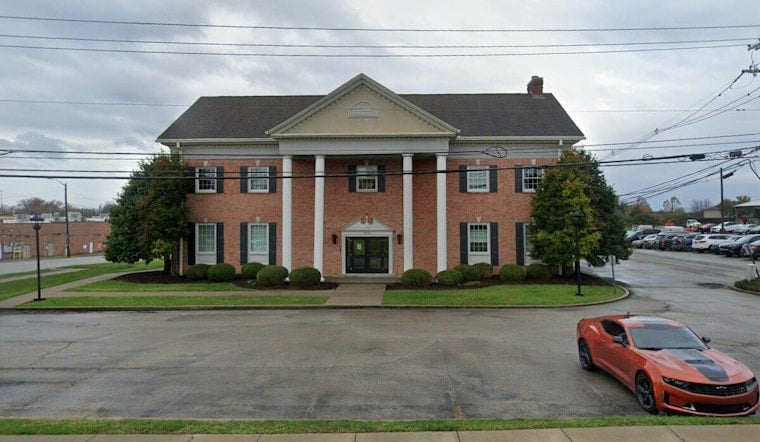
The Oldham County Board of Education voted 4-1 during a special-called meeting Wednesday to propose raising its property tax rate to 82 cents per $100 of assessed value, marking the district's first rate increase since the 2022-23 school year. Board Member Adam Springer cast the lone dissenting vote against the plan, which sits at the maximum revenue increase Kentucky law allows without giving voters a chance to force a recall election.
According to The Oldham Era, Board Chair Carly Clem told colleagues the district had kept its rate flat for four years while discussing staffing, programs, facilities, safety and long-term financial stability. The new rate moves up from 81.2 cents to 82 cents per $100 of assessed value, an increase of eight-tenths of a cent, according to WDRB. That works out to a 4% revenue increase over the compensating rate, the ceiling permitted under Kentucky Revised Statutes § 160.470, also known as House Bill 44, before residents could petition for a public recall vote within a 45-day window, as explained by LINK nky.
What the Extra Pennies Actually Buy
The district projects the 82-cent rate will net its General Fund roughly $800,000 more than simply keeping the current 81.2-cent rate, and about $3.2 million more than adopting the compensating rate, per the same Oldham Era report. That compensating rate is designed to generate the exact same property tax revenue collected the prior year on existing real estate. The approved rate also folds in a small adjustment tied to “exonerations,” a mechanism under Kentucky law that lets districts recover revenue lost when property tax bills were excused or abated in earlier years.
WDRB reports the district said the proposed adjustment supports its continued commitment to providing high-quality educational programs and services for students and families. A special meeting to formally adopt the increased rate is scheduled for September 14, per WDRB's report.
Homeowners Could See Roughly $29 to $30 More a Year
For homeowners, the change would mean approximately $29 to $30 more annually before assessment changes or other levies. With Oldham County median home values estimated between $359,000 and $375,000 by the U.S. Census Bureau, an 82-cent rate translates to an annual school district tax bill of roughly $2,944 to $3,075 per median home, according to figures compiled by The Jimmy Welch Team. The last time the board raised rates, for the 2022-23 school year, it did so in a closer 3-2 vote, lifting the rate from 80 cents to 81.2 cents and pushing total tax revenue from about $57 million to roughly $62.5 million.
Why the District Says It Needs the Money
The vote comes under Superintendent Claudette Herald, who took office on July 1, 2025, bringing more than two decades of education experience after eight years as Deputy Superintendent of Grant County Schools, according to Kentucky Teacher. Even without a rate change, rising real estate assessments generated approximately $2.68 million in additional general property tax revenue for the district during the fiscal year that ended June 30, 2025, according to Kentucky Department of Education financial records, with general property and motor vehicle taxes making up 40.9% of total district revenue that year.
That growth cuts both ways for a property-wealthy district like Oldham County. Under Kentucky's Support Education Excellence in Kentucky funding formula, gains in local property tax revenue trigger decreases in state funding equalization, effectively penalizing districts with rising property values unless local tax rates are periodically adjusted to keep pace. Statewide, property taxes account for 72% of all local school funding and 24% of total K-12 public school operational revenue, per the Kentucky Center for Economic Policy, underscoring how central these local levies have become to keeping districts like Oldham County staffed and funded as state support has lagged behind 2008 baseline levels after adjusting for inflation.





