

























































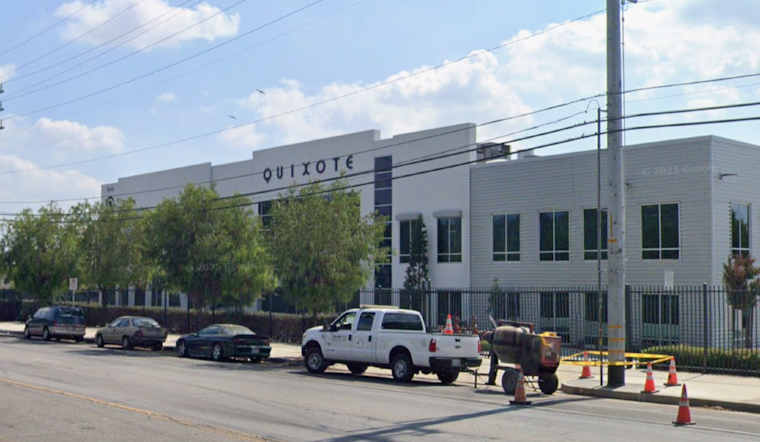
A 125,000-square-foot soundstage complex on Montague Street in Pacoima that sat empty after Quixote Studios pulled out is getting new life this fall. Film and television producer Manny Halley has signed a 25-year lease with an option to buy on the former Quixote North Valley studio complex, and he plans to reopen it as Imani Studio.
Halley told the Los Angeles Times that the lease is worth more than $25 million, though he declined to disclose the price he paid for the facility. Rexford Industrial Realty owns the land beneath the property but is not a party to the production business itself, according to the same report. Halley's company, Imani Media Group, financed the deal, and he has already retained three employees to help run day-to-day operations at the site.
A Producer Betting Against the Industry's Downturn
Halley is best known for the Vivica A. Fox-led True to the Game film trilogy and has shot 18 productions in California, receiving state production incentives for 14 of them, the Los Angeles Times reports. He plans to invest between $2 million and $6 million into the Pacoima facility, which includes four soundstages. Two of his own projects are slated to start shooting there by late September: a True to the Game television series and the BET comedy Lot Patrol, which the network has already picked up for five additional episodes.
Halley also plans to rent out stage space to outside productions, including student projects, and to lean on Imani Media Group's distribution arm, which has worked with Amazon, Tubi and major theater chains. In his telling, owning a stage outright is a way for independent producers to cut costs rather than compete for scarce studio space at premium rates. “I want to change the industry,” Halley told the paper, describing an ambition that goes beyond his own productions.
Quixote's Retreat Opened the Door
The facility Halley is taking over was built for roughly $19 million three years before the Los Angeles Times report, and it carries a well-known production pedigree. Quixote, founded in 1995, expanded into Pacoima with a 75,000-square-foot, five-soundstage complex at 12137 Montague St. in August 2019, according to the Los Angeles Business Journal, before adding an adjacent 123,974-square-foot building at 12154 Montague St. in 2021. Shows including Apple TV+'s The Morning Show, Paramount's Yellowstone, and HBO's Curb Your Enthusiasm and Insecure were among the high-profile productions that once filled Quixote's Los Angeles stages, per the same outlet.
Hudson Pacific Properties bought Quixote in 2022 for $360 million, but in April 2026 the company announced it would wind down most of its Los Angeles soundstage business along with its Atlanta operations, citing structural cost disadvantages in those markets, according to Hudson Pacific Properties. The retreat followed a brutal 2025, when the company posted a full-year net loss of about $572 million, driven largely by a fourth-quarter impairment charge of roughly $300 million tied to writing down Quixote's value, as reported by The Real Deal. Hoodline previously covered that $572 million loss when it was first disclosed.
An Industry Still Struggling to Fill Its Stages
Hudson Pacific's exit is far from an isolated case. FilmLA data cited in the Los Angeles Times report shows average soundstage occupancy across the region held at 63% in 2024, a far cry from the roughly 90% occupancy rates the industry saw between 2016 and 2022. Fewer scripted television shoot days and shorter episode orders have left stages sitting empty even as production companies like Imani look to grab up newly available space at reduced cost.
Soundstage distress has rippled well beyond Pacoima this year. Hoodline has reported on loan defaults hitting major production hubs including Studio City's 55-acre Radford Studio Center and the Manhattan Beach studio that shot Avatar, underscoring how widespread the institutional pullback from studio real estate has become across Greater Los Angeles.
State Incentives and Industry Support
The reopening also arrives as California works to keep production dollars in-state. Governor Gavin Newsom and state lawmakers expanded the state's Film & Television Tax Credit Program from $330 million to $750 million annually, according to the California Film Commission, which has said such facilities help keep productions in California and sustain entertainment-industry jobs. Still, newer state budget legislation known as SB 122 will place limits on corporate tax credit redemptions starting in 2030, capping annual business tax credit use, a policy shift the World Socialist Web Site reports has drawn pushback from entertainment industry unions.
BET, which will film Lot Patrol at the new studio, said supporting Black ownership and entrepreneurship remains important to the network — a nod to Halley's history with the channel, which also aired Keyshia Cole: The Way It Is from 2006 to 2008. Halley previously managed recording artists including Nicki Minaj, Young Thug and Keyshia Cole before moving into film production, according to Production List's profile of his career. As Imani Studio prepares to open its doors this fall, it stands as one independent producer's wager that there's still a business to be built on the stages institutional landlords are walking away from.





