

























































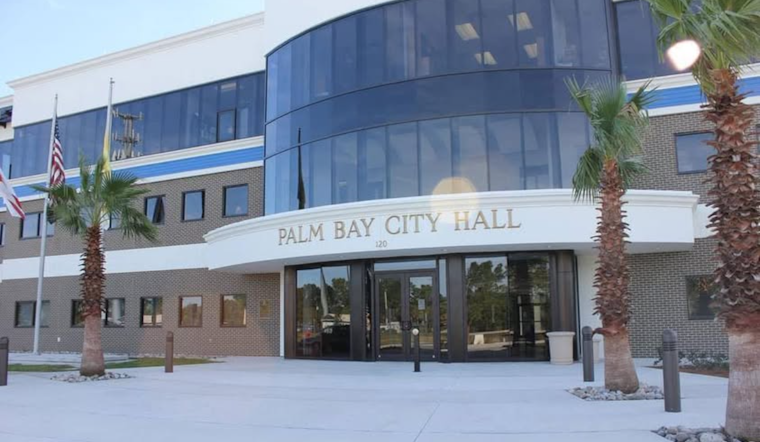
Palm Bay officials have ordered every Flock automated license plate reader in the city physically hooded and taken offline, saying the cameras may never have been properly permitted or installed along municipal roadways in the first place. The order came from City Manager Matthew Morton and Police Chief Jeff Spears after City Council members raised concerns about how and where the surveillance network was built.
According to ClickOrlando, Morton said in a news release that Flock Safety may not have properly permitted or installed cameras around Palm Bay. City staff has been instructed to keep the cameras covered until a comprehensive audit of permitting and physical construction is presented to the council, as The Space Coast Rocket reports.
A Citywide Network Goes Dark
Palm Bay is taking its entire Flock system offline while it reviews camera placement and construction, per the same account. Governments and law enforcement agencies run many of the Flock cameras scattered across Central Florida, while retailers and apartment complexes deploy their own units separately, the report notes. As News 6 demonstrated last month, Flock has installed dozens if not hundreds of cameras across the region, and the WKMG report on the Palm Bay decision was authored by digital journalist Christie Zizo.
This is not Palm Bay's first brush with automated enforcement problems. The city previously suspended an automated school-zone speed camera program in May 2025 after persistent technical accuracy errors and public complaints over improper citations, according to The Palm Bayer. Residents and business owners at the time raised similar concerns about fairness and a lack of municipal oversight in how automated tickets were reviewed.
Vandalism And Misuse Cases Mount Statewide
Palm Bay's move lands amid a wider wave of trouble for Flock's ALPR network across Florida. Flock cameras have been found damaged in recent weeks across Central Florida, including in Lake and Volusia counties, and law enforcement believes the damage amounts to vandalism. In Volusia County specifically, sheriff's office spokesman Andrew Gant reported four separate cases of cameras torn down or vandalized in July, according to The West Volusia Beacon. The county also operates license plate readers at select parks to check passing plates against law enforcement watchlists.
Farther north, a 19-year-old was arrested in July for allegedly using gold and silver spray paint to disable at least eight Flock cameras across Atlantic Beach, Neptune Beach, Jacksonville Beach, and Georgia, as News4JAX reported. Investigators there caught the suspect using the very Flock cameras that were still operational, and Atlantic Beach police estimated replacement costs at roughly $800 per camera before filing multiple criminal mischief charges.
A Detective's Arrest Raises Trust Concerns
Beyond physical vandalism, misuse of the technology by officers themselves has become a flashpoint. Sumter County Sheriff Pat Breeden suspended his agency's own Flock camera network in July and arrested Detective Brandy Almany after an internal audit found she had attached fake case numbers to searches across Flock ALPR and state databases in order to spy on her husband's ex-wife, according to WFTV. Almany was terminated and charged with official misconduct and computer crimes before being booked into the county jail on a $12,500 bond.
That case is not isolated. A national study by the Institute for Justice, published in April 2026, documented dozens of incidents across the country in which police officers improperly accessed license plate reader systems like Flock to stalk current or former romantic partners, cataloging cases in Florida, Georgia, Texas, Wisconsin, and Illinois where officers faced internal audits or criminal charges. Some Palm Bay residents have voiced similar unease, telling reporters the cameras amount to an invasion of privacy that is subject to misuse.
Permitting Rules And Federal Pushback
Florida law adds another layer to Palm Bay's review. Under Florida Statute 316.0777 and Florida Department of Transportation guidelines updated in May 2026, law enforcement agencies must obtain a formal General Use Permit and submit engineering documentation, including site plans detailing foundation and breakaway electrical specifications, before installing automated license plate readers on state highway rights-of-way. The requirement echoes a February 2024 investigation by Forbes that found Flock Safety routinely installed cameras along public roadways in at least five states, including Florida, without obtaining required state transportation permits — a pattern that once forced the company to dismantle unauthorized cameras from state structures like the John's Pass Bridge near Tampa.
Even the images and data these cameras collect are legally shielded from public view. Under Florida Statutes 316.0777 and 316.0778, captured license plate images and associated location data held by public agencies are confidential and exempt from public records requests, restricting access strictly to authorized law enforcement performing official criminal justice duties, according to Landsman Law. Meanwhile, U.S. Representative Tim Burchett introduced H.R. 9800, the Protection Against Mass Surveillance Act, in July to ban federal agencies from purchasing automated license plate readers or funding state and local Flock systems, as reported by Police1.
For now, Palm Bay says its cameras will stay hooded and offline until the city completes its audit and presents findings to the council, a process WKMG's report frames as part of the city's broader push for accountability from Flock Safety, the vendor behind the system.





