

























































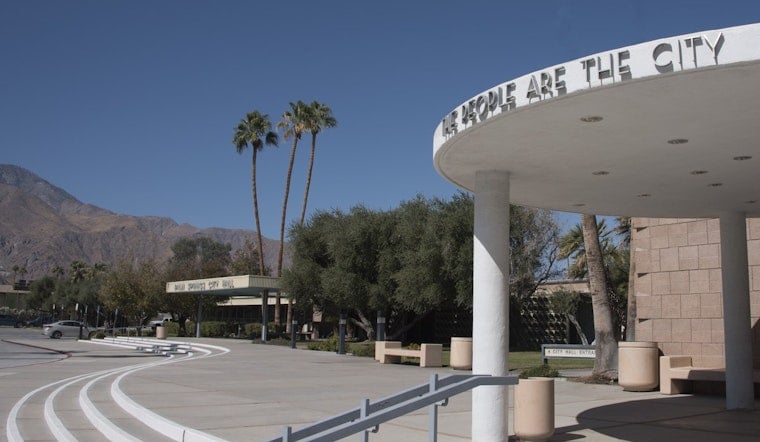
Every licensed cannabis consumption lounge in Palm Springs could be allowed to host up to 24 ticketed events a year, serve non-cannabis food and drinks, and bring in live entertainment, under an ordinance the city council approved on first reading. The move is designed to help a struggling local industry stay competitive, but it's already drawing pushback from residents who live near the lounges.
The Palm Springs City Council approved the expanded lounge ordinance on first reading, according to NBC Palm Springs. The vote reportedly departed from staff recommendations, a shift HR professional Cherie Johnson said appeared to differ from what city staff had proposed. Johnson also raised questions about how the new rules will actually be enforced, and said she remains undecided about whether the expanded lounge operations are a good idea overall.
Under the proposed ordinance, every consumption lounge in the city — not just larger venues — would be permitted to host up to 24 ticketed events per year and offer live entertainment alongside food and non-cannabis beverage service. According to Cannabis Law Report, the council's 5-0 first-reading vote in July removed a staff-recommended restriction that would have limited ticketed events based on a lounge's square footage — a change Councilmember Ron deHarte pushed for, arguing against preemptively banning outdoor events near liquor or tobacco shops.
Neighbors Worry About Odor and Parties
Tammy Bleck, who owns Sherlock Homes Watch, expressed concern about lounges located near residential neighborhoods, warning that expanded operations could create new headaches for nearby residents. She said in the NBC Palm Springs report that residents did not sign up for parties and all kinds of hoopla, and described the potential outcome as either a hot mess, a disaster, or quite wonderful. Even so, Bleck said she supported allowing cannabis lounges to operate more like entertainment venues.
Johnson separately questioned how lounges will control odors that could affect nearby homes and businesses, echoing a broader concern in the debate over balancing support for the cannabis industry with protecting surrounding neighborhoods. The proposed rules do require odor controls, ventilation systems, and security measures at lounges hosting expanded activities. State baseline rules also keep a firewall in place regardless of local changes: cannabis lounges operating under state law remain barred from selling or allowing alcohol or tobacco on-site, and entry is restricted to adults 21 and older, out of public view, according to CalMatters.
A Struggling Local Industry Looks for a Lifeline
City officials are looking for ways to keep the cannabis industry competitive as Palm Springs cannabis tax revenue has dropped sharply in recent years, per the NBC Palm Springs report. The number of active licensed dispensaries in Palm Springs fell from 31 to 20 between April 2023 and April 2025, according to California City News. According to the California Department of Cannabis Control, the retail value of cannabis sales exceeded $4.6 billion in 2024 even as the licensed industry competed against a persistent illicit market.
Palm Springs cannabis tax revenue was predicted to decrease 44% in 2024, from $3.46 million to $1.9 million, a shortfall that helped push local leaders toward expanded lounge operations. Cannabis tax revenue is part of the city's general fund revenue. According to the City of Palm Springs Budget Book FY 2026 & FY 2027, the City Council lowered the effective retail cannabis tax rate from 10% to 5% of gross receipts for cannabis businesses in good standing. Compounding the pressure, the state excise tax on retail cannabis automatically jumped from 15% to 19% in mid-2025 after lawmakers failed to pass legislation suspending the scheduled increase, a hike industry leaders warned would force more legal dispensaries to close, per California City News. In response, several Coachella Valley cities, including Palm Springs, Desert Hot Springs, Palm Desert, and Cathedral City, slashed local cannabis taxes by roughly half between 2023 and 2025 to help legal shops compete with the illicit market.
The State Law Behind the Local Push
Palm Springs' move is possible because of Assembly Bill 1775, signed into law in September 2024 and effective this past January, which gave cities authority to let licensed cannabis retailers serve freshly prepared food, sell non-alcoholic beverages, and host live entertainment in designated consumption spaces. Before that, according to ArentFox Schiff, state law limited dispensaries to prepackaged snacks and banned live performances entirely.
Governor Gavin Newsom had vetoed an earlier version of the concept, Assembly Bill 374, in late 2023 over workplace secondhand smoke concerns, before signing AB 1775 the following year with added requirements that food and drinks be prepared separately from cannabis-infused products, according to the American Nonsmokers' Rights Foundation. Major public health organizations, including the American Heart Association and American Lung Association, had strongly opposed the cannabis cafe legislation altogether, citing health risks to hospitality workers exposed to indoor secondhand smoke in a state that has barred indoor smoking in hospitality workplaces since 1998, per the Public Health Law Center.
San Francisco's broader entertainment-zone law has also been discussed in terms of recovery, neighborhood activation and entertainment, according to CBS News.
Cathedral City records show the region has considered cannabis-event and odor controls before: a Nov. 13, 2019, city record concerned a recommendation to adopt an ordinance amending Section 5.88.035 regarding temporary cannabis events, while an Aug. 24, 2016, record said special conditions for cannabis-related activity could include odor environmental compliance policies.
For now, Palm Springs' expanded lounge rules could boost the city's entertainment scene and give its cannabis industry new revenue streams, but the debate captured in the NBC Palm Springs report shows the tension is far from settled locally. Whether the ordinance ends up looking, in Bleck's words, like a hot mess or something quite wonderful may depend on how tightly the city enforces the odor, ventilation, and security requirements if lounges eventually begin booking their 24 annual events.




