

























































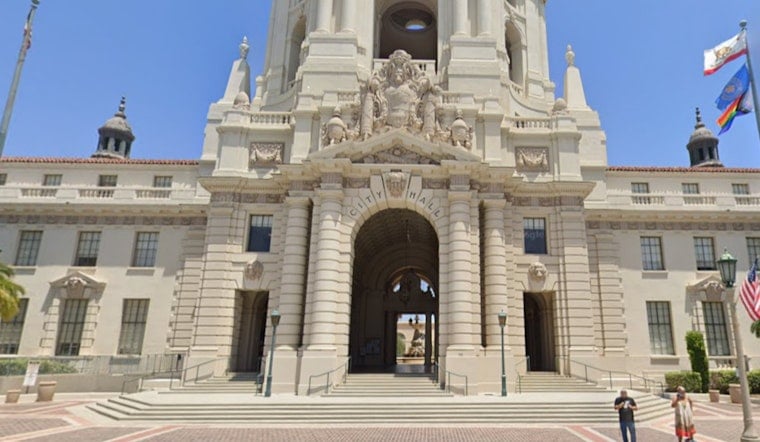
Pasadena Mayor Victor Gordo has sent a letter to the Los Angeles County Board of Supervisors asking them to reconsider how much money the city's public health department receives under Measure ER, the countywide sales tax approved by voters in June. Gordo's request, dated July 20, centers on a 1% combined allocation that Pasadena and Long Beach are set to split, even though the two cities together generate more than 6% of the tax revenue collected under the measure.
Gordo is not opposing the tax itself. In his letter, he thanked county supervisors for their leadership on Measure ER but argued that the 1% combined allocation does not reasonably align with either the cities' proportional revenue contribution or their public health obligations, according to Pasadena Now. Pasadena and Long Beach are the only two cities in Los Angeles County that operate their own independent local health departments rather than relying on the county health system, and together they represent about 6% of the county's population.
The gap between what Pasadena contributes and what it stands to collect is stark. The city is projected to generate roughly $22 million a year from the new sales tax, but current city estimates suggest the Pasadena Public Health Department would receive only about $1 million annually under the 1% allocation plan, according to Pasadena Now's reporting on the measure's implementation.
How the 1% Formula Was Built
Measure ER's spending language dedicates that 1% of total tax revenue to be split between Pasadena and Long Beach based on each city's core public health expenditures over the prior five fiscal years, per the Los Angeles County Board of Supervisors. Gordo asked supervisors to conduct a focused review of that allocation methodology, saying it fails to account for both the cities' share of Measure ER revenue and the scope of services their health departments actually provide.
The Pasadena Public Health Department's responsibilities span infectious disease control, food safety inspections, immunization programs and emergency preparedness — services the county relies on the department to fund and staff independently. The department is now facing significant funding cuts and workforce challenges, per the same account, a pressure point Gordo says the current formula does not reflect. He argued that the cities' status as independent local health jurisdictions should itself be factored into how revenue gets distributed.
Where the Rest of the Money Goes
Measure ER raised Los Angeles County's sales tax rate from 9.75% to 10.25% for a five-year period ending in October 2031, exempting groceries, prescription medications and medical equipment, according to MLK Community Healthcare. Under the broader spending plan, 45% of annual revenue goes to community-based nonprofit health clinics, 2.5% supports in-home supportive services for elderly and disabled residents, and the remaining non-county hospital funds are distributed based on emergency department Medicaid volume, according to the county Board of Supervisors' own documents.
The measure was placed on the ballot to help offset projected multi-billion-dollar losses in federal Medi-Cal funding tied to federal legislative cuts known as H.R. 1, which local health officials warned could leave up to 1.5 million county residents without healthcare coverage, according to Adelante Magazine. Voters narrowly approved Measure ER in the June 2 primary with 50.64% support, a margin of just under 26,000 votes out of nearly 2 million cast, according to Ballotpedia.
County Agrees to Talk, But Questions Remain
The Board of Supervisors has already taken a step toward addressing the complaint. On July 21, supervisors approved a motion instructing county health and executive agencies to meaningfully engage with Pasadena and Long Beach over concerns about the 1% allocation. It remains unclear how much flexibility supervisors actually have to adjust the formula, since Measure ER was approved by voters as a ballot ordinance rather than a standard budget line item — meaning any significant change could require amending the ordinance itself rather than a simple administrative fix.
Measure ER also builds in its own accountability checks, establishing a nine-member independent citizens' oversight committee and requiring annual independent audits of how tax proceeds are disbursed, according to MyNewsLA.com. That structure could give Pasadena and Long Beach a formal channel to press their case as the county begins implementing the tax.
The measure's passage was not universally welcomed even before this funding dispute emerged. The Pasadena Chamber of Commerce had formally opposed Measure ER ahead of the vote, joining the Howard Jarvis Taxpayers Association in arguing that the county's existing sales tax burden was already too high for low-income residents. Voter appetite for local health taxes varied across the region — while LA County's measure narrowly passed, Contra Costa County voters rejected a similar 0.625% sales tax measure the same June due to growing anxiety over regressive taxes, according to CalMatters.
For now, Gordo's letter does not specify exactly what percentage Pasadena and Long Beach should receive instead of the current 1% combined share. His request is narrower: a review of the methodology, and formal recognition that cities running their own health departments are shouldering costs the county formula was not built to capture.





